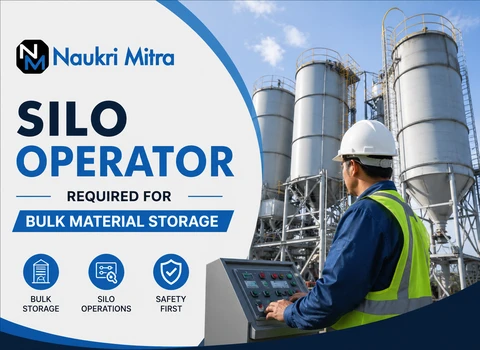
Getting to Know the Silo Operator Job
Bulk material storage sounds simple on paper. You put grain, cement, minerals, or powder into a big tank, and later you take it out. In practice, a Silo Operator Required for Bulk Material Storage has to manage many moving parts to make that simple idea actually work. Levels have to be tracked. Moisture has to be checked. Conveyors jam. Sensors drift. Somebody has to catch all of this before it turns into a bigger problem, and that somebody is usually the silo operator.
Why Storage Facilities Bother Hiring for This
A silo left unattended is a risk waiting to happen. Overfilling wastes material and can damage the structure. A blocked chute can stall an entire loading operation for hours. Companies that store bulk goods can't afford that kind of downtime, especially where cargo needs to move quickly between storage and transport. That's the reason this position exists in the first place — not to babysit a tank, but to keep the whole flow of material predictable.
What a Shift Looks Like
Most days start with a walk around the silo. You check for leaks, listen for anything odd coming from the motors, and glance at the blowers to make sure nothing is straining. Once loading or unloading begins, you're mostly at the control panel or reading gauges by hand, keeping an eye on fill levels as trucks or wagons come and go. There's paperwork too — logging quantities, noting anything unusual, letting the next shift know what to watch for.
The Work Itself
- Running the pneumatic or mechanical systems that push material in and out of the silo
- Watching temperature and moisture readings so stored material doesn't spoil
- Working with loading bay staff while trucks or rail wagons are being filled
- Keeping the area free of dust buildup, which cuts down on wastage
- Recording stock levels and tracking what's come in versus what's gone out
Where This Kind of Work Happens
Cement plants, agro-processing units, fertilizer companies and mineral handlers all need this skill set. So does the logistics side — port terminals and storage yards where bulk cargo changes hands constantly. Around Kandla in Gujarat, where port-linked industrial activity is fairly steady, there's regular demand for people who can handle bulk storage without needing much hand-holding.
Equipment You'll Actually Touch
Rotary valves, screw conveyors, pneumatic blowers, level indicators — this is the everyday toolkit. Weighbridges and load cells come into play when quantities need to be confirmed before dispatch. Some setups have gone digital, with control panels that let you start or stop material flow remotely. Plenty of others still rely on manual valves, so it helps to be comfortable with both.
What Separates an Average Operator from a Good One
Knowing how the machines work is only part of it. The operators who do well are the ones who notice things early — a fill rate that's slightly off, a vibration that wasn't there yesterday. That kind of attention isn't something you're born with; it comes from paying attention shift after shift. Basic troubleshooting skills and the ability to work with a team matter just as much as technical knowledge.
What Employers Look For on Paper
Both freshers and experienced hands find their way into this line of work. An ITI qualification in a relevant trade or a diploma in mechanical engineering tends to catch an employer's eye, though hands-on experience with material handling can carry just as much weight. Being able to read a basic engineering drawing or use a measuring instrument correctly also helps, since operators occasionally need to work from equipment specifications.
On Your Feet, and On a Schedule
This is not a desk job. Expect to be standing, climbing platforms, and working around dust for stretches of the shift, so a reasonable level of fitness matters. Since storage operations tend to run without long breaks, shift work is common and rotating schedules are part of the deal. It's a full-time position — steady hours, and steady responsibility for whatever storage area you're assigned to.
Safety Around the Silo
Dust exposure, confined spaces, moving machinery — these are the real hazards of the job, not hypothetical ones. Most sites require dust masks, helmets, gloves and safety shoes as standard PPE. Beyond that, following lockout steps before any maintenance work, staying out of silo chambers unless authorized, and flagging equipment faults right away are habits that keep people safe, not just rules on a poster.
Where Things Tend to Go Wrong
Blockages happen. Sensors misread. Humidity during certain months can affect how material behaves in storage. None of this is unusual, but it catches new operators off guard. A thorough check at the start of every shift and a proper handover to whoever's coming next prevent most of these small issues from turning into real problems.
Moving Up Over Time
Operators who stick with it and build a solid track record often move into supervisory roles, overseeing larger storage yards or specializing in materials that need more careful handling. It's less about ticking boxes and more about being someone the site trusts to run things without constant oversight.
Pay and What Might Come With It
This is a full-time role based in Kandla, Gujarat, India, with a monthly salary of ₹27,500. Some employers also offer extras like overtime pay, PF, ESI, bonuses, uniforms, transport, or canteen access — these vary from place to place and shouldn't be assumed to be guaranteed.