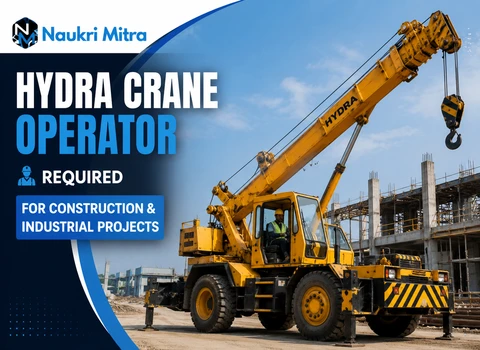
Getting to Know the Hydra Crane Operator's Job
Ask someone on a construction site what a "Hydra" is, and they'll point to the yellow hydraulic crane parked near the material stack. A Hydra Crane Operator operates this machine, lifting steel, pipes, precast slabs, or heavy machinery from one point to another. It sounds simple until you watch one in action — the boom extending over uneven ground, the operator judging weight by eye before the load chart confirms it. That mix of instinct and calculation is really what the job is about.
This is a Full-time position, and the work itself doesn't change much, whether the site is a residential tower going up or a factory shed needing its machinery repositioned.
Why Sites Can't Really Function Without One
Without a Hydra and someone who knows how to run it, a lot of heavy lifting on a construction or industrial site would grind to a halt or require far more manpower. Steel beams don't move themselves, and neither do transformer units or large machine parts. Companies hire dedicated operators because a few centimeters of misjudgment during lifting can mean a damaged load, a delayed schedule, or worse, an on-site injury.
What the Day Looks Like Once Work Starts
Most shifts start with a walk-around check — hydraulic oil, tire pressure, outrigger pads, the hook and sling condition. Nothing gets lifted until this is done. After that, the operator studies the load, checks the ground the crane will stand on, and only then begins positioning the machine. A lot of the actual work happens in short bursts: extend the boom, lift, swing, lower, reposition, repeat. In between, there's constant back-and-forth with riggers on the ground, usually through hand signals since engine noise makes verbal communication difficult.
Where Most of the Time Goes
- Reading load charts before every lift, not just the big ones
- Positioning the crane on firm, level ground
- Working with a signalman or rigger for every movement
- Watching for overhead wires, uneven terrain, and nearby workers
- Logging hours, fuel, and any mechanical issue that comes up
The Kinds of Places That Hire for This Role
Construction sites are the obvious answer, but factories and warehouses hire Hydra operators too, usually to shift heavy equipment during installation or maintenance. Faridabad, in Haryana, has a fair concentration of manufacturing and industrial activity, so operators here often move between construction projects and factory-based lifting work depending on where the demand is at a given time.
How the Machine Actually Works
The crane runs on hydraulic pressure — oil pushed through cylinders extends the boom and powers the lift. Operators control this through levers or joysticks in the cabin, watching the load chart to know how much weight is safe at a given boom length and angle. Slings, shackles, and sometimes a spreader beam connect the load to the hook. Understanding that a longer boom reach means a lower safe lifting capacity is one of the first things a new operator has to internalize — not just read about, but actually feel through practice.
Skills That Actually Matter on Site
Technical skill gets you started, but judgment keeps you employed long-term. An operator who can read a load chart correctly but rushes a lift under pressure from a supervisor is still a liability. The better operators tend to be the ones who slow down at the right moments — checking ground stability twice, confirming the sling angle before lifting, waiting an extra minute if the wind picks up.
What Employers Usually Look For
An ITI certificate in the mechanical, automobile, or diesel mechanic trade is common among candidates, and a Diploma in Mechanical Engineering can help as well. A valid heavy vehicle license is generally required, along with a crane operating certificate if the employer requests one. That said, a candidate who has actually spent time on a hydra, even informally, often gets preferred over someone with only classroom training.
Physical Side of the Work
It's not physically demanding in the way manual labour is, but it does mean long hours in the cabin with sustained concentration — hands on the controls, eyes moving between the load, the ground crew, and the surroundings. Shift timings depend on the project; some sites run early morning to evening, others adjust around material delivery schedules. Faridabad's weather swings from sharp summer heat to winter fog, and operators work through both.
Safety Isn't Optional Here
A dropped or swinging load can hurt people fast, so safety gear and procedure aren't treated as formalities. Helmet, safety shoes, high-visibility vest, and gloves are standard. Before any lift, the ground is checked, the load weight is confirmed against the chart, and wind conditions are factored in. Skipping any of this even once is how accidents happen — most experienced operators will say they've seen a near-miss caused by exactly this kind of shortcut.
Problems Operators Run Into
- Tight, congested sites with barely enough room to swing the boom
- Soft or uneven ground that makes outrigger placement tricky
- Sudden weather shifts mid-lift
- Coordinating with ground staff in high-noise environments
Where the Job Can Lead
Years of hands-on experience count for a lot in this trade. Someone who starts on a smaller-capacity Hydra often moves toward larger cranes as they build confidence and a track record. Over time, some operators shift into site supervision, managing lifting plans and guiding newer operators rather than sitting behind the controls themselves.
Pay and What Else Might Come With It
The salary for this Full-time role in Faridabad, Haryana, India is ₹34,000 per month. Beyond that, some employers offer overtime pay, PF, ESI, bonuses, uniforms, or transport and canteen access — though these aren't guaranteed and tend to vary from one company to the next.
It's a trade that rewards patience more than speed. Operators who take the time to build a habit of checking twice before lifting once tend to be the ones who stay in this line of work for years, not months.