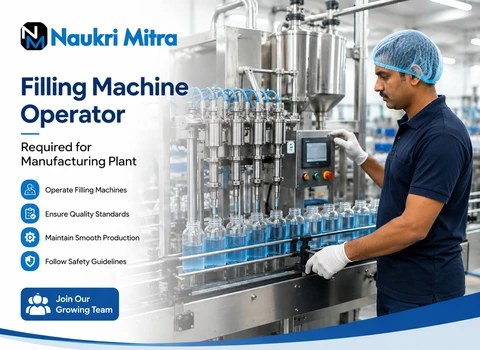
What Does a Filling Machine Operator Actually Do?
Walk into any packaging unit, and you'll usually find a line of machines feeding bottles, pouches, or jars along a conveyor. Someone has to keep that line running — that's the Filling Machine Operator. The job involves loading product into filling equipment, ensuring each container receives the correct amount, and catching problems before they lead to wasted batches. It's hands-on work, and in places like Baddi, Himachal Pradesh, where pharmaceutical and FMCG plants run round the clock, operators are always in demand.
Why This Position Exists on Almost Every Production Line
Filling is one of those steps where a small mistake gets expensive fast. Underfill a batch of medicine bottles, and you've got a compliance problem. Overfilling shampoo pouches takes a hit. So plants hire operators specifically to watch the machine closely, adjust settings when something drifts out of spec, and make sure the output stays consistent shift after shift.
A Shift on the Floor
Most days start with a machine check — cleaning residue from the last run, confirming that the correct nozzles or filling heads are fitted, and loading the scheduled product batch. Once the line starts moving, the operator's attention rarely wanders far from the fill levels. Bottles that run light or heavy get pulled aside. If the machine jams or a seal doesn't set properly, it's the operator's job to stop the line, sort it out, and get things moving again without losing too much time.
Responsibilities That Come With the Role
- Setting machine parameters to match the product being filled that day
- Loading hoppers or tanks and keeping material flow steady
- Verifying fill weight or volume using scales and gauges
- Spotting mechanical issues early — leaks, misalignment, worn seals
- Keeping the work area clean, since hygiene rules are strict in food and pharma plants
- Logging production numbers and flagging anything unusual to the supervisor
Where This Kind of Work Happens
Pharmaceutical companies, food and beverage manufacturers, cosmetics units, and chemical or FMCG plants all run filling lines. The setup usually looks similar wherever you go — a packaging hall with several machines lined up, conveyors moving containers between filling, capping, and labeling stations.
The Equipment You'll Learn to Handle
Depending on the plant, this could mean automatic rotary fillers, semi-automatic piston fillers, capping machines, or induction sealers. Alongside the main machine, operators use weighing scales, volume gauges, and sometimes viscosity meters to double-check that a product is behaving the way it should before it goes into a container.
Skills That Actually Matter Here
Formal qualifications help, but plants also look at what a candidate can do with their hands. Employers may prefer candidates with relevant machining or tool room training. Depending on the complexity of the work, an ITI in a machining-related trade, a Diploma in Mechanical or Tool and Die Engineering, or equivalent vocational training may be considered suitable. Practical experience with EDM machines, engineering drawings, and precision measuring instruments is often valued as much as formal education — sometimes more, if the candidate can show they've actually worked a shift on similar equipment before.
What separates someone who's good at this from someone who's just getting by usually isn't the technical training — it's the habits. Checking fill accuracy without being told to. Not letting small issues pile up until they become big ones. That comes with time on the floor.
What the Body Goes Through
This isn't a desk job. Expect long stretches on your feet, some lifting of filled containers or raw material drums, and working near machinery that never really stops moving. Full-time shifts in a plant like this often rotate, so operators should be ready for early mornings, late nights, or occasional weekend shifts depending on production schedules.
Staying Safe Around the Machines
Gloves, safety shoes, and hairnets are pretty standard on most filling lines, with aprons or masks added depending on what's being handled. Before touching any moving part for cleaning or repair, operators are trained to shut the machine down properly rather than reaching in while it's live. It sounds obvious, but a lot of workplace injuries happen exactly when someone skips that step because they're in a hurry.
What Tends to Trip Up New Operators
Speed versus accuracy is the constant balancing act. When a line is behind schedule, there's pressure to move fast, but rushing is usually how fill errors slip through. Products that are temperature-sensitive or that foam easily add another layer of difficulty. None of this is unusual — most operators say the first few months are about building instinct for the machine's quirks, and after that it gets easier.
Moving Up From Here
Operators who stick with it and pick up troubleshooting skills often move into senior operator roles or shift-in-charge positions. Some go on to oversee entire packaging lines. The path forward mostly depends on how comfortable someone gets with the mechanical side of things and how reliably they run a shift without constant supervision.
Pay and What Else Might Come With the Job
This role is based in Baddi, Himachal Pradesh, India, offered as a Full-time position with a monthly salary of ₹25000. Beyond the base pay, some employers add extras like overtime, PF, ESI, bonuses, uniforms, transport pickup, or canteen facilities — though these vary from company to company and shouldn't be assumed to be guaranteed.