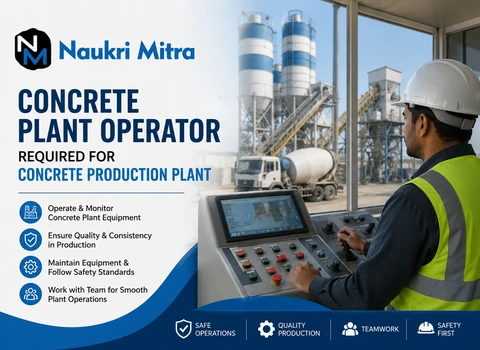
Understanding the Work of a Concrete Plant Operator
A Concrete Plant Operator is responsible for operating the machinery that mixes cement, sand, aggregate, and water into ready-to-use concrete. This role sits at the heart of any concrete production plant, since almost every construction project, from residential buildings to highways, depends on a steady and accurate supply of concrete. Companies recruit for this position because concrete quality directly affects a structure's strength and safety, and a trained operator ensures that every batch meets the required specifications.
Why This Position Matters in Construction Supply Chains
Concrete cannot be stored for long once mixed, so plants need operators who can produce the right quantity at the right time. A small error in proportioning can weaken a batch, delay a pour, or waste raw material. This is why plant operators are treated as skilled technical staff rather than general laborers, even though the job is often listed as a full-time production role.
Where This Kind of Work Usually Happens
Concrete Plant Operators are commonly employed at:
- Ready-mix concrete (RMC) plants supplying construction sites
- Precast concrete manufacturing units
- Batching plants attached to large infrastructure projects
- Construction companies that operate their own on-site mixing plants
In a growing urban center like Hyderabad, Telangana, demand for concrete comes from residential towers, road works, and industrial construction, which keeps such plants operating on a regular schedule.
A Typical Day at the Batching Plant
The day usually begins with a check of raw material stock, followed by calibration of the batching system. The operator monitors the control panel readings, adjusts the mix ratio according to the job order, and starts the mixing cycle. Once concrete is ready, it is loaded into transit mixers for dispatch. Throughout the shift, the operator keeps records of batch quantities, aggregate moisture levels, and any maintenance issues observed in the machinery.
Machines and Instruments Used on the Job
Operators work closely with:
- Batching plant control panels, either manual or computerized
- Weigh hoppers and load cells for measuring material accurately
- Mixer units, either drum type or pan type
- Moisture meters to check aggregate water content
- Conveyor belts and screw conveyors for material transport
Understanding how these instruments work helps the operator maintain consistent concrete grade, which is one of the most valued skills in this trade.
Skills That Set a Good Operator Apart
Technical understanding of mix design, basic mechanical knowledge, and comfort with control panel operations are essential. Just as important are practical habits such as attentiveness to gauge readings, quick response to equipment alerts, and careful record-keeping. Candidates with an ITI qualification in a relevant trade, or a Diploma in Civil or Mechanical Engineering, are often preferred, though hands-on experience with batching systems can be equally valuable.
Physical Demands and Work Schedule
This is a full-time position that may involve rotational shifts, since concrete supply is often needed early morning to match construction schedules. The role requires standing for long periods, occasional climbing on plant structures, and working near moving machinery, so physical fitness and alertness matter.
Staying Safe Around Heavy Plant Machinery
Safety is non-negotiable in this environment. Operators are expected to use PPE such as helmets, safety shoes, gloves, and dust masks, particularly when handling cement dust. Lockout procedures before maintenance, awareness of moving conveyor parts, and careful handling near mixer drums help prevent accidents.
Challenges Operators Commonly Face
Dust exposure, machinery noise, and pressure to meet dispatch deadlines are common challenges. Seasonal weather changes in Telangana can also affect aggregate moisture, requiring quick adjustments to the mix.
Growing Within the Profession
With experience, a plant operator can progress to senior operator, shift in-charge, or plant supervisor roles, eventually overseeing quality control or multiple batching units. Continuous learning about newer automated batching systems adds long-term value to a career in this field.
Salary and Typical Benefits
This Concrete Plant Operator position, based in Hyderabad, Telangana, India, offers a monthly salary of ₹29,500 on a full-time basis. Depending on the employer, additional benefits may include overtime pay, Provident Fund (PF), ESI coverage, festival bonuses, uniforms, and transport or canteen facilities, though these vary by workplace and are not guaranteed.