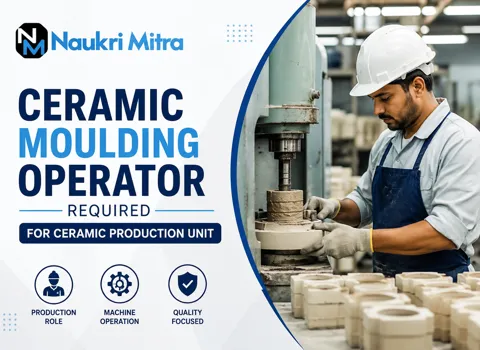
Understanding the Role of a Ceramic Molding Operator
Ceramic production is one of the oldest and most steady manufacturing traditions in India, and Khurja in Uttar Pradesh has long been recognized as a hub for this craft. A Ceramic Molding Operator works inside this industry, turning raw clay and ceramic materials into shaped products that are later fired, glazed, and finished. This role sits at the very beginning of the production process, which makes it one of the most important stations on the shop floor.
This is a Full-time position based in Khurja, Uttar Pradesh, India, and it suits candidates who enjoy hands-on, practical work rather than desk-based tasks.
Why Ceramic Units Look for Skilled Molding Staff
Ceramic factories depend heavily on consistency. If the shaping stage is done poorly, every later stage — drying, firing, glazing — inherits the defect. That is why production units actively recruit operators who understand clay behavior, mould handling, and pressure control. A skilled operator reduces breakage, saves raw material, and keeps daily output steady, which directly affects a factory's ability to meet its order schedules.
What a Typical Working Day Looks Like
The day usually begins with checking the condition of molds and preparing the clay body or slip mixture to the right consistency. From there, the operator loads material into the molding machine or manual press, monitors the shaping cycle, and removes the formed piece carefully to avoid cracks or deformation. Throughout the shift, there is regular checking of thickness, shape accuracy, and surface finish before pieces move to the drying area.
- Preparing and mixing clay or slip to the correct consistency
- Loading and operating molding presses or jigger-jolley machines
- Removing shaped pieces without damage
- Cleaning and maintaining molds between cycles
- Checking dimensions with basic measuring tools
- Reporting faulty moulds or machine issues to the supervisor
Machines and Tools Commonly Used
An operator usually works with plaster of Paris molds, jigger-jolley machines, ram press or hydraulic molding presses, and sometimes semi-automatic pressure casting units. Supporting tools include trimming knives, sponges, calipers and thickness gauges. Understanding how each machine applies pressure or centrifugal force to shape the clay is central to doing the job well, since different products — tableware, sanitaryware or tiles — often need different molding techniques.
Industries and Workplaces That Hire for This Position
This role is common in ceramic tableware factories, sanitaryware plants, tile manufacturing units and pottery workshops. Khurja itself is known across India for its ceramic and pottery output, and many production units in the region hire molding staff on a regular basis. Work usually takes place on a factory floor near kilns, drying chambers and mixing sections, so operators become familiar with the full production sequence rather than working in isolation.
Skills That Make an Operator Stand Out
Technical understanding matters, but so does a steady hand. Employers generally look for a combination of the following:
- Basic knowledge of clay properties and moisture control
- Comfort operating mechanical or semi-automatic presses
- Ability to read simple production instructions or specification sheets
- Attention to detail when checking shape and thickness
- Physical stamina for standing and repetitive movement through the shift
Employers may prefer candidates with relevant machining or tool room training. Depending on the complexity of the work, an ITI in a machining-related trade, a Diploma in Mechanical or Tool and Die Engineering, or equivalent vocational training may be considered suitable. Practical experience with EDM machines, engineering drawings, and precision measuring instruments is often valued as much as formal education, especially for operators who later move into mold-making or maintenance work.
Physical Demands and Shift Pattern
The work involves standing for long periods, lifting molds and wet clay pieces, and repeating similar hand movements throughout the shift. Factories in this sector often run in shifts, so flexibility to work rotating hours can be an advantage. The environment tends to be humid near mixing and molding sections due to the water content in clay, so operators should be comfortable working in such conditions.
Safety Practices on the Production Floor
Handling wet clay, operating presses and working near kilns all carry their own risks, so safety awareness is essential. Common precautions include:
- Wearing gloves and non-slip footwear near wet or dusty areas
- Using aprons to protect clothing from clay and slips
- Keeping hands clear of moving press parts
- Wearing dust masks when handling dry powder materials
- Following lock-out procedures before cleaning or adjusting machinery
PPE such as gloves, aprons and masks is typically provided by the employer, and following these practices consistently helps reduce injuries and long-term health issues linked to dust exposure.
Challenges Operators Often Face
Breakage during handling, mould wear over repeated use, and maintaining consistency across large batches are common day-to-day challenges. Humidity and temperature changes can also affect clay behavior, requiring the operator to adjust technique on the go rather than relying on a fixed routine.
Practical Tips for Doing Well in This Role
Learning to judge clay consistency by touch, rather than relying only on instructions, tends to separate experienced operators from beginners. Keeping molds clean and reporting early signs of wear prevents bigger production losses later. Building a habit of checking each piece before it leaves the station also builds a reputation for reliability, which supervisors notice over time.
Growth Opportunities Within the Same Trade
With experience, a molding operator can progress toward roles handling more complex casting techniques, mold-making, or quality inspection within the same unit. Familiarity with different clay bodies and machine types over time often opens the door to supervisory responsibilities on the production floor, particularly for those who also pick up basic troubleshooting and maintenance skills.
Salary Expectations and Common Benefits
For this position in Khurja, Uttar Pradesh, the monthly salary is ₹30,600. As with many manufacturing roles in India, additional benefits may be available depending on the employer, such as overtime pay, Provident Fund (PF), ESI coverage, annual bonus, uniforms, or transport and canteen facilities. These are common possibilities in the sector, not guaranteed entitlements, and candidates should confirm specific benefits directly with the employer.
Is This Career Path Right for You?
This role suits freshers willing to learn on the job as well as ITI or diploma holders looking to apply their technical training in a real production setting. For those who enjoy working with their hands, don't mind a physically active shift, and want steady, full-time work in a well-established industrial town like Khurja, this profession offers a practical and dependable entry point into India's ceramic manufacturing sector.