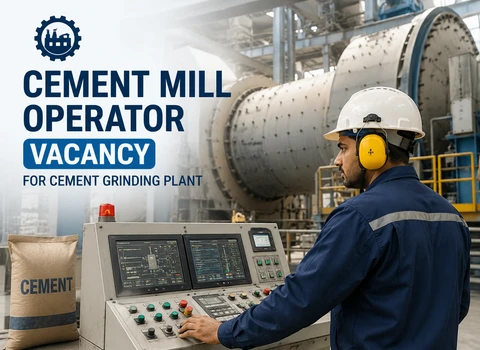
What It Actually Means to Work as a Cement Mill Operator
Walk into any cement grinding plant during a running shift, and you'll notice the mill area rarely goes quiet. There's a constant hum of machinery, the occasional clang of material moving through chutes, and someone standing near the control panel keeping an eye on things. That someone is usually the mill operator. Right now, a Cement Mill Operator Vacancy for a Cement Grinding Plant is open in Satna, Madhya Pradesh, India, and it's a Full-time role that suits people who don't mind being on their feet and paying close attention to machines all day.
Satna has long had a strong footing in cement and mineral processing, so this isn't an unusual line of work to find there. For someone new to the idea, though, it's worth breaking down what the job actually looks like before applying.
<p>Grinding plants take clinker — the semi-finished output of a cement kiln — and grind it down with gypsum and other additives until it becomes the fine powder we know as cement. The operator's job sits right at the heart of that grinding stage.</p>
Why This Position Exists in the First Place
Grinding mills don't run reliably on their own. Feed rates drift, temperatures rise, and vibration patterns change when something inside the mill isn't behaving normally. If nobody catches these shifts early, output quality drops or the mill can shut down unexpectedly, costing the plant hours of production. That's the gap this role fills — someone who watches the numbers, listens to the machine, and steps in before small issues become big ones.
How a Shift Usually Unfolds
No two shifts are identical, but most follow a familiar rhythm. An operator generally handles:
- Starting up and running the ball mill or vertical roller mill as per production schedule
- Watching feed rates of clinker, gypsum, and other additives entering the mill
- Reading control panel data — temperature, pressure, vibration — and flagging anything unusual
- Staying in touch with the control room over fineness targets and output numbers
- Walking the mill floor periodically to check for leaks, blockages or strange noises
- Filling in shift logs so the next operator knows exactly where things stand
It's less about constant physical labor and more about staying alert. That said, you're not glued to a chair either — regular rounds around the equipment are part of the job.
The Equipment You'll Get Familiar With
Ball mills and vertical roller mills form the core of the job, but there's more to it than that. Bucket elevators move material between stages, separators sort particles by fineness, and weighing feeders control the amount of material entering the system at a given time. Dust collection units run alongside all of this to manage airborne particles. Beyond the big machinery, you'll be handling basic hand tools, lubrication equipment, and instruments like pressure gauges and temperature sensors. Many newer plants also use SCADA-based monitoring, so some comfort with control room screens helps, even if it's not something you've used before.
Skills That Actually Come Into Play
Formal knowledge helps, but a lot of this job is learned on the floor. Still, a few things go a long way:
- A working sense of how mechanical and electrical systems interact
- Ability to read gauges and panel data without second-guessing yourself
- Staying calm and thinking clearly when something goes wrong mid-shift
- Not cutting corners while feeding material into the mill
- Being genuinely comfortable working near large, moving machinery
Freshers can enter this field, and so can experienced hands. ITI graduates and diploma holders with mechanical backgrounds often pick things up quickly, but plants typically train new operators on their specific equipment regardless of prior exposure.
What the Work Physically Demands
Expect to be on your feet for long stretches, moving across the plant floor and occasionally climbing stairs or ladders to reach elevated sections of the mill. It gets dusty. It gets loud. That's simply the nature of grinding operations, and most people who take up this line of work adjust to it over the first few weeks. Since grinding units typically operate around the clock, shift work — including night shifts on rotation — comes with the territory.
Staying Safe Around Heavy Machinery
Safety isn't an afterthought here; it's built into how the day runs. Helmets, dust masks, safety shoes, ear protection and gloves are standard PPE across most grinding plants. Lockout-tagout procedures are critical during maintenance windows, and operators are expected to maintain a safe distance from rotating parts unless direct intervention is required. If something looks off — a strange smell, an odd sound, a loose guard — reporting it immediately is part of the job, not optional extra care.
The Harder Parts of the Job
Nobody enjoys the dust on a bad day, and constant vibration from heavy equipment can wear on you over a long shift. Concentration matters more than people expect going in — a moment of distraction near moving parts isn't something you want. Operators who stay in this field tend to develop sharp observational habits early and maintain them.
Where This Can Lead Over Time
Stick with it, and there's real room to grow. Operators who consistently perform well and maintain clean safety records often move into senior operator roles, shift-in-charge positions, or specialised maintenance work within the same plant. It's not a fast climb, but it's a steady one for people willing to keep learning the equipment as it changes.
Pay and What Else Might Come With It
This particular opening pays ₹36,500 a month for a Full-time position based in Satna, Madhya Pradesh, India. Beyond the base salary, some employers add extras like overtime pay, PF, ESI coverage, bonuses, uniforms, or transport and canteen facilities — though what's actually offered varies by plant, so it's worth confirming directly with the employer before assuming anything is included.