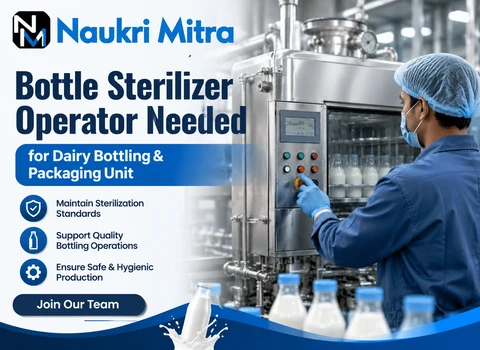
What a Bottle Sterilizer Operator Actually Does in a Dairy Unit
Before milk or curd goes anywhere near a bottle, that bottle has to be spotless. Not just rinsed — properly sterilized, at the right temperature, for the right amount of time. That job falls to the Bottle Sterilizer Operator. In a dairy bottling and packaging unit, this person runs the machine that cleans and sanitizes bottles before they reach the filling line, and honestly, if this step goes wrong, everything after it is at risk.
Why This Job Exists at All
Dairy is unforgiving when it comes to hygiene. Milk sitting in a bottle that wasn't properly cleaned can turn a whole batch bad within hours, sometimes faster in warm weather. So plants don't leave this to whoever's free that day. They put a dedicated person on it — someone who knows the machine, watches the readings, and catches problems before bottles move forward. In dairy hubs across Punjab, including operations based in Mohali, this role is treated as a core part of the packaging line, not an afterthought.
A Shift, Roughly, From Start to Finish
Most days start with a walk-around: check the washing tanks, check the steam lines, make sure the sterilizing chamber is at the correct temperature before a single bottle goes in. Once things are running, the operator loads bottles onto the conveyor, keeps an eye on the cycle as it moves through rinsing, sterilizing, and drying, and pulls out anything that looks off — a chip, a crack, a bottle that didn't dry properly. It's repetitive work, but the attention required doesn't really let up.
What the Job Actually Involves, Day to Day
- Running the bottle washing and sterilizing equipment, start to finish
- Watching water temperature, steam pressure, and sanitizing solution strength — and adjusting when something drifts
- Checking every batch of bottles for damage or leftover residue before it heads to filling
- Noting down cycle timings and output numbers for the shift supervisor
- Flagging strange noises, leaks, or slowdowns to maintenance right away, not at the end of the shift
- Keeping the floor around the machine dry and clear — water pooling near steam equipment is a hazard nobody wants
Where You'll Find This Kind of Work
This role sits inside dairy bottling and packaging units, milk processing plants, and sometimes larger beverage packaging facilities that handle glass or plastic bottling at scale. These places tend to be semi-automated — steam boilers, washing tunnels, conveyor lines — and they run on tight schedules because milk collection doesn't wait around. A unit in Mohali, Punjab, for instance, will typically operate across shifts to keep up with daily intake and packaging targets.
The Equipment You'd Be Working With
Expect to work with bottle-washing tunnels, steam-based sterilizers, hot-water circulation systems, and a control panel that governs cycle settings. Thermometers and pressure gauges come into play too, since the sterilizing cycle only counts if it stays within a safe temperature range. Some units also use caustic soda-based cleaning agents in the wash cycle, so knowing roughly how much to use — and why — matters more than people expect going in.
Skills That Actually Matter Here
You don't need years of experience to start, but you do need to understand what the machine is telling you — temperature readings, pressure gauges, cycle timers. Freshers coming from an ITI background in mechanical or electrical trades usually pick this up faster than most, and diploma holders in mechanical or food processing streams tend to do well too. That said, the single biggest factor isn't a certificate. It's whether you actually notice the small stuff — a hairline crack, a bit of film left on the glass — because that's what separates a good operator from someone just going through the motions.
Habits That Separate Good Operators From Average Ones
- Staying sharp even on the fiftieth identical bottle of the shift
- Actually following the cleaning and hygiene procedure, not just the shortcut version
- Speaking up to the filling team when something's off, instead of letting it pass through
- Being okay working close to steam and hot water for stretches at a time
What the Work Demands Physically
This is a full-time role, and it involves a fair bit of standing — hours of it, near heat and steam, handling bottles on repeat. Some dairy units run rotational shifts based on how much milk comes in that day, so flexibility helps. It gets humid close to the sterilizing chamber, and staying hydrated through a shift isn't optional; it's just part of managing the job well.
Safety Isn't Optional Around Steam and Chemicals
Steam, hot water, and sanitizing agents don't mix well with carelessness. Rubber gloves, an apron, and non-slip footwear are typically part of the standard setup, and goggles come in when handling cleaning solutions directly. One rule that shouldn't be broken: never open or adjust the machine while it's running. If there's steam leaking anywhere, it gets reported immediately — not after the cycle finishes.
What Tends to Trip Up New Operators
The repetition gets to some people before anything else does. Standing near heat for long stretches, listening to machine noise all shift, doing the same visual check over and over — it can wear on focus, especially in the first couple of weeks. Most operators find their rhythm once they learn what the machine's normal sounds and warning signs actually feel like. After that, the job settles into something manageable.
Where This Can Lead Over Time
Stick with it, and there's room to grow within the same dairy unit — moving into a supervisory position on the bottling line, cross-training on filling or capping machines, or shifting toward quality checks on the packaging floor. None of this happens overnight, but plants do notice operators who consistently get the hygiene and process side right, and that tends to open doors internally.
Pay and What Else Might Come With It
This is a full-time position based in Mohali, Punjab, India, with a monthly salary of ₹29,600. Beyond the base pay, some employers offer overtime, PF, ESI coverage, bonuses, uniforms, or canteen access — though what's actually included depends on the specific company, so it's worth confirming during the hiring process rather than assuming.