📚 Table of Contents
- Why More Professionals Are Combining Gig Work With Remote Jobs
- Extra Financial Stability
- Career Growth and Skill Development
- Flexibility and Independence
- Long-Term Career Security
- The Biggest Challenges of Balancing Gig Work and Remote Careers
- Time Management Problems
- Burnout and Mental Fatigue
- Difficulty Separating Work and Personal Life
- Managing Multiple Priorities
- How to Successfully Balance Gig Work and a Remote Career
- Create a Clear Weekly Schedule
- Use Time Blocks
- Avoid Overbooking Your Day
- Set Boundaries Between Your Main Job and Gig Work
- Never Mix Work Hours
- Create Separate Workspaces if Possible
- Learn to Say No
- Prioritize High-Value Gig Work
- Choose Projects That Match Your Skills
- Build Repeat Client Relationships
- Use Productivity Systems That Actually Work
- Use Task Management Tools
- Follow the Most Important Task Method
- Batch Similar Tasks Together
- Protect Your Physical and Mental Health
- Schedule Real Breaks
- Get Enough Sleep
- Exercise Regularly
- Watch for Signs of Burnout
- Communicate Clearly With Clients and Employers
- Set Realistic Deadlines
- Be Transparent About Availability
- Maintain Professional Standards
- Build a Financial Plan Around Multiple Income Streams
- Track All Earnings and Expenses
- Create an Emergency Fund
- Avoid Lifestyle Inflation
- Real-Life Example of Balancing Remote Work and Freelancing
- Best Careers That Pair Well With Gig Work
- Content Writing and Copywriting
- Graphic Design
- Web Development
- Virtual Assistance
- Online Tutoring or Coaching
- Signs You May Need to Reduce Your Workload
- How Technology Makes Balancing Multiple Careers Easier
- Future Trends in Remote Work and Gig Careers
- FAQs
- Can you work a remote job and do freelance work at the same time?
- How many hours should I spend on gig work each week?
- How do I avoid burnout while managing multiple jobs?
- What are the best side gigs for remote workers?
- Is gig work stable enough for long-term income?
- Conclusion
How to Balance Gig Work and Remote Careers Together
The modern workforce looks very different from what it did a decade ago. Today, many professionals no longer rely on a single source of income. Instead, they are combining remote careers with freelance projects, side gigs, consulting work, or online services to create more financial security and flexibility. For some people, gig work starts as a way to earn extra income. For others, it becomes a creative outlet or a long-term career strategy. At the same time, remote jobs continue to grow across industries like marketing, customer support, software development, design, education, and finance. Balancing both worlds can sound exciting, but it also comes with challenges. Managing deadlines, avoiding burnout, staying productive, and protecting personal time become essential. Without a proper system, juggling a remote career and gig work can quickly become overwhelming. The good news is that it is possible to build a sustainable work-life balance while handling multiple income streams. With smart planning, realistic expectations, and healthy boundaries, you can enjoy the benefits of both remote employment and freelance flexibility. In this guide, you will learn practical strategies to balance gig work and remote careers together without sacrificing your productivity, mental health, or personal life.Why More Professionals Are Combining Gig Work With Remote Jobs
The rise of remote work has opened new opportunities for professionals around the world. People now have more control over where and how they work. At the same time, digital platforms have made gig work more accessible than ever. A remote employee can easily take on freelance writing projects, virtual assistance work, graphic design assignments, tutoring sessions, or social media management during flexible hours. There are several reasons why professionals choose this path.Extra Financial Stability
Relying on one income source can feel risky, especially during uncertain economic periods. Gig work provides additional income that can help cover savings goals, debt payments, travel plans, or emergency expenses. For example, a remote customer support specialist may also work as a weekend freelance content writer to increase monthly earnings.Career Growth and Skill Development
Side gigs often help professionals learn new skills that their primary job may not provide. Someone working remotely in marketing might explore freelance opportunities in video editing, copywriting, or consulting. Over time, these additional skills can strengthen career opportunities and increase earning potential.Flexibility and Independence
Gig work allows people to choose projects that align with their interests and schedule. This flexibility is one reason why many professionals enjoy balancing freelance work with remote employment.Long-Term Career Security
Building multiple income streams creates more career resilience. If one opportunity changes, another source of income remains available. Professionals who develop freelance clients alongside their remote jobs often feel better prepared for career transitions.The Biggest Challenges of Balancing Gig Work and Remote Careers
Although the benefits are attractive, managing both responsibilities can create pressure if not handled properly. Understanding the common challenges helps you prepare realistic solutions before problems grow.Time Management Problems
One of the biggest struggles is finding enough time for everything. Remote jobs already require meetings, deadlines, and communication. Adding gig work on top can make schedules feel crowded. Without clear planning, work hours can slowly extend into late nights and weekends.Burnout and Mental Fatigue
Working continuously without proper rest can damage productivity and motivation. Many people underestimate how mentally exhausting it is to switch between different tasks and clients. Burnout often starts quietly. You may notice reduced focus, constant tiredness, irritability, or loss of creativity.Difficulty Separating Work and Personal Life
Remote workers already face challenges in creating boundaries between home and work. Adding freelance projects can blur those lines even more. Some professionals end up working during meals, family time, or late at night because there is always another task waiting.Managing Multiple Priorities
Different clients, managers, and deadlines can create confusion without an organized system in place. For example, imagine attending a remote team meeting while responding to freelance client revisions at the same time. Multitasking in this way usually lowers the quality of work.How to Successfully Balance Gig Work and a Remote Career
Balancing remote work and side gigs is not about working every available hour. The goal is to create a system that supports income growth without damaging your health or performance. Here are practical strategies that make a real difference.Create a Clear Weekly Schedule
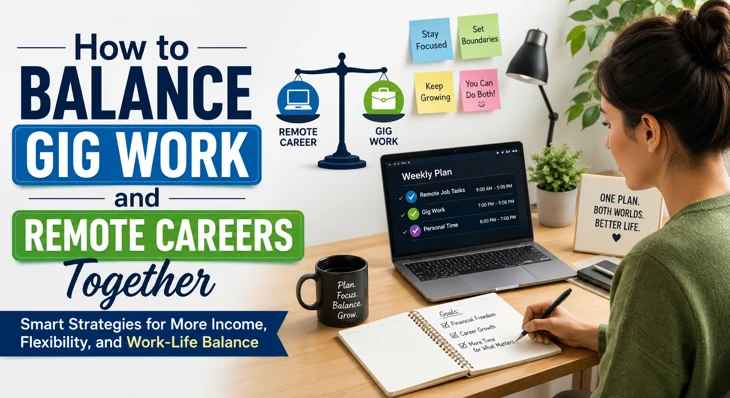
One of the best ways to manage freelance work and remote jobs is through structured scheduling. Instead of deciding daily when to work on side gigs, plan your week in advance.Use Time Blocks
Assign specific hours for different tasks. For example:- Remote job tasks: 9 AM to 5 PM
- Freelance projects: 7 PM to 9 PM
- Exercise or personal time: 6 PM to 7 PM
Avoid Overbooking Your Day
Many professionals make the mistake of filling every free hour with work. Leaving space between tasks improves energy levels and reduces stress. You do not need to accept every freelance project to be successful.Set Boundaries Between Your Main Job and Gig Work
Keeping clear boundaries is essential when balancing multiple professional responsibilities.Never Mix Work Hours
If your remote employer expects your full attention during office hours, avoid working on freelance tasks then. This protects professionalism and helps maintain trust with your employer.Create Separate Workspaces if Possible
Even a small distinction helps mentally separate different types of work. For example:- One desk setup for your remote job
- Another area for freelance projects
Learn to Say No
Not every opportunity is worth accepting. If your schedule is already full, turning down extra projects may actually protect your long-term productivity and reputation.Prioritize High-Value Gig Work
Many people fall into the trap of taking too many low-paying freelance projects. Instead of chasing volume, focus on gigs that offer better income, flexibility, or long-term growth.Choose Projects That Match Your Skills
Working on projects aligned with your strengths saves time and reduces stress. For example, if you already work remotely as a graphic designer, offering freelance branding packages may feel easier than learning an entirely unrelated service.Build Repeat Client Relationships
Constantly finding new freelance clients can become exhausting. Repeat clients reduce marketing effort and create more predictable income. A remote developer who regularly handles monthly website maintenance for the same clients will likely experience less stress than someone constantly searching for one-time projects.Use Productivity Systems That Actually Work
You do not need complicated productivity methods to balance multiple jobs. Simple systems are often more effective.Use Task Management Tools
Apps like Trello, Notion, Google Calendar, or Todoist help organize deadlines and priorities. Tracking everything in one place prevents forgotten tasks.Follow the Most Important Task Method
Start each day by identifying the top one or two tasks that truly matter. Completing high-priority work first improves focus and prevents procrastination.Batch Similar Tasks Together
Switching between unrelated tasks repeatedly wastes mental energy. Try grouping similar work together. For example:- Answer emails at one scheduled time
- Complete client calls together
- Handle content writing tasks in one focused session
Protect Your Physical and Mental Health
Long-term success depends on sustainability. No amount of extra income is worth constant exhaustion.Schedule Real Breaks
Short breaks during the day improve concentration and reduce fatigue. Stepping away from screens for even ten minutes can refresh your energy.Get Enough Sleep
Many professionals sacrifice sleep to manage extra work. Unfortunately, poor sleep eventually lowers creativity, focus, and decision-making ability. Consistent rest helps maintain productivity across both remote jobs and freelance work.Exercise Regularly
Even simple activities like walking, stretching, or yoga help reduce stress. Physical movement also improves mental clarity during busy work periods.Watch for Signs of Burnout
If you constantly feel overwhelmed, emotionally drained, or unmotivated, it may be time to reduce your workload temporarily. Ignoring burnout usually creates larger problems later.Communicate Clearly With Clients and Employers
Strong communication prevents misunderstandings and scheduling conflicts.Set Realistic Deadlines
Do not promise faster turnaround times than you can realistically handle. It is better to deliver quality work slightly later than to produce rushed results.Be Transparent About Availability
Freelance clients appreciate honest communication. For example, you can explain that you are available for revisions in the evenings or on weekends. Clear expectations reduce unnecessary stress.Maintain Professional Standards
Balancing multiple jobs should never reduce work quality. Consistent communication, punctuality, and reliability help protect your reputation in both roles.Build a Financial Plan Around Multiple Income Streams
Managing two or more income sources requires smart financial organization.Track All Earnings and Expenses
Freelancers often forget to monitor income carefully. Using budgeting apps or spreadsheets helps track profits, taxes, and business expenses.Create an Emergency Fund
Gig income can fluctuate monthly. Having savings reduces stress during slower periods.Avoid Lifestyle Inflation
As extra income grows, many people immediately increase spending. Instead, consider using additional earnings for investments, debt reduction, or long-term financial goals.Real-Life Example of Balancing Remote Work and Freelancing
Consider Sarah, a remote digital marketing specialist working full-time for a software company. At first, she accepted freelance social media projects whenever opportunities appeared. Within a few months, she felt exhausted from working late every night. Instead of quitting freelancing entirely, Sarah changed her approach. She limited herself to two freelance clients at a time, blocked specific evening hours for client work, and stopped checking emails after 9 PM. She also increased her freelance rates so she could earn the same income while working fewer hours. As a result, she maintained a better work-life balance while still growing an additional income stream. Her experience highlights an important lesson: success comes from smart systems, not endless working hours.Best Careers That Pair Well With Gig Work
Some remote careers naturally work better alongside freelance opportunities. Here are a few examples.Content Writing and Copywriting
Remote writers can easily handle freelance blogs, website copy, or editing projects during flexible hours.Graphic Design
Design professionals often balance full-time remote roles with branding, logo, or social media design projects.Web Development
Developers frequently take on freelance website projects alongside remote software positions.Virtual Assistance
Virtual assistants may work remotely for one company while supporting small businesses on the side.Online Tutoring or Coaching
Professionals with specialized knowledge can earn additional income through online teaching or consulting.Signs You May Need to Reduce Your Workload
Balancing multiple jobs should improve your life, not damage it. Sometimes, reducing workload becomes necessary. Watch for these warning signs:- Constant exhaustion
- Missed deadlines
- Poor work quality
- Lack of motivation
- Increased anxiety or stress
- No personal or family time
- Difficulty sleeping
How Technology Makes Balancing Multiple Careers Easier
Modern technology plays a huge role in helping professionals manage remote jobs and gig work effectively. Cloud storage, communication apps, project management tools, invoicing software, and scheduling platforms simplify daily operations. For example:- Slack improves team communication
- Zoom supports remote meetings
- Google Drive keeps files organized
- Calendly helps schedule client calls
- QuickBooks assists with freelance finances