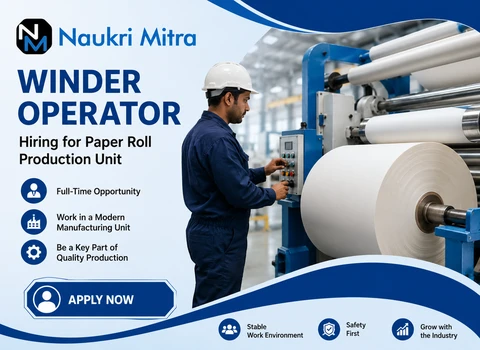
Understanding What a Winder Operator Does in a Paper Mill
A Winder Operator works at one of the final and most important stages of paper manufacturing. After large paper reels come off the main production machine, they need to be cut, rewound, and packed into smaller, usable rolls. This is where the winder operator steps in. The job involves operating the winding machine that converts jumbo paper reels into finished rolls with the correct width, length, and tightness, ready for dispatch to customers or further processing units.
Why Paper Manufacturers Need This Role
Paper roll production cannot be completed without proper winding. If a roll is wound too loose or too tight, it can wrinkle, tear, or become unusable during printing, packaging, or converting. Companies hire dedicated operators for this reason, since a trained person understands tension control, roll alignment, and cutting accuracy far better than an untrained worker. This makes the position a core part of any paper roll production unit.
A Look at the Daily Work Routine
On a typical shift, a machine operator starts by checking the winding machine, blades, shafts, and core holders before production begins. Once the jumbo reel is loaded, the operator closely monitors the unwinding and rewinding processes, adjusts tension settings, and watches for paper breaks or uneven winding. Rolls are then trimmed to the required size, weighed, labelled and moved for packing. Regular quality checks are done throughout the shift to avoid rejections.
Main Responsibilities on the Floor
- Loading and unloading paper reels safely
- Setting correct tension, speed and cutting width
- Monitoring roll diameter and paper thickness
- Identifying and fixing paper breaks quickly
- Inspecting rolls for defects like wrinkles or misalignment
- Recording production data and reporting machine issues
- Keeping the work area clean and free of paper waste
Where Winding Professionals Usually Work
This role is common in paper mills, tissue paper units, corrugated board plants, and paper roll production units. Such facilities usually run on a shift basis and require operators who can work in a fast-paced, production-driven environment. This particular opening is based in Nepanagar, Madhya Pradesh, India, a region known for its paper industry activity.
Machines and Tools Involved
An operator regularly works with rewinders, slitting blades, tension control panels, core chucks, and digital thickness gauges. Basic tools like spanners, cutters and measuring tapes are also used for adjustments and quality checks. Familiarity with control panel readings helps in catching problems early, before they affect an entire batch of rolls.
Skills That Make an Operator Reliable
Beyond machine handling, employers value technicians who can think quickly during breakdowns. Good hand-eye coordination, attention to detail, a basic understanding of mechanics, and the ability to read simple production reports are all useful. A production worker who communicates clearly with supervisors about quality issues tends to perform better over time.
Suitable Educational Background
Freshers, ITI candidates, and diploma holders in mechanical or related trades are often preferred for winder operator positions. Employers may also consider candidates with practical training in machine operation, engineering drawings, or precision measuring instruments, since hands-on exposure is often valued as much as formal qualifications.
Physical Demands and Shift Expectations
The job involves standing for long hours, lifting paper cores, and working near moving machinery. Since paper mills typically run continuously, this is a full-time role that may include rotational shifts, including night duty. Reasonable physical fitness and the ability to stay alert during repetitive tasks are important for this line of work.
Safety Practices Every Operator Should Follow
Working around winding machines involves moving blades, rotating shafts and heavy rolls, so safety cannot be ignored. Operators are usually expected to wear PPE such as safety shoes, hand gloves, ear protection, and safety goggles. Following lock-out procedures during maintenance, avoiding loose clothing near rotating parts, and reporting faulty guards immediately are basic habits that prevent accidents on the floor.
Challenges Faced on the Job
Frequent paper breaks, sudden machine stoppages, and the need to maintain consistent roll quality within production targets are common challenges. Noise levels and continuous standing can also be tiring. Operators who stay patient, follow standard procedures and keep the machine well maintained usually face fewer disruptions during their shift.
Building a Long-Term Career in Paper Production
With experience, a winder operator can grow into roles such as senior operator, shift-in-charge, or production supervisor within the paper manufacturing sector. Learning additional machine sections, understanding quality standards, and gaining exposure to different paper grades can support this growth over time.
Salary and Possible Benefits
This Winder Operator position in Nepanagar, Madhya Pradesh, India offers a monthly salary of ₹31,200 on a full-time basis. Depending on the employer, workers in this field may also receive benefits such as overtime pay, PF, ESI, bonus, uniforms, transport or canteen facilities, though these vary from one company to another.