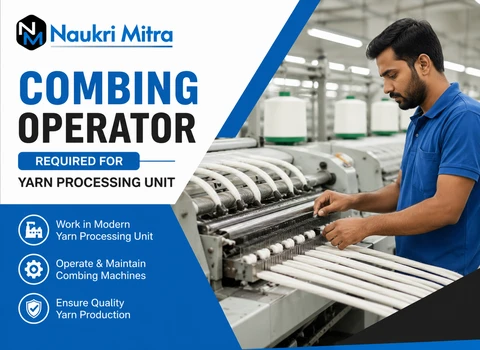
Understanding the Role of a Combing Operator in Textile Manufacturing
A Combing Operator works at one of the most important stages of yarn production, where raw cotton or fiber is refined into smooth, uniform strands ready for spinning. This Combing Operator Required for Yarn Processing Unit position is based in Tiruppur, Tamil Nadu, India, and is offered on a Full-time basis. Anyone researching this career for the first time will find that it blends machine handling, quality checking, and process discipline, making it a solid entry point into the spinning and textile industry.
Why Yarn Processing Units Look for Skilled Machine Operators
Combing is a precision step that removes short fibers, dust, and impurities from cotton slivers before spinning. If this stage is handled poorly, the final yarn turns out uneven or weak. That is why textile units prefer trained operators who understand fiber behavior, machine settings, and the importance of consistent monitoring, rather than someone simply pressing buttons.
What a Typical Workday Looks Like
A production worker on the combing line usually starts the shift by checking the combing machine, lap feed, and settings from the previous shift. The core tasks include:
- Loading cotton laps onto the combing machine correctly
- Monitoring fiber feed speed and noil percentage
- Checking sliver quality at regular intervals
- Identifying breaks, uneven feeding, or fiber tangling
- Recording production output and machine stoppages
- Coordinating with the shift supervisor on quality issues
Machines and Tools Used on the Floor
An equipment operator in this role works closely with the combing machine, lap former, and drawing frame. Common instruments include lap weight scales, sliver testers, and noil percentage gauges. Many units in Tamil Nadu also use digital display panels on modern combing machines, so basic comfort with numeric readouts is helpful.
Skills That Make a Technician Successful Here
Technical skills matter, but practical shop-floor sense often makes the real difference. Useful skills include:
- Basic understanding of fiber and yarn quality parameters
- Ability to read machine gauges and adjust settings
- Attention to detail while inspecting sliver output
- Comfort working with fast-moving mechanical parts
- Basic record-keeping and shift reporting
Freshers, ITI candidates, and diploma holders in textile technology or mechanical trades are generally well suited for this position. Prior floor experience in spinning mills is valued, though many units also train motivated freshers on the job.
Where Combing Operators Typically Work
This kind of work is common in spinning mills, yarn processing units, and integrated textile plants, especially in textile clusters like Tiruppur, which is known for its concentration of knitwear and yarn manufacturing units. The work environment is usually a factory floor with continuous machine noise, moderate humidity control for fiber handling, and a steady work pace through the shift.
Physical Demands and Shift Pattern
The job involves standing for long periods, walking between machines, and occasional lifting of cotton laps. Since yarn processing units often run in rotating shifts to keep machines running continuously, plant operators should be prepared for shift-based schedules, including night shifts on a rotational basis.
Staying Safe on the Combing Floor
Safety is a routine part of daily work. Workers are generally expected to use PPE such as ear protection due to machine noise, dust masks, and safety footwear. Following lock-out procedures before clearing machine jams and keeping walkways clear of fiber waste are common safety practices in most units.
Common Challenges and Practical Tips
New operators often find it challenging to judge sliver quality by touch and sight in the early weeks. Regularly observing experienced technicians, asking questions during quality checks, and keeping a personal note of common fault patterns can speed up learning. Consistency in machine monitoring, rather than reacting only when a problem occurs, tends to separate reliable operators from the rest.
Growing Within the Same Trade
With experience, a combing operator can progress toward roles such as senior machine operator, shift-in-charge on the combing line, or quality checker within the spinning department. Consistent performance and a good understanding of machine settings often open doors to handling more advanced combing machines or supervising a small team on the floor.
Salary and Common Workplace Facilities
The monthly salary for this Combing Operator position in Tiruppur, Tamil Nadu is ₹29,200. Depending on the employer, workers in yarn processing units may also receive benefits such as overtime pay, PF, ESI, festival bonus, uniforms, transport facility, or canteen access, though these vary from unit to unit and are not guaranteed.