
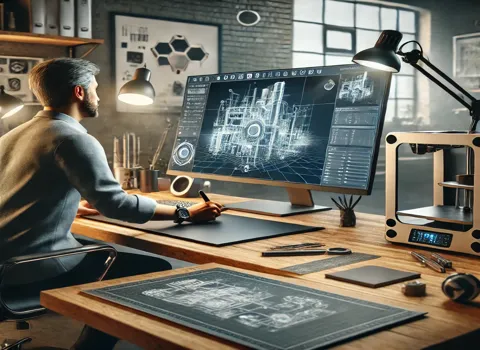
This job is for someone who can take a rough sketch and turn it into something a factory can actually build. We're hiring a Virtual 3D Industrial Designer to work fully remote, and the pay is $110,500 a year. No office, no commute — just the tools and the work.
Industrial design isn't only about how something looks. A chair has to hold weight correctly. Packaging has to survive a warehouse. You'll build 3D models and prototypes that get tested against those kinds of realities, not just admired on a screen. Your work goes into production. It doesn't sit in a folder.
Day to day, you'll spend time in CAD software, building and rendering models, running basic simulations to see how a design holds up, and putting together prototypes people can actually react to instead of just imagine.
A Bachelor's degree is required, along with at least 3 years of hands-on experience in industrial or product design. Beyond that:
People browsing roles like this on Naukri Mitra sometimes assume remote design work means working alone. It doesn't have to. A lot of that depends on how the team actually runs things day to day, which is something worth asking about in any interview.
You'll notice it. Teammates start routing decisions through you before you ask them to. A stakeholder looks at your prototype and just says yes, without three follow-up meetings. A design you built gets manufactured close to exactly how you drew it. None of that happens overnight, but it's the actual marker of whether this is working.
Remote here doesn't mean quiet. Design reviews happen live. Feedback is direct, not softened into vague notes. If someone solves a hard problem, people notice and say so. If something doesn't work the first time, it gets treated as useful information, not a mistake to be embarrassed about.
Decisions get made in conversation, not buried in approval chains. If you have a good argument for a design choice, you'll get heard, and often you'll be the one making the final call.
Some people in this role go deep on the craft and become the person others turn to for hard design problems. Others move into leading junior designers. Both paths exist here, and which one you take is up to you and how your interests change over time. You'll also get visibility into the whole product lifecycle — from first sketch to manufacturing — which is broader exposure than a lot of design jobs offer.
Send your portfolio along with a short note on the kind of design problems you actually enjoy working on. We're more interested in how you think through a problem than how polished your final renders look — though both help.
This role is open to remote applicants worldwide, including the USA, India, and other eligible regions. Check our global hiring locations page for details on eligibility where you live.