What Does a Shrink Wrapping Machine Operator Actually Do?
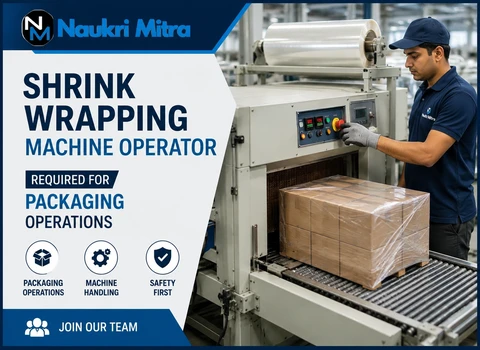
Walk into any packaging hall, and you'll usually spot a shrink wrapping machine tucked near the end of the line, right before goods leave for dispatch. The person running it is the Shrink Wrapping Machine Operator. Their job is straightforward on paper: wrap products in plastic film, then pass them through a heat tunnel that shrinks the film tight around the item. In practice, it takes a steady hand and a good eye to keep the line moving without wasting film or damaging stock. This is a Full-time position based in Silvassa, Dadra and Nagar Haveli, and Daman and Diu, India, and it's a good fit for someone who doesn't mind being on their feet and likes work with visible, immediate results.
Why This Role Exists on Almost Every Packaging Line
Nobody wants a product arriving damp, dusty, or tampered with. Shrink film solves that problem cheaply and quickly, which is exactly why so many companies build it into their packaging process. A tight wrap also makes a product look presentable on a shelf, which matters more than people assume in retail-facing industries. Since dispatch schedules run on tight timelines, a factory can't really afford unpredictable output at this stage. That's the whole reason the role gets staffed carefully rather than left to whoever is available that day.
How a Shift Usually Plays Out
Most shifts start the same way: check the machine, check the heat tunnel, check the film rolls, and only then start production. Once things are running, the operator loads products onto the conveyor, feeds the film so it wraps evenly, and keeps an eye on the sealing process as items pass through. Small problems come up constantly on this job — a seal that looks loose, a jam in the film feed, a tunnel that's running a touch too hot. Catching these early is really the difference between a smooth shift and a messy one.
What the Job Involves Day to Day
- Running the shrink wrapping machine and heat tunnel to meet daily production targets
- Loading and aligning products so the film wraps consistently
- Adjusting heat and conveyor speed depending on the product being packed
- Checking finished packs for tight, bubble-free seals before they move on
- Flagging machine faults to maintenance instead of trying to force a fix
- Keeping basic records of output and film wastage
Where Operators End Up Working
You'll find this role across FMCG plants, food and beverage packing units, pharmaceutical packing sections, and general consumer goods manufacturing. It's almost always in a dedicated packaging department or packing hall, and on busier lines there might be several machines running side by side to keep up with dispatch volumes.
The Equipment You'll Be Handling
Semi-automatic and fully automatic shrink-wrapping machines are the core of the job, along with heat sealers, the heat tunnel itself, film cutters, and the conveyor system that feeds everything through. It's not all guesswork either — thermometers are used to check tunnel temperature, and simple gauges help confirm film thickness. Getting comfortable with the temperature dials and conveyor speed controls tends to matter more than any single piece of theory.
Skills That Separate a Good Operator from an Average One
Understanding how heat-shrink film behaves at different temperatures is very helpful, especially when something isn't sealing properly and needs a quick diagnosis. But the practical side counts just as much — noticing a defect at a glance, staying alert through a long shift, and actually following the standard procedure instead of cutting corners when the line gets busy.
Where Training Fits In
Plenty of packaging units train freshers directly on the machine, so formal qualifications aren't always mandatory. That said, employers may prefer candidates with relevant machining or tool room training. Depending on how complex the work gets, an ITI in a machining-related trade, a Diploma in Mechanical or Tool and Die Engineering, or similar vocational training can work in the candidate's favor. Practical exposure to EDM machines, engineering drawings, and precision measuring instruments is often valued just as much as the certificate itself.
What the Body Goes Through on This Job
Expect to be standing for most of the shift, doing some light to moderate lifting, and working fairly close to the heat coming off the tunnel. Shift work is common, depending on how the plant schedules production, which may involve rotational or night shifts. The area near the tunnel does get warm, so it helps to be someone who isn't bothered by that kind of environment.
Staying Safe Around Heat and Machinery
Because the process runs at high temperatures, operators are usually expected to wear PPE — heat-resistant gloves, safety shoes, and sometimes an apron. Beyond that, following lockout procedures before cleaning or servicing the machine matters, as does keeping loose film scraps off the floor and staying clear of the hot tunnel surface. None of this is complicated, but skipping it is how minor accidents happen.
The Problems That Come Up Most Often
Film wastage is a recurring headache, and so are jams that show up right when the line is running fast. Getting a consistent seal across products of different shapes and sizes takes some getting used to as well. Operators who start recognizing these patterns instead of just reacting to them tend to have far fewer bad shifts over time.
Growing Within the Packaging Field
Time on the job usually opens doors to roles such as senior machine operator, packaging line supervisor, or shift in-charge, where the focus shifts toward training new staff and overseeing the entire line rather than just one machine. Operators who gain experience across different machine types tend to have an easier time moving up, simply because they bring greater versatility to the table.
Pay and What Else Might Come With It
For this Full-time role in Silvassa, Dadra and Nagar Haveli and Daman and Diu, India, the monthly salary is ₹23,000. Depending on the employer, additional benefits such as overtime pay, PF, ESI, bonus, uniforms, transport, or canteen facilities may also be offered — though none of these are guaranteed and they tend to vary from one company to another.
Is This the Right Career Move for You?
Whether you're fresh out of an ITI course, hold a diploma, or already have some years on a factory floor, this line of work offers a genuine, hands-on way into manufacturing and packaging. It rewards people who are willing to learn the machine properly, stick to safety practices, and take quality checks seriously rather than treating them as an afterthought — and over time, that consistency is usually what gets noticed.