
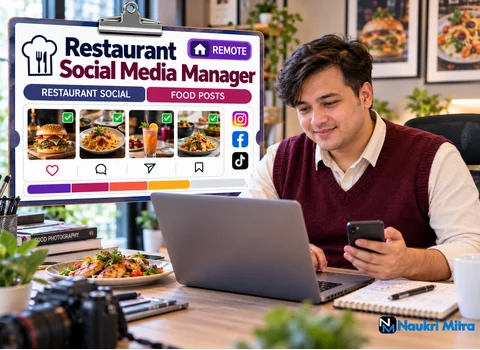
The thali special goes live at 10:45, not at one o'clock. By one, the office crowd has already chosen where to eat, and a post that lands mid-rush only reaches people holding a plate. Posting before hunger peaks, while someone is still deciding, is the whole craft in miniature: you think like the kitchen and the customer at the same time. These online restaurant social media manager jobs pay $12 per hour (USD) for part-time hours, all from home, and people in any country can apply. You shoot and post reels and offers, schedule content, answer reviews and read the numbers to plan the next week.
Most of your photos will come from a smartphone, either your own or one held by a staff member you guide over a video call. Daylight from a side window beats any overhead tube light in a restaurant. Put the plate near the glass, turn off the ceiling lights so colours stay true, and shoot from roughly 45 degrees for curries and thalis, straight down for pizzas and platters.
One rule is firm: the picture must show the dish a customer will actually receive. No borrowed stock images, no extra paneer that never reaches the box, no filters that turn a dal orange. A diner who feels misled leaves a one-star review, and that becomes your problem.
Short video carries most of the reach on Instagram and Facebook for food pages. In CapCut you trim raw clips into reels of fifteen to thirty seconds: the tadka hitting hot oil, the cheese pull, the biryani lid lifting. Add clean captions for people watching without sound, keep text away from the edges where the app interface sits, and use music that is licensed for business accounts. Hook in the first second and show the offer before the end.
Offer posts, story frames, festival greetings and digital menu cards are built in Canva. Set up a brand kit for each client with their colours, logo and two fonts, then save templates so a Tuesday combo can be updated in five minutes. Keep prices readable on a phone, mark veg and non-veg clearly, and state offer terms plainly: valid days, timings, dine-in or delivery.
Meta Business Suite lets you plan and schedule posts and stories for linked Facebook and Instagram accounts, answer messages from one inbox, and check insights. You will usually be given access as a partner or with a defined role, which means you never need the owner's personal password. Check which posts earned saves, shares and profile visits rather than likes alone, and when followers are most active. That reading shapes the next week's plan.
For a local restaurant, the Google Business Profile often brings more walk-ins than Instagram. Keep opening hours, holiday closures, the menu link and fresh photos current, add short updates for new dishes, and reply to every review. Thank people for praise by naming what they liked. For complaints, apologise without arguing, give a way to reach the manager, and pass the details to the owner privately.
The same tone applies to delivery apps. Owners also want help with Zomato and Swiggy listings: accurate dish photos, descriptions that mention portion and spice level, and bestsellers placed first. Never write fake reviews, never offer discounts in exchange for five stars, and never ask only happy customers to review while steering unhappy ones elsewhere. Platform policies prohibit these practices, and they can get a listing penalised.
Indian restaurants live by the festival calendar. Plan Navratri thalis, Diwali sweet boxes, Christmas bakes, New Year party packages, Ramzan iftar menus and Onam sadya weeks at least three weeks ahead, because the kitchen needs time to cost the dish and you need time to shoot it. Add cricket nights and monsoon chai-and-pakora days, and keep one shared calendar with the owner.
Take an invented client: a small cloud kitchen in Pune selling rolls and rice bowls, open for delivery only. On Monday you review last week's insights and draft five posts in a shared sheet. Tuesday is a video call: the chef plates three dishes by the window while you direct angles, and he sends the raw clips over cloud storage. Wednesday you cut two reels in CapCut and design a weekend combo in Canva. The owner asks for one revision, a bigger price tag, and you fix it the same afternoon. Thursday you schedule everything in Meta Business Suite and reply to eight Google and delivery-app reviews. Friday you send a short report on what worked. Hours shift with the client's plans and are not fixed.
That is the real restaurant social media manager job description in practice: briefs, drafts, a revision round or two, and steady deadlines tied to service times.
You need a smartphone with a decent camera, a laptop or desktop that runs CapCut and Canva smoothly, and broadband that holds steady, with phone data as a fallback, since video files are large. Store client files in cloud folders named by date and version, such as "rollbox_diwali_reel_v2", so nothing gets lost. Treat customer names and messages from reviews or the inbox as private, and never share login access beyond what the client approved.
Single-outlet cafes, restaurant groups and cloud kitchens all hire for this work. Restaurant social media manager jobs for freshers do exist, because a strong portfolio can stand in for years of experience. Experience running food or hospitality pages is preferred but not compulsory, and formal education is optional.
Build a portfolio from real plates: cook at home, shoot a local bakery for free in return for permission to show the work, or run a page for a family business. Show three reels, some Canva offers and sample review replies. Many clients send a test brief, for example one reel and two captions for a single dish.
On your restaurant social media manager resume, list the pages you handled, the tools you used and concrete outcomes in plain words, without invented figures. Typical restaurant social media manager interview questions cover how you would answer an angry review, how you pick posting times and how you plan a festival week. A restaurant social media manager certification is optional; free or low-cost courses from Meta Blueprint or Google on digital marketing can help you learn, though clients judge your reels first. To find clients, message nearby restaurants with a sample post of their own dish and ask happy clients for referrals.
On restaurant social media manager salary per hour, this listing is clear: $12 per hour (USD), part-time. Any incentive depends on the individual employer and is not promised here. The core restaurant social media manager skills are food photography, short video editing, clear copy, polite review handling and reading insights.
A food influencer builds a personal audience and is paid to feature places on their own channel. You work behind the brand, for the restaurant's account, and your success is the restaurant's footfall and orders rather than your follower count.
Restaurant marketing on Instagram has grown alongside delivery apps, and the work can lead to handling several outlets, running paid ads or wider hospitality marketing. People who prefer a few long-term clients often look for freelance restaurant social media manager jobs rather than one employer.
Say no to anyone wanting a registration, kit or activation fee, a month of free content dressed up as a "trial", your bank OTP or UPI PIN, or who only talks through a WhatsApp "HR" number with no business you can check. Be wary of cheques that overpay with a request to refund the difference, and of clients who want every final file before the agreed payment.
Applying is free. If restaurant social media manager work from home suits you, or you want part time restaurant social media manager jobs that fit around study or another role, send a short note, one reel you edited and a link to a food page you have run. An honest sample says more than a long cover letter.