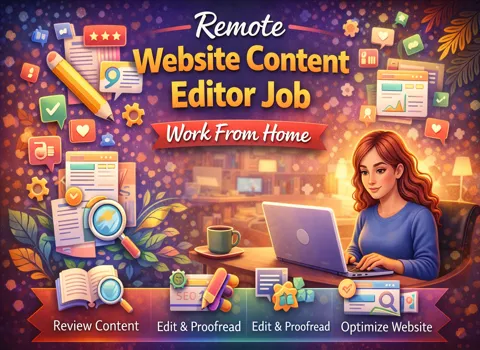
Remote Website Content Editor – Work From Home Opportunity
A well-designed website is much more than a source of information—it’s the foundation of how users perceive and interact with a brand. Every detail, from the words on the page to the way content is organized, shapes whether visitors stick around, trust the message, and ultimately take action. As a Remote Website Content Editor, you’ll be at the heart of this process, making sure every piece of website content is accurate, engaging, and aligned with user needs and brand messaging.
This work-from-home job gives you the unique opportunity to shape the digital content that businesses rely on every day. In this content editing role, you’ll balance creative thinking with an eye for detail, using your skills to boost user experience and brand messaging. Your edits will help drive engagement, build trust, and improve website performance—all from the comfort of your remote workspace.
Annual Salary: $76,000 – A Competitive
Remote Job Salary for Website Content Editors
Role Overview
As a website content editor, you’ll be responsible for keeping digital content up-to-date, clear, and in line with the company’s brand voice. Your main tasks include editing website content for quality, optimizing pages to improve the user experience, and ensuring every piece supports the overall brand messaging. You’ll play a key role in digital content management and content optimization across all platforms.
Editing website content goes beyond fixing grammar or typos. You’ll dive into the purpose behind each page—whether you’re working on product descriptions, landing pages, or knowledge base content. The aim is to make every section of the site accessible, compelling, and easy to navigate, ensuring consistent brand voice and content clarity throughout.
What This Role Contributes
The influence of a website content editor extends well past editing lines of text. Thoughtfully structured and optimized content not only boosts website readability but also strengthens brand credibility and increases user engagement. When digital content is managed effectively, it improves SEO performance and helps the brand stand out online.
By focusing on optimized content and brand consistency, this role helps to:
- Enhance website readability and user engagement
- Boost SEO content writing and search visibility through optimized website content
- Maintain brand consistency and clear messaging across all website pages and digital content
- Reduce confusion for customers and team members by improving content clarity and user experience
- Strengthen the organization’s digital presence and customer experience
Every edit contributes to a smoother journey for the end user, making it easier for them to find what they need and trust what they see.
Day-to-Day Work
Your day-to-day work will include reviewing website pages, identifying opportunities to improve content, and collaborating with other teams to ensure your efforts support the company’s content strategy. Content collaboration is key to aligning digital content with marketing and brand objectives.
Some days, you’ll polish new website content; on others, you’ll update existing pages for fresh information or improved structure. You’ll focus on content updates, content structure, readability improvement, and smart keyword placement to maximize SEO optimization and keep the site user-friendly.
Content updates are often guided by content analytics and performance data. If analytics show that a page isn’t meeting its goals, you’ll step in to adjust formatting, improve content clarity, or restructure information for better engagement. Even small changes—such as improving content formatting, updating keyword placement, or simplifying text—can deliver measurable results.
Collaboration is at the heart of this role. You’ll work closely with writers, designers, and marketing teams to ensure that all website pages reflect consistent brand messaging and clear content strategy. Open communication helps keep content aligned with both user experience and visual design goals.
Skills That Help You Succeed
To thrive as a website content editor, you’ll need a mix of strong editing skills, digital content expertise, and a knack for understanding what makes online content perform.
Excellent writing and editing skills, along with a keen eye for detail, are essential. You should feel comfortable shifting tone and style to fit the audience and maintain brand voice consistency.
A solid grasp of SEO content writing principles and search engine optimization will help your pages rank higher and attract more visitors. Paying attention to user behavior and content decision-making leads to smarter, more effective edits.
Other helpful strengths include:
- Clear communication and collaboration skills for working across remote teams
- Strong time management skills to stay organized and productive in a remote work environment
- Ability to use content analytics to track content performance and guide content improvement
- Comfort with content management systems (CMS) and digital workflows for website publishing
How Work Happens in This Remote Role
A remote work environment calls for a balance of flexibility and structure. You’ll manage tasks through digital workflows, making priorities and deadlines easy to track.
Remote collaboration happens through virtual meetings, team communication tools, and shared documents. Even in distributed teams, strong communication keeps everyone aligned and moving forward together.
The content editing role values independent work and remote productivity. You’ll be trusted to manage your time efficiently, contribute to distributed teams, and keep content goals in mind as you work from home.
Tools or Methods Used in the Work
You’ll use a variety of tools to streamline your work as a website content editor. Content management systems (CMS) are essential for publishing and updating website pages, while website publishing tools help keep everything running smoothly.
SEO tools are crucial for keyword placement, SEO optimization, and monitoring search ranking. Grammar tools and readability tools support high-quality editing, while analytics platforms let you track content performance and make data-driven improvements.
Common methods include:
- Content audits to pinpoint outdated or underperforming website pages
- Keyword optimization and keyword placement for better SEO performance and search visibility
- A/B testing to refine content structure, website engagement, and layout for optimal website performance
- Style guides and content strategy documents to maintain brand consistency and structured content across all digital content
These tools and methods ensure that content is not only polished but also effective in achieving business goals.
A Realistic Scenario
For example, suppose a business finds that visitors are bouncing from a service page without converting. The website content is technically accurate but lacks readability and isn’t user-friendly, making it hard for users to engage or take the next step.
A website content editor reviews the page, refines the content readability, breaks up dense text, and adds user-friendly headings. They naturally integrate keyword placement to improve SEO and adjust the tone to connect with the intended audience.
Soon, content engagement improves—visitors spend more time on the page, and conversion rates go up. Even small updates to content optimization can lead to significant gains in website performance.
Who Thrives in This Role
This position is a great fit for people who love turning digital content into clear, engaging, and effective communication. If you enjoy content refinement, content strategy, and digital communication—and you thrive combining creativity with structured problem-solving—you’ll feel right at home here.
People who succeed here tend to:
- Take pride in content refinement and improving details while keeping the overall content strategy in focus
- Enjoy making website content more readable, structured, and user-friendly for all audiences
- Stay curious about user behavior trends and digital trends, always aiming to boost content effectiveness
- Work well independently, but also value remote team collaboration and contributing to a shared goal
A natural sense of ownership and a commitment to quality often set top performers apart.
Closing Message
Great content is no accident—it’s the result of content editing expertise, digital experience, and a deep understanding of user interaction. This remote work opportunity lets you directly shape how people experience digital content day after day.
If you’re passionate about making an impact through content editing and want to see the real results of your work, this is your chance. Enjoy the flexibility of remote work, shape evolving digital content, and help drive content impact with every project you take on.