📚 Table of Contents
- How the Work Culture Shift Changed Everything
- From Side Projects to Serious Income Streams
- Types of content businesses actively invest in
- Why Income Stability Is Now More Realistic Than Before
- Common ways content creators earn online
- Personal Branding: The Real Game Changer
- Why personal branding matters so much
- Tools That Make Remote Content Work Seamlessly
- Everyday tools used by content creators
- The Appeal of Flexibility and Control
- What flexibility actually looks like in real life
- A Realistic Look at the Journey
- Challenges That Still Exist
- Common struggles creators face
- Skills That Separate Successful Creators From the Rest
- Core skills that matter most
- What the Future Looks Like for Content Creators
- FAQs
- 1. Is a remote content creator career really sustainable long-term?
- 2. How do beginners start in full-time freelance content creation?
- 3. Do content creators need formal education?
- 4. How long does it take to become a full-time remote creator?
- 5. What makes personal branding important in content creation?
- Conclusion
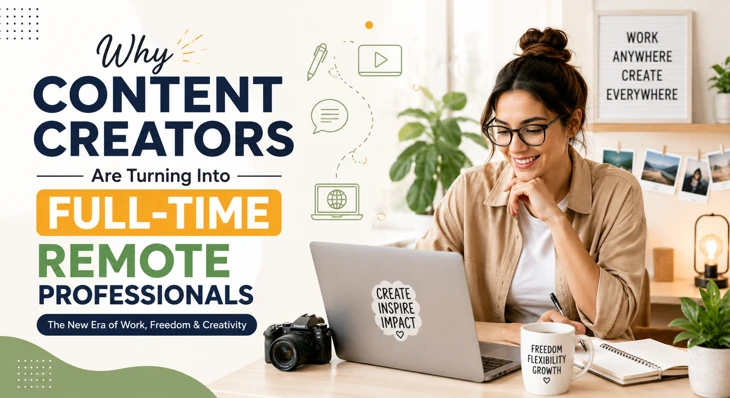
Why Content Creators Are Turning Into Full-Time Remote Professionals
There’s been a quiet but powerful shift in how people build careers online. More and more content creators are stepping away from traditional office paths and choosing something far more flexible, creative, and location-free. What used to start as casual blogging, part-time freelancing, or social media posting has now become a serious, full-time remote profession. This change didn’t happen overnight. It has been shaped by new technology, changing brand expectations, and a growing acceptance that creative work doesn’t need a fixed desk to be valuable. Today, a remote content creator career is not just realistic—it’s becoming one of the most practical ways to earn a living in the digital economy.How the Work Culture Shift Changed Everything
A few years ago, working remotely was considered a privilege. Now, it’s simply part of how modern work functions. Businesses realized that results matter more than location, and that shift opened doors for creative professionals everywhere. For content creators, this meant freedom in the truest sense. No commute, no strict office hours, and no geographical limits on clients or opportunities. A writer in one country can easily collaborate with a brand halfway across the world. What made this possible? Instead of one single reason, it’s a combination of changes working together:- Faster internet and stable digital infrastructure
- Easy access to global freelance platforms
- Widespread use of cloud-based collaboration tools
- Businesses prioritizing online presence and digital marketing
From Side Projects to Serious Income Streams
Not long ago, content creation was mostly seen as something people did on the side. A blog here, a few social media posts there, maybe some freelance writing for extra income. But things look very different today. Brands now depend heavily on digital storytelling. Whether it’s a startup trying to build awareness or an established company scaling its online presence, content is at the center of marketing strategy. This has created consistent demand for creators who understand how to communicate online.Types of content businesses actively invest in
Instead of random content, companies now look for structured, strategic output:- SEO-focused blogs that improve search visibility
- Social media content calendars that build engagement
- Video scripts for short-form and long-form content
- Email campaigns that drive conversions
- Brand storytelling that builds trust
Why Income Stability Is Now More Realistic Than Before
One of the biggest concerns people used to have about content creation was income uncertainty. That concern still exists, especially in the beginning—but the landscape has changed significantly. Today, successful creators rarely rely on a single source of income. Instead, they build multiple streams that work together.Common ways content creators earn online
- Freelance writing and content strategy services
- Long-term brand partnerships
- Affiliate marketing through blogs or social channels
- YouTube monetization and ad revenue
- Selling digital products like templates, guides, or courses
- Consulting and training services for businesses
Personal Branding: The Real Game Changer
If there’s one factor that has completely reshaped the content world, it’s personal branding. Platforms like LinkedIn, Instagram, YouTube, and even niche blogs have given creators a stage to showcase their expertise publicly. This visibility builds credibility—and credibility brings opportunities.Why personal branding matters so much
It’s not just about being visible. It’s about being trusted.- People are more likely to hire creators they recognize
- Strong branding attracts inbound clients instead of constant pitching
- It positions creators as experts, not just freelancers
- It allows higher pricing for services and collaborations
Tools That Make Remote Content Work Seamlessly
One of the biggest enablers of this shift has been technology. Without modern tools, remote content creation at scale would be difficult. Today’s creators rely on digital tools for almost everything—from planning to publishing.Everyday tools used by content creators
- Writing platforms for blogs, scripts, and copy
- Design tools for visuals and branding assets
- Video editing software for short-form content
- Project management tools for client coordination
- AI-assisted tools for ideation and productivity support
The Appeal of Flexibility and Control
Ask most full-time creators why they made the switch, and you’ll hear the same theme repeatedly—freedom. Not just freedom to work remotely, but freedom to design their own schedules and priorities.What flexibility actually looks like in real life
- Working during early mornings or late nights based on creativity
- Taking breaks without asking permission
- Choosing projects that align with personal interests
- Balancing travel and work without disruption
A Realistic Look at the Journey
The path to becoming a full-time remote content creator usually doesn’t happen overnight. Take a simple example. A writer starts by taking small freelance gigs while working a regular job. At first, the income is inconsistent. But over time, they build a portfolio, improve writing skills, and start attracting repeat clients. Later, they expand into SEO content, strategy work, and consulting. Eventually, their freelance income becomes more stable than their salary. At that point, the transition feels less like a risk and more like a natural next step. This type of progression is becoming increasingly common in today’s digital-first economy.Challenges That Still Exist
Even though the opportunities are strong, this path is not without difficulties. It requires patience and consistency.Common struggles creators face
- Income fluctuation in the early stages
- High competition in content platforms
- Constant need to upgrade skills
- Difficulty separating work and personal time
- Pressure of finding and retaining clients
Skills That Separate Successful Creators From the Rest
Content creation is no longer just about writing or posting. It has become a mix of creativity, strategy, and marketing awareness.Core skills that matter most
- SEO understanding and keyword intent
- Storytelling that connects with audiences
- Digital marketing fundamentals
- Strong communication with clients
- Time management and self-discipline
What the Future Looks Like for Content Creators
The future of content creation is closely tied to how digital consumption evolves. And everything points in one direction—growth. We are already seeing:- More remote-first marketing teams
- Rising demand for niche and expert content
- Growth of creator-led businesses and personal brands
- Deeper integration of AI tools in content workflows