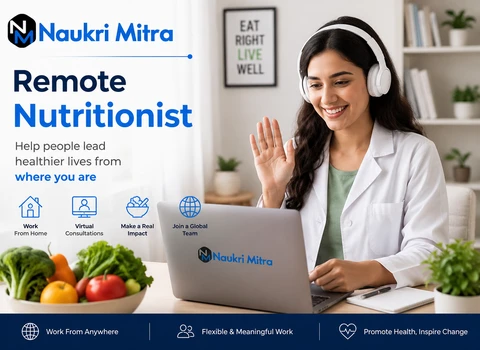
Most nutrition jobs still describe the work the way it looked a decade ago — a printed meal plan, a monthly check-in, maybe a spreadsheet. That's not really the job anymore, not for the clients this team serves. Continuous glucose monitors, genetic panels, wearable sleep data — a lot of it lands on your desk before the client even opens their mouth on a call. This Remote Nutritionist role is built around that reality.
What the role actually is
You'd be joining a fully remote digital health team as a nutritionist, working with clients scattered across time zones through video calls, secure messaging, and connected health apps. The plans you build aren't templates. They're shaped by lab work, activity logs, and whatever the client's wearable has been quietly recording for the past month — and they change as that data changes.
It's a full-time, salaried role at
$95,000 per year, open to applicants who can work from anywhere.
How your week tends to break down
No two days look identical, but a fair amount of your time goes toward:
- Building and adjusting nutrition plans based on biometric and lifestyle data
- Reading through blood panels, food sensitivity results, or nutrigenomic reports and translating them into something a client can actually use
- Running video consultations, then following up async through in-app messaging — not everything needs a scheduled call
- Keeping an eye on compliance and progress through wearable and app data, rather than waiting for a client to self-report
- Writing client-facing material — a guide here, a macro calculator there, occasionally a short video explainer
- Hosting the odd webinar or group Q&A when a topic comes up often enough to warrant one
- Documenting everything properly in the EHR, since other people on the care team will read those notes
- Checking in with fitness coaches or behavioral health specialists on clients you're both working with
What you'll need to bring
There's a floor here, and we won't move it:
- A Bachelor's degree in nutrition, dietetics, or something closely related
- At least 3 years of nutrition consulting experience, with a chunk of it spent working virtually or in a hybrid setup
- A real grasp of metabolic health and micronutrients — enough to read lab or genetic data and know what it means for a diet
- Some comfort with telehealth software, EHR systems, and the usual nutrition-tracking apps
- Writing and speaking skills that hold up across email, chat, and video — three very different registers
- The discipline to manage a full caseload on your own, with no one checking over your shoulder
Not required, but it helps
None of this is a dealbreaker if you're missing it. But it moves an application to the top of the pile:
- An RD or CNS credential
- Time spent inside platforms like Practice Better, SimplePractice, Healthie, or Cronometer
- Familiarity with wearables — Fitbit, Apple Watch, Oura, whichever
- Any background with genomic or microbiome testing
- A knack for content — blog posts, short scripts, the occasional infographic
Pay and what comes with it
If you found this listing through Naukri Mitra, you'll notice the benefits are spelled out here rather than saved for a callback — that's intentional. Beyond the base salary:
- Fully remote work with async scheduling — you build the day, within reason
- An annual stipend for certifications, courses, or a conference you actually want to attend
- Mental health support and a digital fitness or wellness membership
- Quarterly virtual team retreats, plus a peer mentorship setup that isn't just on paper
- Regular performance reviews tied to actual paths forward, not just a pay bump
Where people tend to go from here
A few directions show up most often. Some nutritionists move into Lead Nutrition Analyst roles, working with larger datasets and training new hires. Others end up shaping wellness programs at scale as a Virtual Wellness Director. And a smaller group drifts toward product work — HealthTech Product Specialist roles, where clinical judgment feeds directly into how an app or platform gets built. None of it is promised. It's just where the last few years of internal movement have pointed.
The team you'd be joining
It's a distributed group — dietitians, behavioral health people, care coordinators — who mostly communicate through async messages and the occasional scheduled call. Documentation carries real weight here, since your notes might be the only context another team member has before they talk to your client. The team also pays close attention to outcomes over time, so you'll be expected to notice patterns and say something, not just follow whatever protocol was written last year.
Applying
Send a resume along with a short note on your virtual client management experience and any tools or credentials worth mentioning. Applications get reviewed on a rolling basis. Shortlisted candidates move on to a video interview, followed by a brief conversation based on a sample client case.