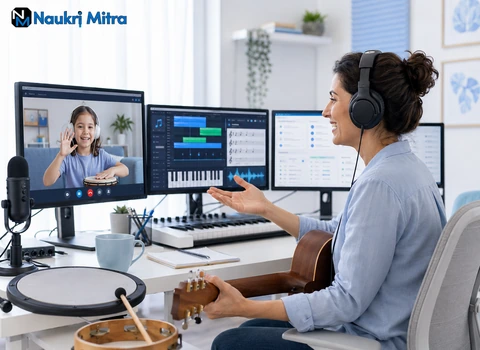
Some clients open up faster to a chord progression than they ever would to a direct question. That's not a metaphor — it's the actual clinical premise behind this role. We're hiring a board-certified music therapist to run virtual sessions with clients who range from young kids in early intervention programs to adults working through trauma or cognitive decline.
This is a fully remote position. Salary is $73,500 per year.
The Work Itself
- Lead individual and small-group therapy sessions over video with clients across different age groups and needs
- Assess clients through a mix of standardized tools and hands-on clinical observation
- Build out therapy plans centered on rhythm, lyric work, or instrumental engagement depending on the client
- Track how sessions are actually landing and adjust your approach accordingly
- Document sessions accurately and store records properly within the clinical system
- Stay in contact with other members of a client's care team when treatment overlaps
- Run instruments and digital audio tools remotely without losing session flow to tech friction
- Create space for clients to express things that don't come out easily in plain conversation
Minimum Qualifications
- Minimum education required: Bachelor's degree, earned through a music therapy program that carries proper accreditation
- Active MT-BC certification, currently in good standing
- At least 1 year of direct music therapy experience; remote or telehealth experience is a plus, not a requirement
- Working proficiency on at least one instrument — piano, guitar, and percussion are the most commonly used
- Working understanding of mental health conditions and developmental differences relevant to the populations you'll treat
Nice to Have
- Comfort with telehealth platforms and digital music-sharing software already common in the field
- A communication style that comes across as warm rather than clinical, even over a screen
- Strong self-direction — this role doesn't come with someone checking your calendar for you
- Patience with the occasional bad internet connection or awkward camera angle on the client's end
What Your Setup Looks Like
A quiet, private space with reasonable acoustics is non-negotiable — this isn't work you can do from a busy household. Most of the actual infrastructure is handled for you:
- Zoom for Healthcare or Doxy.me for HIPAA-compliant sessions
- Soundtrap, BandLab, or GarageBand for making music together with clients live
- Virtual keyboard and percussion setups compatible with screen share
- Cloud-based EHR software for documentation
- A shared library of therapeutic music, session templates, and clinical resources
People scanning remote clinical postings on something like Naukri Mitra often can't tell what a role actually involves day-to-day — this one's meant to be more specific than most: real sessions, real clients, real clinical documentation, just delivered over video.
Team Culture
You'll work most of the time independently, but the role isn't isolating by design. There are regular case review meetings, training sessions, and space to ask a colleague for a second opinion when something's tricky. New therapists typically get paired informally with a more senior clinician early on.
Room to Grow
This isn't meant to be a static role. Over time, therapists here move toward mentorship in telehealth-specific techniques, program leadership or supervisory roles, certification tracks in areas like trauma-informed care or autism spectrum work, involvement in research on remote therapy outcomes, or speaking opportunities at virtual conferences.
Compensation and Benefits
- $73,500 annual salary, paid on a consistent schedule
- Fully remote with flexible hours and no commute
- Continuing education allowances and reimbursement
- MT-BC renewal and licensing fee support
- Full access to a clinical and musical resource library
- Dedicated tech support for platform issues
The Actual Impact
An older client with dementia recognizing a song from decades ago. A nonverbal child finding a rhythm to connect through. A teenager working through anger with a drum pad instead of a wall. These outcomes show up quietly and often, not as rare wins but as the normal result of doing this work carefully, week after week.
How to Apply
Open to applicants from the USA, Canada, the UK, the EU, Australia, India, and other international regions. If you hold an active MT-BC credential and want clinical work with room for creativity, send in your application and tell us what drew you toward music therapy specifically.