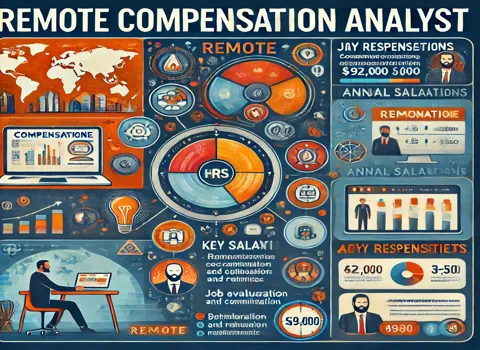
Remote Compensation Analyst – Shape Pay Strategies from Anywhere
So, you’ve been curious about what it’s like to own the numbers behind pay decisions without being tied to an office? As a
Remote Compensation Analyst, you’ll do just that. Imagine being the person who makes sure pay isn’t just competitive, but also fair, motivating, and future-focused. That’s what makes this role matter day to day. And the best part? You’ll do it all from home—no commute, no dress code, just meaningful work with smart people who trust you to get things done.
Why This Remote Compensation Analyst Role Stands Out
You know how some jobs sound exciting but turn into endless spreadsheets no one ever looks at? Not here. Your analysis actually shapes how real people get rewarded for their hard work. You’ll be balancing spreadsheets with the real stories behind them. We’re talking about making compensation not just a policy, but a powerful tool that drives careers and company growth.
Remote work can feel isolating sometimes, right? That’s why our team has weekly check-ins where we swap stories—like the time Sarah spotted a market pay analysis trend that saved us from losing a key engineer. Or when Jamal’s quick total rewards analysis gave a whole team confidence that they were being valued fairly. And Priya? She once tied equity reviews to turnover data, and we saw retention improve by 12% within months. Those are the kinds of wins that prove your work matters.
How Your Work Shapes Pay and Careers
Here’s the thing: pay talks matter. When employees feel pay is unfair, everything else—engagement, trust, retention—takes a hit. Your work will help prevent that. From running pay equity assessments to advising on incentive compensation programs, you’ll give leaders tools they need to make better calls.
And yes, there’ll be times when you’ll crunch numbers so long you’ll wonder if you’re dreaming in spreadsheets. But then someone will tell you,
“Hey, that adjustment you recommended? It helped me stay and grow here.” That’s when it clicks—you’re not just looking at data, you’re shaping people’s lives and careers.
A Day in the Life of a Remote Compensation Analyst
Wondering how your day will actually go? Let’s walk through it:
- Morning: With coffee in hand, you log in and check updates from the HRIS compensation reporting system. Perhaps you notice a trend where bonus payouts are skewing higher in one region than others.
- Midday: Jump into a quick video call to talk about job evaluation and grading. The marketing team just created a brand-new role, and they need your input on where it fits.
- Afternoon: Deep-dive into market pay analysis. You’re comparing data from different regions and industries, spotting gaps, and making recommendations.
- Late Afternoon: Wrap things up with a short huddle with fellow remote HR compensation consultants. You discuss incentive compensation programs and share stories—such as how variable pay structures motivated one team to meet their targets ahead of schedule.
It’s a busy day, but every task connects back to people’s growth and fairness.
Key Areas Where You’ll Step Up
Pay Equity and Fairness
You’ll lead pay equity assessments that make sure people are rewarded based on skills, performance, and potential—not bias. Ever wonder how a company actually puts fairness into practice? This is how.
Strategy Meets Numbers
Compensation isn’t random. You’ll work on compensation strategy development, which means helping leaders tie pay to long-term goals. Think of it like building a roadmap that shows where rewards can actually drive results.
Data Storytelling
Sure, spreadsheets matter, but so does how you explain them. You’ll turn HR compensation analytics into clear, human insights. Whether it’s benefits and compensation insights or executive compensation support, your storytelling will help leaders make confident decisions.
Planning for Tomorrow
Compensation planning and forecasting might sound dry, but it’s really about seeing around corners. You’ll help make sure we’re ready for tomorrow’s needs—not scrambling to catch up. This includes examining global compensation trends, ensuring we’re constantly benchmarking against the most accurate data.
What You’ll Need to Shine
Let’s be real: not everyone loves spending hours comparing salary benchmarking specialist data or diving into variable pay structures. But if you find joy in making sense of numbers—and you care about fairness—you’ll thrive here.
A few things that’ll help you hit the ground running:
- Strong background as a salary benchmarking specialist or in similar roles.
- Comfort with tools, whether it’s HRIS systems, spreadsheets, or dashboards.
- Curious to keep asking why. Like, why is one role paid differently in two regions? Why do incentive compensation programs succeed in some places and flop in others?
- Empathy—because behind every number is a person making life decisions.
The Kind of Teammate You’ll Be
We don’t just want someone who ticks boxes. We want someone who:
- Gets the details right but doesn’t get stuck there.
- Knows how to explain complex compensation policy compliance rules without putting people to sleep.
- Can laugh when things get messy—because honestly, they will.
- Wants to share wins, not just collect them.
One of our teammates, Priya, once said,
“The reason I love being here? I can bring both my calculator and my compassion.” That’s the energy we’re looking for.
Career Growth and Rewards
This role isn’t just about crunching numbers for today; it's about shaping the future. It’s about building skills that’ll take your career anywhere in HR, finance, or leadership.
Here’s what’s on the table:
- Exposure to executive compensation support that gives you boardroom-level insights.
- Hands-on experience with compensation planning and forecasting—skills every future HR leader needs.
- A chance to shape compensation strategy development for a growing company.
- Real influence. Leaders will turn to you not just for data, but for direction. Your analysis will guide how leadership makes pay decisions.
And let’s not forget—an annual salary of
$92,000. Fair pay ensures fairness for everyone else. That’s the reward for stepping into this Remote Compensation Analyst role.
Thriving as a Remote Compensation Analyst
Working remotely doesn’t mean working alone. We keep things connected with:
- Weekly team huddles where stories and shout-outs keep energy high.
- A culture where you can actually ask for help without feeling weird about it.
- Flexibility to design your day—whether you’re an early bird or a night owl.
Remote HR data analysts often say the biggest challenge is feeling unseen. Here, your story will be different—you’ll be seen, supported, and celebrated.
Challenges You’ll Tackle
Some days, the questions will be challenging and the trade-offs sharper than you expect. You’ll face:
- Leaders asking, “Why can’t we pay below market if people will still accept it?”
- Conflicting priorities between keeping costs low and rewarding people fairly.
- The occasional fire drill requires quick adjustments to incentive compensation programs.
But you won’t face these challenges alone. You’ll have a team of remote HR compensation consultants who know the drill, and you’ll work closely with leaders in compensation consulting discussions to guide smart decisions.
Why Fair Pay Builds Trust and Energy
Compensation is more than numbers. It’s a trust signal. When people see that their pay makes sense, they trust leadership more, they give their best, and they stay longer. That’s why this role matters so much.
We’re building something where pay isn’t just about checks—it’s about showing people their value. And honestly, isn’t that the kind of work worth doing?
Ready to Step In?
So, here’s the moment of truth. If you’re the kind of person who:
- Wants to make pay fair, smart, and motivating.
- Likes mixing numbers with strategy.
- Doesn’t mind being the go-to person for tough compensation questions.
Then this role is for you. As a
Remote Compensation Analyst, your work won’t just be seen—it’ll be felt by every person who opens their paycheck and feels recognized.
Together, we’ll shape pay strategies that make fairness a daily reality.
Closing Note
If you’ve ever thought,
“I wish my work had more impact,” this is your chance. Here, your spreadsheets become stories, your analysis turns into strategy, and your voice helps shape the future of work.
Take the step, bring your expertise, and help make compensation the reason people stay, grow, and thrive.