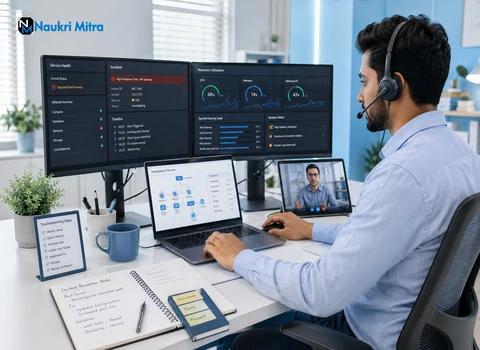
Something breaks in a client's cloud environment at 2 am their time. By the time they wake up, they need it fixed, explained, and prevented from happening again. That's the job. We're hiring a Remote Cloud Support Associate to be the person clients actually trust when their infrastructure stops cooperating.
Why This Seat Exists
Companies keep moving workloads to the cloud because it's faster and more flexible than running their own servers — until something goes wrong, and then it's someone else's problem to solve fast. That someone is you. You'll keep environments running, catch issues before they turn into outages, and give clients enough understanding of their own systems that they stop calling about the same problem twice.
Naukri Mitra is helping fill this role for a team that measures itself on resolved tickets, not just opened ones.
What the Work Actually Involves
Most days start with a queue — some routine, some urgent. You'll troubleshoot performance issues, configuration problems, and outright failures across AWS, Azure, or Google Cloud environments, working to cut downtime rather than just documenting it. When a fix isn't obvious, you dig — checking logs, testing configurations, ruling things out methodically until you find what's actually broken. And when you do find it, you write it down clearly enough that the next person facing a similar issue doesn't have to start from zero.
Core Responsibilities
- Troubleshoot cloud infrastructure issues quickly, with downtime reduction as the priority
- Support clients in optimizing cloud deployments for performance and cost efficiency
- Build practical solutions to recurring or unusual technical problems
- Keep clear, accurate documentation of issues, resolutions, and recurring patterns
- Coordinate with support teams across time zones so handoffs don't lose context
- Monitor system performance proactively, catching problems before clients notice them
- Walk clients through their own infrastructure, so they understand what they're running
What You'll Need
Minimum education required:
Bachelor's degree in Computer Science, Information Technology, or a related field. Minimum experience:
2 years in cloud support, technical support, or systems administration.
You'll need hands-on experience with at least one major cloud platform — AWS, Azure, or Google Cloud — including deploying and managing services, not just reading dashboards. A working grasp of networking, databases, virtualization, and general system management is expected going in. Just as important: you can explain a technical problem to someone who isn't technical, without making them feel talked down to.
Nice to Have
- DevOps experience with tools like Docker, Kubernetes, or CI/CD pipelines
- Familiarity with cloud security practices and compliance requirements
- Scripting ability in Python, Bash, or PowerShell
- A cloud certification — AWS Certified Solutions Architect, Azure Administrator, or Google Cloud Professional
Pay and Benefits
The annual salary for this role is
$112,824. Beyond that:
- Fully remote work with real control over how you structure your day
- Access to training, certifications, and mentorship to keep your skills current
- A team that actually collaborates across regions instead of working in silos
- Room to grow into more specialized or senior cloud roles over time
What a Day Might Look Like
You check in with the global team and pick up where the overnight shift left off — usually with one or two issues awaiting a response. Mid-morning, you're deep in a client's configuration, tracing a performance issue back to a misconfigured load balancer. After lunch, you put together a cost-optimization plan for a client whose cloud spend has crept up faster than their usage justifies. Late afternoon might mean a quick knowledge-sharing call with teammates — someone found a fix worth passing along that saves the next person an hour of digging.
Who Does Well Here
People who thrive in this role don't panic when something's on fire — they get methodical instead. They're comfortable not knowing the answer immediately and comfortable saying so, then finding it. And they treat documentation as part of the job, not an afterthought squeezed in when there's time.
How to Apply
Send your resume along with a short note on a cloud issue you've resolved that you're genuinely proud of solving. This role is open to professionals from the USA, Canada, the UK, European countries, Australia, India, and other eligible regions. If keeping complex systems running sounds like satisfying work rather than stressful work, we'd like to hear from you.