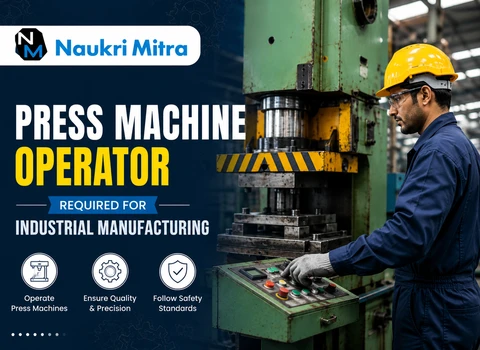
What Does a Press Machine Operator Actually Do?
Walk onto almost any metal fabrication floor, and you'll hear it before you see it — the steady thud of a press machine cutting or shaping sheet metal into parts. The person running that machine is a Press Machine Operator, and the job is a lot more hands-on than the title suggests. It's not just loading material and hitting a button. Operators set up the machine, monitor the process closely, catch problems early, and ensure every piece coming off the line matches what the drawing calls for.
Why This Role Matters to Manufacturers
Pressing is still one of the quickest, cheapest ways to turn flat metal into usable parts, which is exactly why so many units in Faridabad, Haryana keep this position filled around the clock. A press that sits idle costs money. A press run by someone careless costs even more — in scrapped material, damaged dies, or worse, an injury. So companies look for operators who take the setup seriously and don't cut corners once the machine is running.
A Shift, Start to Finish
Most days start the same way: check the die, check the guards, check the lubrication. Nothing gets loaded until the machine passes that quick inspection. Once production begins, the operator feeds blanks or sheet stock, monitors stroke speed and pressure, and periodically pulls samples to check dimensions. Toward the end of a run, there's usually cleanup, a handover note for the next shift, and a log of whatever came up during the day — jams, tooling wear, anything worth flagging.
Day-to-Day Responsibilities
- Setting up the press according to the job card or drawing
- Loading and unloading metal sheets or blanks without damaging them
- Watching each cycle for pressure or alignment issues
- Checking finished parts against dimensional tolerances
- Making small die adjustments and flagging tooling that's wearing out
- Filling out production and shift records
- Clearing scrap and keeping the station tidy
Where This Work Happens
You'll find this job in metal fabrication shops, auto component units, electrical assembly plants, and general engineering workshops. Some operators work inside a large manufacturing plant with a dedicated pressing section; others work in smaller tool rooms attached to a factory. Faridabad has long been one of the industrial centers of Haryana, and its manufacturing base gives this profession a solid, consistent demand in the region.
The Machines and Instruments You'll Handle
The main equipment is the press itself — hydraulic, mechanical, or in some setups, pneumatic. But the job isn't just about the big machine. Operators also work with hand tools for die handling, torque wrenches for fastening, and measuring instruments like vernier calipers, micrometers, and dial gauges to verify part accuracy. In shops that do more precision work, familiarity with EDM (Electrical Discharge Machining) equipment and the ability to read engineering drawings start to matter a great deal.
Skills That Actually Get Used on the Floor
Knowing how material behaves under pressure, understanding what each machine setting controls, and being able to troubleshoot when something's off — these are the technical basics. But the practical side matters just as much. Can you tell from the sound of the machine that something's wrong before it shows up in the parts? Can you read a drawing quickly without needing someone to explain it? Operators who develop that kind of instinct tend to move up faster.
What Employers Look For in Terms of Training
Employers may prefer candidates with relevant machining or tool room training. Depending on how demanding the work is, an ITI in a machining-related trade, a Diploma in Mechanical or Tool and Die Engineering, or similar vocational training can be enough to get started. That said, practical experience with EDM machines, engineering drawings, and precision measuring instruments often carries as much weight as the certificate itself — so a fresher with solid hands-on exposure shouldn't feel at a disadvantage.
The Physical Side of the Job
Expect to be on your feet for most of the shift, repeating similar hand movements, and occasionally lifting dies or components. Concentration matters more than people expect — press machines move fast, and a moment of distraction is when accidents happen. Shift work is common in this line of work, too, so operators should be ready to rotate through morning, evening, or night schedules depending on production schedules.
What the Shop Floor Feels Like
It's rarely quiet. There's machine noise, some vibration, and the smell of cutting oil in the air. Temperatures shift with the seasons, especially in units without heavy ventilation. None of this is unusual for manufacturing work, but it does mean safety habits can't be optional — they have to become second nature.
Staying Safe Around Heavy Machinery
Press machines apply serious force, and that's not something to get casual about, even after years on the job. Most units require safety shoes, gloves, safety goggles, and ear protection in louder sections. Lockout procedures before adjusting or cleaning a machine aren't a suggestion — they're the difference between a normal day and a serious injury. Guards stay on. Unusual sounds or vibrations get reported immediately, not "looked at later."
Challenges New Operators Run Into
Judging the right pressure for different materials takes time, and so does spotting early die wear before it ruins a batch. Long shifts with repetitive tasks can wear on concentration too. Most experienced operators say the same thing helped them get past this stage: building a routine inspection habit and paying attention to small changes in sound or output, rather than waiting for something to go visibly wrong.
Where Experience Can Take You
Operators who perform consistently often move into senior operator roles, shift-in-charge positions, or specialize in die-setting. Picking up exposure to different machine types, tool room work, and precision measurement along the way makes a real difference — it's usually what separates someone who stays an operator for years from someone who moves into more responsibility.
Pay and What Else Comes With the Job
This is a Full-time position based in Faridabad, Haryana, India, offering a monthly salary of ₹26,000. Beyond the base pay, some employers offer overtime, PF, ESI, an annual bonus, uniforms, transport, or canteen facilities — though these vary by company and are best confirmed directly during the hiring process rather than assumed.
A Few Honest Tips Before You Apply
If you're considering this line of work, spend time getting comfortable with basic measuring tools and simple engineering drawings before you even start — it saves a lot of confusion in the first few weeks. Safety habits picked up early tend to stick for good. And honestly, showing up on time and staying reliable often counts for just as much as technical skill when a supervisor is deciding who to trust with more responsibility.