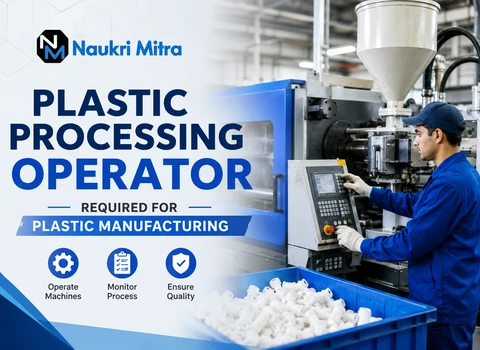
What Does a Plastic Processing Operator Actually Do?
Plastic granules go into a machine. Bottles, containers, pipes, or molded parts come out the other end. That transformation, done hundreds of times a shift, is the job of a Plastic Processing Operator. It sounds simple written down, but running an injection molding or extrusion machine well takes a trained eye for temperature, pressure, and timing.
Factories don't run themselves. Someone has to load the material, set the machine, watch the cycle, and catch problems before they turn into a pile of rejected parts. That's the operator's job, and it's why plastic manufacturers keep hiring for this role year after year.
A Shift on the Floor
Most shifts start the same way: check the machine, check the material, look over what the last shift left behind. From there it's a rhythm of feeding granules into the hopper, watching gauges, and pulling finished parts for inspection. Some hours are quiet. Others get busy fast, especially when a mould change is due, or a batch starts showing defects.
Operators handle a mix of tasks through the day:
- Running injection molding, extrusion, or blow molding machines
- Loading raw material and adjusting temperature and pressure settings
- Checking finished parts for cracks, bubbles, warping, or shrinkage
- Logging output and flagging issues to the supervisor
- Basic upkeep of tools, molds, and the work area
None of this is glamorous work, but it's steady, and it teaches discipline fast.
The Kind of Places You'll Work
This job is based in Daman, in the union territory of Dadra and Nagar Haveli and Daman and Diu, a stretch of India with a fair number of plastic and small-scale manufacturing units. Operators here typically work in factories producing containers, packaging film, pipes, or plastic household goods. The floor is usually loud, warm near the machines, and busy with material movement in and out.
Machines, Gauges, and Tools of the Trade
Injection molding machines, extruders, blow molding units, granulators — these are the core equipment an operator gets familiar with. Alongside the big machines sit smaller tools: thermometers, pressure gauges, digital calipers for checking part dimensions. A one-degree slip in temperature or a slightly off pressure setting can ruin an entire batch, so reading these instruments correctly matters more than it might seem at first.
Knowing why plastic behaves the way it does under heat helps too. Different resins shrink at different rates, cool at different rates, and respond to pressure changes in their own ways. Operators who understand this tend to catch defects before they multiply.
Who Fits This Role
Freshers with an ITI in plastic processing or a mechanical trade often land well here. So do diploma holders in plastic technology or mechanical engineering — they usually pick up machine settings and mould handling faster and move into senior roles sooner. Experience matters, but so does temperament: patience with repetitive work, calm troubleshooting when something jams, and consistency shift after shift.
Standing, Shifts, and the Physical Side
This is a full-time role, and expect to be on your feet for long stretches near running machinery. Plastic units often operate around the clock, so rotational shifts, including night shifts, are common. It's not a desk job, and the heat from the machines is part of the daily environment.
Staying Safe Around the Machines
Hot molds, moving parts, and pressurized systems don't leave room for carelessness. PPE on this job usually means heat-resistant gloves, safety goggles, and closed-toe footwear. Lockout steps before any maintenance work, and keeping hands well clear of hot surfaces, are basics that every operator learns early — and shouldn't forget even after years on the job.
What Trips People Up
Heat, noise, and doing the same motion for hours can wear on anyone. Machines also sometimes go down without warning, and material quality isn't always consistent from batch to batch. The operators who handle this well are the ones who stick to the standard procedure instead of guessing, and who speak up the moment something feels off rather than waiting to see if it fixes itself.
Where the Job Can Lead
Time on the floor adds up to more than just experience. Operators who show consistency often move up to senior operator positions or shift supervisor roles. Some specialize further in machine setting or mould changing — skills that are always in demand in plastic manufacturing and tend to pay off over the course of a career.
Pay and What Might Come With It
The role pays ₹23,500 a month. Beyond the base salary, some employers offer extras such as overtime pay, PF, ESI, bonuses, uniforms, and transport and canteen facilities. These aren't guaranteed across every company, so it's worth confirming what's actually on offer during the hiring conversation.