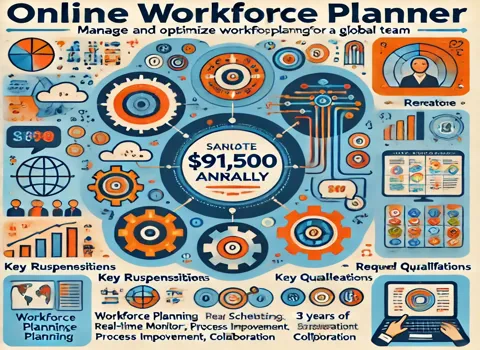
Online Workforce Planner – Remote Opportunity
Let’s be real—planning and managing a workforce online isn’t just about filling shifts. It’s about making sure people feel supported, projects stay on track, and the whole team can breathe easier knowing things are organized. As our new
Online Workforce Planner, you’ll play a big part in shaping how smoothly everything runs. And yes, you’ll be doing it all from the comfort of your home, with the tools and freedom that come with
remote work.
We’re talking about more than spreadsheets and schedules. This is about understanding people, predicting needs, and making choices that help everyone succeed. If you’ve ever balanced complex projects while keeping people engaged, you already know how impactful this kind of work can be.
Why the Online Workforce Planner Role Matters in Remote Teams
When teams go remote, planning becomes even more critical. Think about it: no one’s bumping into each other at the office coffee machine, and schedules can get scattered across time zones. That’s where you step in.
Your role keeps everything aligned. You’ll look at the big picture, spot potential issues before they hit, and help us use our people and time wisely. Workforce planning goes beyond numbers — it’s about giving people realistic schedules so they can perform at their best without burning out.
We once had a week where two projects overlapped unexpectedly. Without a proper resource planning system, deadlines would’ve slipped. But with intelligent scheduling in place, we shifted capacity and finished on time. That’s the kind of balance we want to keep creating—thanks to you.
Daily Responsibilities of an Online Workforce Planner
Here’s a glimpse of how your days might look:
- Balancing schedules. You’ll design fair, practical schedules so no one feels overloaded.
- Predicting demand. Using data and trends, you’ll figure out when we’ll need extra support and when we can lean on automation.
- Keeping things smooth. You’ll help identify potential gaps—such as too many projects being assigned to one team—and find ways to distribute the workload.
- Staying connected. Weekly check-ins and quick messages keep the team aligned. You’ll be part of those conversations.
Ever felt like you were running into walls because projects weren’t synced up? That’s the exact problem you’ll be helping to prevent.
Key Skills for Successful Workforce Planning
You don’t need to know everything on day one, but here are the qualities that will help you thrive:
- Organized but flexible. You’ll keep details in order while adapting when things change.
- People-focused. Workforce management isn’t just about charts; it’s about making sure people can do their best work.
- Tech-comfortable. You’ll be working with employee scheduling software, dashboards, and reports.
- Problem-solver. When things get messy, you’ll find ways to untangle them.
Workforce Management Tools You’ll Use
This toolkit helps you simplify remote workforce management, making scheduling more transparent and more predictable:
- Digital scheduling platforms
- Workforce management dashboards
- Communication tools like Slack or Teams
- Data insights from project tracking software
Think of it as your support system for keeping projects aligned and people on track.
Impact of Workforce Planning on Remote Teams
This role has ripple effects across the team:
- For employees, this means they get clear schedules, realistic expectations, and fewer last-minute surprises.
- For managers: they can see what’s happening, plan ahead, and keep projects moving.
- For the company: smoother operations, better resource planning, and happier teams.
When a teammate logs in and already knows what’s on their plate—and that it’s actually doable—that’s your work in action.
Real Challenges You’ll Face
We’re not sugarcoating it—remote planning comes with bumps:
- Different time zones mean schedules aren’t always simple.
- Project demands change quickly.
- People sometimes need last-minute adjustments.
But here’s the good news: by setting up clear schedules and anticipating changes early, those bumps turn into minor adjustments instead of crises. And you won’t be handling them alone—we’ll back you up.
A Peek Into the Team Culture
Remote doesn’t mean disconnected. Here’s how we stay close:
- Weekly team huddles (quick, fun, and useful)
- A channel just for random wins—like when someone finishes a tricky report
- Celebrating small things: birthdays, first-day anniversaries, or even “survived Monday” moments
You’ll join a team that celebrates results while making sure people feel connected and supported.
Career Growth in Workforce Planning
We believe in learning while doing. Here’s what you can look forward to:
- Exposure to different departments and their needs
- Training on advanced planning tools and capacity planning strategies
- Mentorship opportunities with experienced planners
- Chances to lead special projects as you grow
Imagine starting by balancing schedules, then moving into forecasting demand for entire teams. That’s the kind of growth path we want to support.
Who You’ll Work With
You won’t be alone behind a screen. You’ll connect with:
- Project managers who need resource planning
- HR specialists who handle staffing changes
- Team leads who care about their people’s workloads
- Other planners sharing insights and strategies
It’s teamwork across departments, all pulled together through clear communication and shared goals.
The Kind of Background That Fits Well
There’s no one “perfect” path, but people who succeed here often have:
- Experience in workforce management, scheduling, or project coordination
- A background in HR, operations, or consulting
- Comfort with data, trends, and reports
- The ability to explain complex plans in plain English
And honestly, curiosity and adaptability often count just as much as years of formal experience.
Compensation and Benefits
We know this matters, so here’s the breakdown:
- Salary: $91,500 annually
- Along with competitive pay, our workforce management team members enjoy flexible work hours and remote-first benefits
- Remote-first setup—you choose your workspace
- Wellness support and personal development perks
- Paid time off for rest and recharging
Examples of Work You Might Handle
Picture this: a product launch is coming up. Marketing, design, and support teams all need to deliver at the same time. Without planning, chaos. With your scheduling and resource planning maps, everyone knows when and how to contribute. The launch goes smoothly, the stress is lower, and the outcome is stronger.
Or imagine spotting that one department is consistently overbooked. You propose shifting some tasks around or adjusting deadlines. Suddenly, workloads feel fairer, and productivity actually increases.
Small adjustments like these create a ripple effect—reducing stress while boosting overall productivity.
Career Story: How One Planner Grew
Take Maya, one of our planners. She started by focusing on daily scheduling. Within a year, she was leading capacity planning for major projects. Today, she’s mentoring new planners and shaping strategy. Her journey shows how much room there is to grow if you’re curious and ready to step up.
Why This Might Be the Right Fit for You
If you like organizing chaos, predicting needs, and making things run smoother for everyone, this could be your next adventure. You’ll get the satisfaction of knowing your work directly affects how teams feel and perform.
And let’s be honest—few things are as rewarding as hearing, “Thanks, this schedule actually made my week easier.”
Final Thoughts on the Online Workforce Planner Role
Being an
Online Workforce Planner isn’t about sitting in the background. It’s about shaping how the team works, making life easier for colleagues, and helping projects land on time. You’ll bring clarity to team alignment, resource allocation, and capacity planning across departments. In return, you’ll get flexibility, growth, and a team that has your back.
If this sounds like the kind of challenge that excites you, step up. Let’s make remote work smarter, smoother, and more human—together.