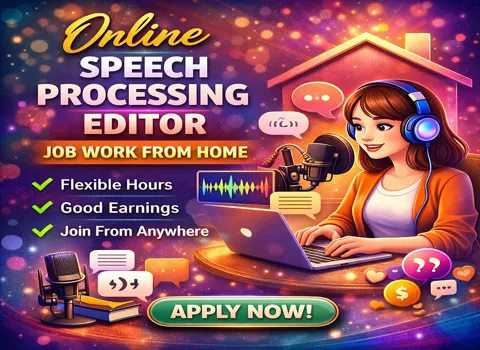
Remote Online Speech Processing Editor – Work From Home
Every spoken word holds meaning, emotion, and purpose. But without thoughtful editing, even the most important audio can lose its impact. As a remote Online Speech Processing Editor, you'll work where language meets technology—turning raw speech into polished, accurate content that fuels digital tools, accessibility features, and smart systems.
In this remote online speech-processing editor job, your efforts shape how people understand information across countless platforms. From perfecting speech-to-text editing to improving speech datasets, the work you do ensures that language sounds natural and accurate—helping businesses provide clearer communication and a better user experience.
Annual Salary: $56,000
Role Overview
This remote speech-editing work focuses on making speech-based data reliable, readable, and ready for use in many real-world applications. You’ll handle everything from audio transcription editing to audio data validation—combining your language skills with a keen eye for detail.
You’ll support industries ranging from AI-powered communication tools and accessibility services to voice-enabled technologies. Every transcript you refine, or dataset you improve, helps build systems people trust every day—from digital assistants to automated customer support.
What This Role Contributes
While the impact of your work isn’t always visible, it’s incredibly meaningful. By ensuring clear and accurate speech data, you’ll help speech recognition systems better interpret human language, lower the risk of errors, and boost user confidence.
By refining transcripts and fixing inconsistencies, you’ll directly help to:
- Raise voice recognition accuracy
- Make content more accessible for users who depend on captions or transcriptions
- Provide machine learning language data that’s high-quality and reliable
- Streamline communication for audiences around the world
Each improvement directly influences how smoothly people interact with technology.
Day-to-Day Work
Each day, you’ll review and edit speech outputs, focusing on clarity, accuracy, and consistency. Your tasks include spotting errors in automatic transcriptions, fixing grammar and punctuation, and ensuring the text fits the audio’s context.
This isn’t just about editing words—it’s about understanding tone, intent, and subtle meaning. You’ll navigate background noise, different accents, and unique speaking styles, so no two tasks are exactly alike.
A typical day may include:
- Checking speech-to-text editing results for accuracy
- Editing online transcripts to ensure they’re easy to read and logically structured
- Validating speech data processing by comparing transcripts with audio files
- Flagging any inconsistencies or unclear audio segments
- Collaborating with remote teams through cloud-based collaboration tools
You’ll enjoy focused, independent work while still playing a key part in a larger remote editing workflow.
Skills That Help You Succeed
To succeed in this role, you’ll need both a strong command of language and an analytical mindset. Great listening skills and attention to detail are must-haves—small mistakes can have a big impact on transcription quality assurance.
Key strengths include:
- Excellent written and spoken English proficiency
- Strong grammar, punctuation, and editing skills
- Experience with audio transcription editing and digital content accuracy editing
- Ability to interpret different accents and speech patterns
- Comfort using cloud-based collaboration tools in a remote content editing job
- Good time management and self-discipline in remote editing workflows
If you’re curious about natural language processing support or language technology, that’s a definite plus.
How Work Happens in This Remote Role
This work-from-home transcription role is 100% remote, designed for flexibility and focus. You’ll get tasks through structured, cloud-based workflows and have control over your schedule while meeting quality standards.
Most collaboration happens through cloud-based platforms and messaging apps, so you won’t be stuck in endless meetings. With clear guidelines and steady feedback, you’ll stay aligned with your remote team no matter where you are.
Working remotely lets you focus deeply, making it easier to stay in the zone during detailed AI speech data editing tasks.
Tools or Methods Used in the Work
You’ll use a mix of digital tools for speech data processing and remote editing workflows, such as:
- Speech recognition platforms for reviewing automated outputs
- Audio playback tools for detailed listening
- Text editing platforms made for remote transcription editor work
- Quality assurance systems for validating edits
- Cloud-based collaboration tools for remote teams
Knowing your way around speech-to-text editing software, audio annotation tools, and digital content accuracy editing systems will help you hit the ground running.
A Realistic Scenario from the Workday
Picture yourself reviewing a transcript from a customer support call. The speech recognition system got most of it right, but there are a few subtle mistakes—maybe a product name was misheard, there’s some missing punctuation, or a phrase doesn’t sound quite right.
You listen closely to the audio, then fine-tune the transcript to make it clear and easy to understand. That improved version helps train the machine-learning language model, making future conversations easier for the system to interpret.
A simple edit becomes part of a bigger mission—constantly improving how speech dataset improvement and voice data refinement shape customer interactions.
Who Thrives in This Role
People who love working with language, enjoy solving small but meaningful challenges, and take pride in accuracy do well in this role.
You might thrive as a remote speech processing editor if you:
- Finds satisfaction in refining details
- Enjoys independent, focused work
- Has patience for repetitive but important tasks
- Is curious about how language and technology intersect
This is a great fit if you want a stable, remote language-processing job with clear goals and real results.
Closing Message
This isn’t just another editing job—it’s your chance to help shape how language is used and understood in today’s digital landscape. Every transcript you polish and every phrase you clarify makes life a little easier for the millions who depend on these systems for clear communication.
If you value precision, clarity, and making a real difference from behind the scenes, this remote editing opportunity offers meaningful work and lasting impact.