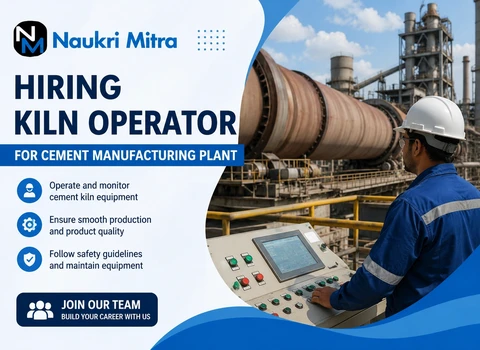
What It Means to Work as a Kiln Operator in a Cement Plant
A cement plant runs on heat, precision, and constant monitoring, and the person responsible for keeping that balance is the Kiln Operator. This is one of the most technically demanding roles in a cement manufacturing unit because the rotary kiln is where raw materials are transformed into clinker, the core ingredient of cement. If you are exploring this career, it helps to understand that the job is less about manual labor and more about controlling a large industrial process through panels, sensors, and experience-based judgement.
Why Cement Manufacturers Need Skilled Operators
Cement production is a continuous process that cannot be paused without incurring high costs and material losses. Companies hire dedicated kiln operators because even a small deviation in temperature, feed rate, or fuel supply can affect clinker quality for hours. A trained operator prevents downtime, protects expensive equipment, and ensures the plant consistently meets its daily production targets.
A Typical Shift on the Kiln Floor
Most of the working day is spent inside or near the central control room, watching temperature graphs, pressure readings, and material flow indicators. An operator regularly cross-checks these readings with physical inspections of the kiln shell, burner area and cooler section. Communication with the shift supervisor, feeding operators and maintenance staff happens throughout the day to keep the process stable.
Core Responsibilities
- Monitoring and adjusting kiln speed, feed rate and fuel input
- Reading temperature and pressure data from control panels
- Coordinating with the burner operator and cooler section staff
- Identifying early signs of coating buildup, ring formation, or refractory wear
- Recording shift logs and reporting abnormal readings immediately
- Supporting planned shutdowns and startup procedures
Equipment and Instruments Used Daily
A production worker in this role interacts with a mix of mechanical and digital systems. This includes the rotary kiln drive, burner assembly, preheater tower, clinker cooler, and a distributed control system (DCS) that displays live process data. Measuring instruments such as pyrometers, pressure gauges, and gas analyzers are used to keep emissions and combustion within safe limits. Familiarity with these tools separates an average technician from a dependable one.
Where This Kind of Work Happens
Kiln operators are employed inside cement manufacturing plants, particularly in regions with strong limestone reserves. Rajasthan, including areas around Chittorgarh, has a notable concentration of cement production due to readily available raw materials. Plant operators in this belt typically work in large industrial facilities equipped with kilns, grinding units and packing sections.
Skills That Help You Succeed
Employers usually prefer candidates with an ITI qualification in a relevant trade such as Electrical, Instrumentation or Mechanical, though a Diploma in Cement Technology or Mechanical Engineering is also well regarded. Practical exposure to DCS panels, rotary equipment and process documentation is often valued just as much as formal certificates. Beyond technical knowledge, an equipment operator needs alertness, patience and the ability to stay calm when readings fluctuate unexpectedly.
Physical Demands and Working Conditions
The job involves standing for extended periods, occasional climbing near kiln platforms, and exposure to heat, dust, and machine noise. Since cement plants operate around the clock, this position is offered on a Full-time basis and generally follows a rotational shift pattern, including night duties.
Safety Practices and Protective Gear
Safety is taken seriously in kiln areas due to high temperatures and moving machinery. Workers are usually required to wear helmets, safety shoes, ear protection, heat-resistant gloves, and dust masks. Following lockout-tagout procedures during maintenance and staying within marked safety zones near the kiln shell are standard expectations.
Challenges Operators Commonly Face
New technicians often find it challenging to quickly interpret combined data from multiple instruments, especially under unstable process conditions. Handling unexpected coating formation or sudden temperature drops requires quick, informed decisions. Gaining confidence in these situations usually comes with hands-on experience and close observation of senior operators.
Building a Long-Term Career in Kiln Operations
Many operators begin as helpers or junior technicians before moving into full kiln control responsibilities. With consistent performance, a machine operator can progress toward shift-in-charge or senior production roles within the same plant, gaining more responsibility over process optimization and fuel efficiency over time.
Salary and Possible Benefits
For this position based in Chittorgarh, Rajasthan, India, the monthly salary is ₹41,800. Along with the fixed pay, workers in cement manufacturing units may also be offered benefits such as overtime pay, Provident Fund (PF), ESI coverage, annual bonus, uniforms, and transport or canteen facilities, depending on the employer's policies.