What This Job Really Involves
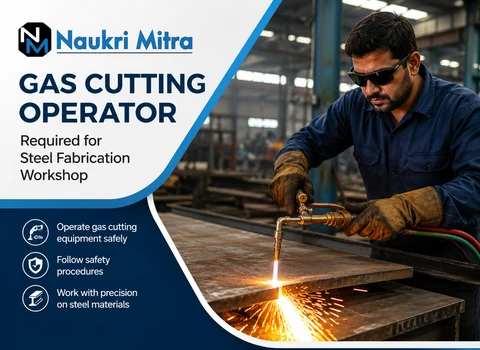
Cut steel first, weld it later — that's the basic rule in any fabrication shop. A Gas Cutting Operator handles that first part. Using an oxy-fuel torch, the operator slices plates, pipes, and structural sections to the exact size required by the job. Right now, a Steel Fabrication Workshop in Ludhiana, Punjab is hiring for exactly this position, on a Full-time basis. If you're new to the trade, here's what the work actually looks like once you're on the floor.
Why This Trade Stays in Demand
Ludhiana has one of Punjab's busiest engineering and metal-working clusters, and almost none of that production can start without cutting. Welders, fitters, painters — everyone downstream is waiting on a clean, accurate cut. A sloppy cut wastes material and slows the whole line. That's the simple reason workshops keep hiring for this role instead of treating it as an afterthought.
Walking Through a Regular Shift
Most operators begin by checking cylinders and hoses for leaks before touching anything else — skipping this step is how accidents happen. Once the torch is confirmed safe, the job sheet or drawing gets studied, the sheet is marked, and gas pressure is set. From there it's a matter of watching the flame, adjusting speed, and keeping the cut steady. A rushed cut usually shows up later as burrs or warping, so patience matters more than speed in the early stages.
What Fills Up the Day
- Reading job drawings and cutting layouts
- Adjusting oxygen and fuel gas pressure
- Cutting mild steel plates, pipes, and structural sections
- Marking dimensions with tape, scriber, or chalk line
- Checking cut edges for burrs or dross
- Cleaning and maintaining torches and nozzles
Where You'll Find This Work
Steel fabrication workshops are the most common employers, but boiler units, tank manufacturers, and structural engineering plants also hire for this role. Some operators work directly on construction sites, cutting sections just before they're erected. In a city like Ludhiana, most jobs sit inside organized fabrication workshops feeding parts into larger manufacturing chains — not one-off freelance cutting.
The Equipment on the Floor
The oxy-acetylene or oxy-LPG torch is the main tool, paired with regulators, hoses, and gas cylinders. Bigger workshops sometimes run CNC or profile-cutting tables for repetitive, high-precision jobs, which reduces manual marking. For measuring and checking work, expect to use steel rulers, try squares, spirit levels, and chalk lines — nothing exotic, but accuracy with these basics separates a good operator from an average one.
What Employers Actually Check For
Flame control matters more than people expect. Too hot and the edge burns; too cold and the cut drags. Most workshops prefer candidates who've done an ITI course in welding or a fabrication-related trade, though solid hands-on experience can count for just as much. Being comfortable reading drawings and using basic measuring instruments often matters more to a hiring supervisor than the certificate itself, particularly for operators who'll be working with less supervision.
Skills That Don't Show Up on a Resume
Steady hands help more than most people realize, especially on thick or curved sections. So does noticing a small equipment fault before it becomes a bigger problem mid-shift. Operators who do well here tend to communicate clearly with supervisors about job requirements and manage their time across multiple orders without needing constant reminders.
What the Job Demands Physically
Expect long hours on your feet, work near open flame, and occasional lifting when repositioning sheets. Cutting stations run warm, sparks and fumes are part of the environment, and machinery noise is constant in the background. Shift work varies with workshop load, so reasonable physical fitness isn't optional here — it's part of the job.
Safety Isn't Optional in This Trade
Open flame and pressurized gas leave no room for shortcuts. Safety goggles or a face shield, flame-resistant gloves, an apron, and proper safety shoes are standard gear. Beyond that, good ventilation, proper cylinder storage, and routine hose checks are what actually prevent accidents — not just following a monthly checklist.
Where New Operators Usually Struggle
Keeping a consistent flame and cutting speed trips up most beginners at first — it's a feel you build over weeks, not something you get right immediately. Thick steel sections can warp if the cut isn't managed carefully, and production deadlines don't always leave room to slow down. Learning to troubleshoot a minor torch or regulator issue on your own, instead of waiting for help, is what cuts down real downtime.
Growing Within the Trade
Operators who stick with it often move on to CNC profile-cutting machines, take charge of a cutting section, or specialize in thicker structural steel and pressure-vessel work. Gaining basic welding knowledge alongside cutting skills tends to lead to broader responsibilities within the same workshop over time.
Pay and What Else Might Come With It
This Full-time role in Ludhiana, Punjab, India pays ₹26,500 a month. Depending on the workshop, you might also see overtime pay, PF, ESI, bonuses, uniforms, or transport support — none of that is guaranteed across the board, so it's worth confirming directly with the employer during the hiring process.