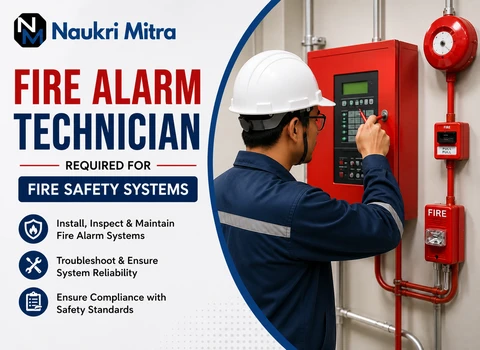
Understanding the Role of a Fire Alarm Technician
Fire safety is one of the most important parts of any building, whether it is a factory, office complex, hospital or residential tower. A Fire Alarm Technician is the person responsible for ensuring that fire detection and alarm systems operate exactly as they should. This is a full-time position based in Noida, Uttar Pradesh, India, with a monthly salary of ₹28,500. For anyone exploring a technical career in the fire safety industry, this profession offers steady, meaningful work with clear day-to-day responsibilities.
Why Businesses Need Skilled Fire Alarm Technicians
Every commercial building, industrial unit, and residential society must maintain functional fire alarm systems to ensure safety compliance. Faulty wiring, damaged sensors or outdated control panels can put lives at risk. Because of this, companies actively seek trained technicians who can install, inspect, and repair these systems. A technician's work directly reduces fire-related risks and helps organizations stay compliant with safety regulations.
A Typical Day on the Job
The daily routine of a fire alarm technician usually includes site visits, panel inspections and hands-on troubleshooting. A normal day may involve:
- Checking smoke detectors, heat sensors and manual call points for proper function
- Testing control panels and alarm sounders
- Running new wiring or replacing damaged cables
- Recording inspection results and identifying faults
- Coordinating with building staff regarding maintenance schedules
No two days are identical, since each site presents different equipment ages, layouts, and issues.
Core Responsibilities in This Profession
Beyond routine checks, a technician is expected to install new fire alarm systems, upgrade existing panels, and respond quickly to client-reported system faults. Reading electrical layouts and understanding circuit diagrams is part of the job, along with maintaining proper documentation for every service call.
Industries and Work Locations
Fire alarm technicians are needed across many sectors, including commercial buildings, industrial plants, warehouses, hospitals, educational institutions and residential complexes. In a growing urban region like Noida, demand often comes from office parks, manufacturing units, and upcoming residential townships that require certified fire-safety infrastructure.
Tools, Equipment and Instruments Used
Technicians work with a mix of hand tools and specialized testing instruments. Common items include:
- Multimeters for checking voltage and continuity
- Smoke and heat detector testers
- Wire strippers, crimping tools and screwdrivers
- Cable testers and network tone generators
- Ladders and safety harnesses for elevated work
Understanding how each detector communicates with the main control panel is essential, since most modern systems use addressable wiring loops rather than simple point-to-point connections.
Skills That Matter in This Trade
Technical knowledge of electrical circuits, basic firefighting systems, and panel programming is valuable. ITI candidates with a background in the Electrician or Electronics trade, or diploma holders in Electrical or Electronics Engineering, are often well-suited for this role. Practical exposure to wiring layouts, conduit installation, and basic networking concepts provides an added advantage. Alongside technical ability, patience, attention to detail and clear communication with site supervisors are equally important.
Physical Demands and Working Conditions
This job involves a fair amount of physical movement, including climbing ladders, working in ceiling voids, and standing for extended periods during inspections. Technicians should be comfortable working at height and in tight spaces such as false ceilings or electrical shafts. As a full-time role, the work typically follows standard shift timing, though occasional evening visits may be needed for urgent fault repairs.
Safety Practices and Protective Equipment
Since the work involves electrical systems and elevated platforms, safety cannot be compromised. Technicians are usually expected to use:
- Safety helmets and non-conductive gloves
- Safety shoes with slip resistance
- Safety harnesses when working at height
- Insulated tools for live wiring checks
Following lock-out procedures before working on panels and double-checking power isolation are basic habits every technician should build early in their career.
Common Challenges Faced on Site
Older buildings sometimes have outdated wiring that does not align with current documentation, making troubleshooting time-consuming. Technicians may also face tight deadlines during compliance audits, requiring quick yet accurate fault resolution. Building good judgement for prioritizing urgent versus routine repairs comes with experience.
Growing Within the Fire Safety Field
With experience, a fire alarm technician can move into senior technician roles, take charge of larger installation projects, or specialize in system design and panel programming. Over time, many technicians develop deep expertise in specific fire alarm system brands, which increases their value within the industry.
Salary and Benefits Overview
This full-time position in Noida, Uttar Pradesh offers a monthly salary of ₹28,500. Depending on the employer, additional benefits may include overtime pay, Provident Fund (PF), Employee State Insurance (ESI), uniforms, transport support, or canteen facilities. These benefits vary by organization and are not guaranteed across every workplace.
Getting Started in This Career
For freshers and ITI or diploma holders looking to enter this field, building a strong foundation in electrical fundamentals and gaining hands-on experience with real fire alarm panels make a noticeable difference. Staying up to date on new detector technologies and being willing to learn on the job are qualities that help technicians grow steadily in this profession.