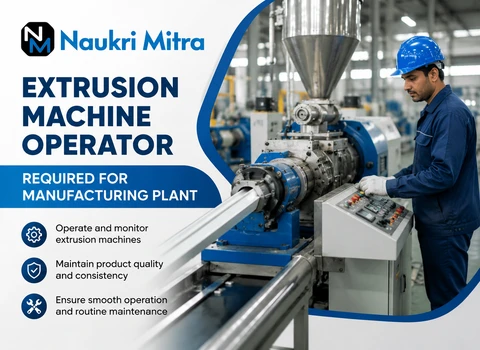
What Life Looks Like Behind a Steel Tube Mill
Walk into any tube manufacturing shed and you'll notice the mill line first — long, loud, and constantly moving. Running that line is the job of a Tube Mill Operator, someone who turns flat steel strip into round, square, or rectangular pipe. It's not glamorous work, but it's precise. A roll set a millimeter off, and an entire batch of tube can come out with the wrong wall thickness. Right now, there's a Tube Mill Operator Required for Steel Tube Manufacturing opening in Silvassa, Dadra and Nagar Haveli, and Daman and Diu, and it's a Full-time position for someone ready to work hands-on with metal all day.
The Reason Factories Keep Hiring for This Role
Tube mills don't run themselves, no matter what the automation brochures say. Someone still has to watch the strip feed, catch a weld that's starting to drift, and stop the line before bad material piles up. That's why plants keep bringing in operators — not just to press buttons, but to notice the small things before they become expensive ones.
How a Shift Actually Plays Out
Most days start the same way: check what the last shift left behind, look over the coil stock for scratches or rust, get the mill warmed up. Then it's hours of watching forming rolls, checking weld quality, adjusting pressure here and there. Somewhere in between, there's measuring — diameter, thickness, length — and writing down numbers so the next person coming on shift knows exactly where things stand.
What the Job Actually Involves, Day to Day
- Setting forming rolls for whatever tube size is running that day
- Feeding strip into the mill and keeping an eye on the weld line
- Measuring tubes with gauges and calipers as they come off the line
- Catching defects early — weld seam problems, dents, surface marks
- Handling small maintenance issues and flagging bigger ones
- Keeping batch records so quality can be traced back if needed
The Kind of Places This Work Happens
You'll find this profession mostly in tube and pipe manufacturing units, rolling mills, and fabrication plants of varying sizes. Some are large setups running several mill lines at once; others are smaller operations turning out specific tube sizes for construction sites, furniture makers, or engineering firms.
Machines and Instruments You'll Get Familiar With
Expect to work around the tube mill itself, plus uncoilers, forming and sizing rolls, and a welding unit — often high-frequency induction welding — as well as cutting or saw stations. On the measuring side, vernier calipers, micrometers, and thickness gauges show up constantly, and go/no-go gauges aren't unusual either. Being able to read a basic engineering drawing saves a lot of guesswork.
What Employers Actually Look For
A working understanding of rolling and forming, some grasp of welding parameters, and steady hands with measuring tools go a long way here. Employers may prefer candidates with relevant machining or tool room training. Depending on the complexity of the work, an ITI in a machining-related trade, a Diploma in Mechanical or Tool and Die Engineering, or equivalent vocational training may be considered suitable. Practical experience with EDM machines, engineering drawings, and precision measuring instruments is often valued as much as formal education.
Skills That Don't Show Up on a Certificate
No training program really teaches you to hear when a machine sounds wrong, but experienced operators pick up on it fast. Standing for long stretches, staying alert through repetitive checks, and working well with helpers and supervisors matter just as much as technical know-how. Shift handovers go much more smoothly when someone communicates clearly instead of just scribbling a note.
Shifts and the Physical Side of the Job
This is a Full-time role, and depending on the plant's schedule, that can mean rotating or night shifts. Expect to be on your feet for most of it, lifting moderate loads occasionally, and working near hot surfaces and moving parts — not the kind of job where you sit still for long.
Safety on the Shop Floor
Between the noise, the heat near welding stations, and sharp metal edges, safety habits aren't optional. Safety shoes, gloves, ear protection, and safety glasses are the usual PPE. Lockout procedures during maintenance and keeping walkways clear matter more than people realize until something goes wrong.
Where New Operators Tend to Struggle
Judging the right roll pressure takes time — it's not something you get right on day one. Spotting early weld defects is another learning curve. And honestly, long shifts of repetitive checks can wear on concentration. Most of this gets easier once you've spent enough hours on a particular mill and learned its quirks.
A Few Things That Help Long-Term
Paying attention to production data patterns, double-checking measurements rather than rushing them, and staying curious about different tube specifications tend to set operators apart. Picking up basic maintenance knowledge along the way also makes someone more useful on the floor, not just at their own station.
Where This Can Lead
Operators who stick with it often move into senior operator roles, shift in-charge positions, or quality control work within the same production line — same industry, more responsibility, better pay over time.
Pay and What Else Might Come With It
The monthly salary for this position in Silvassa, Dadra and Nagar Haveli, and Daman and Diu is ₹27,500. Some employers also offer overtime pay, PF, ESI, bonuses, uniforms, transport, or canteen facilities — though these vary from one company to another and shouldn't be assumed.