
"The Creator grants Brand a perpetual, worldwide, royalty-free licence to use the Creator's name, likeness and voice in any media now known or later developed." That clause is an illustration, but wording like it can turn up in a brand's first draft. A good talent manager draws a line through it before the creator has finished reading the fee. Perpetual means forever. "Any media" means paid ads the creator never approved, running years after the campaign ends, while the creator's face sells something they've since stopped believing in. This posting is for remote creator talent manager jobs where that red pen is the core of the work: you sit on the creator's side of the table, not the brand's, and your job is to make sure every deal they sign still looks sensible in three years.
What follows is a plain creator talent manager job description, organised the way a creator's career actually unfolds with a manager beside them. You can do it from home in any country; it is full-time and carries a $60,000 USD annual salary.
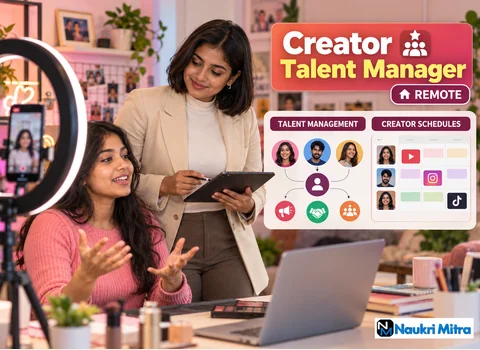
If someone asks you at a dinner what a creator talent manager does, the honest short answer is this: you negotiate creator contracts and brand deals, track channel growth and audience data in Social Blade, send and manage agreements in DocuSign, and advise creators on content strategy, pricing and long-term career moves. Everything below is that sentence stretched out over the life of a client.
It starts with a creator deciding to trust you. First calls are part audit, part therapy. They'll tell you about the brand that paid them 45 days late, or the agency that took a cut of a deal the creator found on their own. Your first job is to listen, then explain clearly what you'll handle, what you won't, and how you get paid. Creators who've been burned want that written down, and they're right to.
Before any agreement, you look hard at whether you can actually help. A gaming creator with a loyal 80,000 subscribers might be a better fit for you than a lifestyle account with ten times that and falling engagement. Taking on someone you can't grow does them no favours.
Brands will check your creator's stats. You should have checked them first. Social Blade gives you subscriber and follower history, estimated views, and upload frequency over time, and those curves tell a story. A flat month after a viral spike is normal. A slow 18-month slide in views per upload is a conversation you need to have with the creator, privately, before a sponsor raises it on a call.
You'll use this data in two directions. Outward, it backs up a rate: "The last ten long-form uploads average 210,000 views, so a dedicated integration starts here." Inward, it guides advice. If Shorts are bringing in new subscribers who never watch long-form, that changes what you'd tell the creator to film next quarter.
A creator living on two big sponsors is one budget cut away from a bad year. Part of the work is spreading their earnings across sources that suit them: platform ad revenue, recurring sponsorships, affiliate links, memberships, merch, paid appearances, licensing of their existing videos. Not every creator needs all of these. A woodworking channel might do well with a tool affiliate deal and a paid plans download; a comedy creator probably shouldn't launch a course.
Good creator monetisation advice is specific. "Diversify" is useless. "Your audience asks for your camera settings in every comment section; let's look at an affiliate agreement with a gear retailer and a pinned settings guide" is useful.
Negotiating contracts and rates is the part people picture, and it takes a large share of your time. A brand sends a brief and a number. You come back with the usage terms you'll accept, the deliverables you'll commit to, the payment schedule, and the fee. Typical sticking points:
Once terms are agreed, you send and track the agreement in DocuSign, make sure the right version is the one being signed, and chase signatures on both sides. Then you check that what the creator posts matches what the contract says, and that the invoice actually gets paid.
Saying no is a big share of the job. You turn down deals that pay well but clash with what the creator stands for, because the audience will notice even when the brand doesn't. You read the fine print on morality clauses so a one-sided version can't be used to claw back fees over a joke made years ago. You keep the creator's calendar from filling with "quick calls" that eat into filming days.
Creator talent manager work from home jobs have a rhythm worth admitting. Creators and brands sit in different time zones, and a launch going wrong at 11pm someone's time does happen. Many teams set response windows so evenings aren't permanently on call; agree that up front with whoever hires you.
The best managers keep a rough long-range plan for each client. Where does this creator want to be when they're tired of filming weekly? A podcast, a product line, a book, a production company, a quieter channel with fewer but larger partners? Your advice on pricing and partnerships should point toward that. Sometimes that means turning down a fat one-off deal to protect a long relationship with a brand that fits the plan.
A track record of two to five years in talent management, influencer agencies or entertainment is typical for this role. The creator talent manager skills that matter most are strong contract negotiation, comfort reading Social Blade analytics, day-to-day use of DocuSign, and a working understanding of how creators earn money. No specific degree is required. People come into this from agency coordinator roles, music or sports management, brand partnerships teams, or from having managed a friend's channel seriously for years.
The creator talent manager salary for this listing is $60,000 each year in US dollars, for full-time hours. That's the figure stated; this posting doesn't mention a commission. In the wider industry, some managers are paid a base, some a percentage of the deals they close, some a mix. If commission matters to you, ask during interviews and get the structure in writing before you sign.
There isn't one required creator talent manager course or creator talent manager certification. What helps more is proof you can do the work. Pick a public creator, pull their Social Blade history, and write a one-page note on what you'd pitch them and at what rate. Draft a redlined sample brand agreement showing which clauses you'd strike and why. Bring both to interviews.
For your creator talent manager resume, lead with deals and outcomes: rates you negotiated up, payment terms you fixed, creators you kept on the roster for years. Expect creator talent manager interview questions like "A brand wants 12 months of whitelisting for the original fee. What do you say?"
Apply through this listing with your resume and, if you have them, your sample redline and creator write-up. There's nothing to pay, and a real employer won't bill you for anything. When you're looking at other creator talent manager jobs remote worldwide, watch for agencies that ask you to pay for "onboarding", can't name a single creator they represent, promise you a roster of clients on day one, or send contracts from a free email address with no company details. A real agency can show you its creators and its contracts.