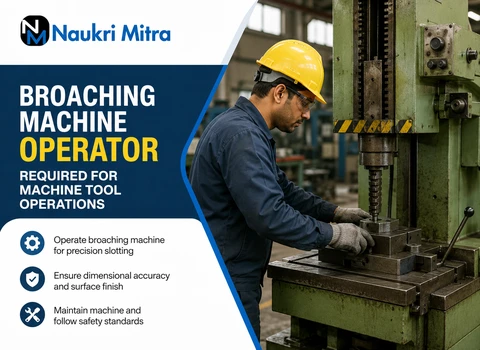
Understanding the Work of a Broaching Machine Operator
A Broaching Machine Operator works with a specialized metal-cutting process called broaching, which uses a toothed tool to remove material from a workpiece in a single, controlled pass. This method is widely used to cut keyways, splines, slots and internal or external shapes with high precision. Companies in Faridabad, Haryana, and across India's manufacturing belt rely on skilled operators because broaching produces accurate, repeatable results that are difficult to achieve with general-purpose machining methods.
Why Manufacturing Units Hire for This Position
Precision engineering, automotive parts, and tool room industries depend on components that fit together with very little tolerance for error. A trained operator ensures that each part meets exact measurements, reduces material wastage, and keeps production moving without delays. Because broaching machines require careful setup and monitoring, employers prefer candidates who understand both the machine and the quality standards expected in engineering drawings.
A Typical Day on the Shop Floor
The daily routine usually begins with checking the machine, reviewing the job order, and confirming the broach tool matches the required specification. From there, the operator loads the workpiece, aligns it correctly, and runs the cutting cycle while watching for vibration, tool wear, or unusual noise. Once the piece is cut, it is measured against the drawing tolerances before moving to the next stage of production.
Core Responsibilities
- Setting up broach tools and fixtures according to job specifications
- Loading and unloading workpieces safely
- Monitoring cutting speed, feed rate, and coolant flow
- Inspecting finished parts using measuring instruments
- Recording production output and reporting defects
- Carrying out basic maintenance and cleaning of the machine
Industries and Workplaces Where This Role Exists
This profession is common in tool rooms, automotive component units, machine part manufacturing plants, and engineering workshops. Faridabad, being an established industrial hub in Haryana, hosts several such manufacturing facilities where precision machining plays a central role in daily production.
Tools, Machines and Measuring Instruments Used
Besides the broaching machine itself, operators regularly work with vernier calipers, micrometers, dial gauges, and sometimes EDM (Electrical Discharge Machining) equipment for complex tool and die work. Reading engineering drawings correctly is just as important as operating the machine, since every cut depends on understanding the specified dimensions.
Skills That Make an Operator Successful
Technical skill matters, but so does patience and attention to detail. Since broaching is often used for close-tolerance work, a small setup error can lead to a rejected part. Strong hand-eye coordination, basic mechanical understanding, and the ability to troubleshoot minor machine issues are valued on the shop floor.
Recommended Educational Background
Employers may prefer candidates with relevant machining or tool room training. Depending on the complexity of the work, an ITI in a machining-related trade, a Diploma in Mechanical or Tool and Die Engineering, or equivalent vocational training may be considered suitable. Practical experience with EDM machines, engineering drawings, and precision measuring instruments is often valued as much as formal education.
Physical Demands and Working Environment
This is a full-time, hands-on job that involves standing for long periods, lifting moderate loads, and working close to moving machinery. The environment can involve noise, cutting oil, and metal shavings, so operators need to stay alert throughout their shift. Depending on the production schedule, shift work may be required.
Safety Practices and Protective Equipment
Safety is a daily priority in machine shops. Operators are generally expected to wear safety shoes, gloves, safety glasses, and sometimes ear protection depending on noise levels. Following lock-out procedures before adjusting or cleaning the machine, keeping the work area free of oil spills, and never bypassing machine guards are standard practices that reduce accidents.
Common Challenges on the Job
New operators often find tool alignment and the maintenance of consistent tolerances challenging at first. Tool wear, coolant management, and identifying the early signs of machine trouble also take time to master. Learning to read subtle changes in sound or vibration during cutting is a skill that improves with hands-on experience.
Practical Tips for Building Confidence
Observing experienced technicians during setup, double-checking measurements before starting a full production run, and asking questions about drawing specifications can speed up learning. Keeping a personal note of common defects and their causes also helps operators avoid repeating mistakes.
Career Growth Within the Trade
With experience, a machine operator can progress to handling more complex broaching jobs, take on quality inspection responsibilities, or move into a senior technician or shift-in-charge role within the same tool room or manufacturing setup. Those who develop strong reading skills for engineering drawings and measuring instruments often become valuable resources for training newer staff.
Salary and Employment Details
This is a full-time position based in Faridabad, Haryana, India, offering a monthly salary of ₹29,500. Depending on the employer, additional benefits such as overtime pay, Provident Fund (PF), Employee State Insurance (ESI), bonus, uniforms, transport, or canteen facilities may be provided, though these vary by organization and are not guaranteed.
For anyone exploring a career as a machine operator in India's precision engineering sector, this role offers a practical entry point into skilled manufacturing work, with clear opportunities to grow through hands-on experience and technical training.