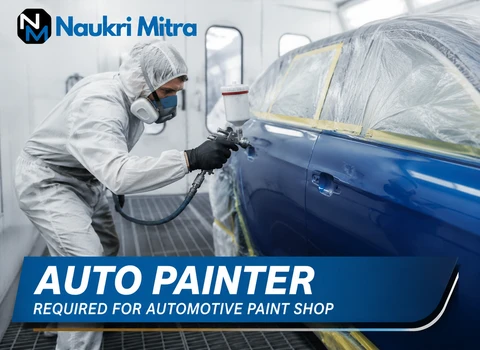
What This Job Really Looks Like on the Shop Floor
Step into a paint shop and the smell hits before anything else - thinner, primer, that faint sweetness of fresh enamel drying under lights. This is where an Auto Painter spends most of the day. A dented door panel or a faded bonnet comes in looking rough, and it leaves looking like it never had a problem. There's nothing flashy about the process, but getting it right takes a steady hand and a fair bit of patience. The position is Full-time, based in Pune, Maharashtra, India, and pays ₹25,500 a month.
Why Shops Keep Hiring for This Role
Vehicles get scratched, dented, resprayed for cosmetic reasons, or need fresh coats straight off the production line. Pune has a decent automobile and ancillary presence, so paint work doesn't dry up easily here. What shops actually need is someone who can hit the same shade code reliably, panel after panel, without the finish looking patchy or uneven when it's done.
How a Shift Typically Unfolds
Most days start with a quick check of the booth - is the compressor running fine, is the filter clogged, is the lighting bright enough to actually see flaws? After that comes prep work: sanding away old paint, masking off trim and glass, wiping everything down with a tack cloth so no dust settles into wet paint later. Then it's primer, base coat, clear coat, one after another with drying gaps in between. Toward the end of the shift, finished panels get pulled under strong light for a final look. A run in the paint or a rough orange-peel texture gets caught here, before the vehicle moves ahead.
What Actually Fills the Working Hours
Surface prep takes up a large chunk of time - more than people expect before they start this kind of work. Beyond that, the job involves mixing paint to match exact shades, running the spray gun with a steady hand, keeping an eye on how thick each coat is, and catching problems before a supervisor or customer does. Equipment upkeep matters too. A clogged spray gun ruins a finish fast, so cleaning it properly after use isn't something painters skip.
The Kind of Places That Employ Painters
Body shops, vehicle service centers, in-house paint booths at manufacturing units, independent repair garages - these cover most of it. Some painters end up working mainly on two-wheelers, others on cars or light commercial vehicles. The core skill carries over between them, though the exact setup and pace can differ quite a bit.
Tools You End Up Using Constantly
HVLP spray guns are pretty much standard now, along with air compressors, sanding blocks, masking tape, and tack cloths for cleanup. Color accuracy used to rely almost entirely on the eye, but many shops now use spectrophotometers to reduce guesswork. Wet film thickness gauges help too - instead of assuming a coat is thick enough, you actually measure it before moving forward.
What Separates a Decent Painter from a Good One
Understanding how paint behaves - how humidity affects drying, how gun angle changes the spray pattern - is the technical part, and it can be taught. What's harder to teach is the feel for it. Staying calm when a shade doesn't match on the first attempt. Noticing a flaw before it becomes a complaint from the customer picking up their car. That instinct usually comes from time spent in the booth, not from a manual.
How People Usually Get Started
An ITI certificate in the Painter trade helps, and some employers do prefer it on paper. But a fair number of working painters started out doing prep work - sanding, masking - long before they were trusted with an actual spray gun. What tends to matter more on the ground is whether someone understands different paint types and doesn't waste material through carelessness.
What the Work Demands Physically
Long stretches on your feet, a lot of bending over panels, and fumes in the air even with decent ventilation running. Since this is a Full-time role, shift timing can vary depending on how much work comes through the shop in a given week, so some flexibility helps.
Handling the Chemical Side Safely
Solvents used in painting aren't something to breathe in casually, which is why respirators, gloves, goggles, and coveralls are standard rather than optional. Ventilation and fire-safety rules inside the booth matter just as much - cutting corners there is how workplaces end up with real problems down the line.
Where New Painters Tend to Trip Up
Getting an even coat sounds simple in theory and turns out to be anything but, especially early on. Color matching under booth lighting also causes trouble - a shade that looks correct indoors can read slightly off once the vehicle is outside in daylight. Practicing on scrap panels and asking senior painters for honest, unfiltered feedback tends to fix this faster than figuring it out on your own.
What Comes Next If You Stick With It
Painters who stay in the trade often move from general painter to senior painter, and from there into roles like quality inspector or paint shop supervisor - checking finished work rather than only producing it, and training newer staff on shade matching and finish standards.
Pay and What Might Come Alongside It
This role in Pune, Maharashtra, India pays ₹25,500 per month. Depending on the employer, there may also be extras such as overtime pay, PF, ESI, bonus, uniforms, transport, or canteen facilities - though these differ from one workplace to the next and shouldn't be treated as guaranteed.