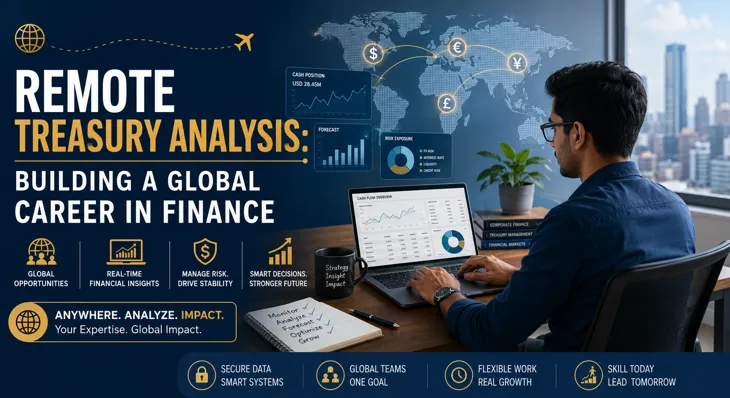
Remote Treasury Analysis: Building a Global Career in Finance
Finance has quietly gone through one of the most meaningful transformations in recent years. Roles that once required full-time presence in corporate offices are now being performed across borders, time zones, and continents. Among these evolving career paths, remote treasury analysis stands out as one of the most stable and future-ready options for finance professionals seeking flexibility without compromising growth.
At its core, this role blends financial control, data interpretation, and strategic thinking. But when done remotely, it also demands adaptability, independence, and a strong understanding of global financial systems. Let’s explore how this career works in real life, why it’s growing so quickly, and how professionals can build a successful path in it.
What Remote Treasury Analysis Really Means in Today’s Finance World
Remote treasury analysis is not just about crunching numbers from a laptop at home. It is about ensuring that a business always knows where its money is, how it is moving, and what risks might affect it in the future—all without being physically present in an office.
Think of it as the financial control tower of a company. A treasury analyst keeps track of cash positions, monitors incoming and outgoing funds, and helps businesses make smart liquidity decisions. When this work is done remotely, everything happens through secure cloud systems, dashboards, and digital reporting tools.
Companies today operate globally, which means money flows across multiple currencies and banking systems every day. Remote treasury professionals help keep this entire system balanced and predictable.
Why This Career Is Becoming More Relevant Than Ever
There is a clear reason why remote treasury analysis is gaining momentum: businesses no longer operate within borders.
Global Operations Demand Real-Time Financial Awareness
A company might be selling in the US, sourcing from Asia, and managing operations in Europe all at once. This creates constant movement of funds. Treasury professionals ensure nothing gets lost in translation between regions, currencies, or banking systems.
Technology Has Changed Everything
Earlier, treasury work required manual tracking and heavy paperwork. Today, cloud-based treasury management systems and ERP platforms allow real-time visibility of financial data. This shift has made remote financial roles not just possible, but highly efficient.
Companies Prefer Flexible Finance Teams
Hiring remote finance professionals reduces operational costs and gives companies access to global talent. Instead of limiting themselves to local hiring, organizations can now find skilled treasury analysts anywhere in the world.
What a Remote Treasury Analyst Actually Does Day to Day
The role is a mix of routine monitoring and strategic thinking. While responsibilities may vary by company, the core work usually centers on financial stability and forecasting.
Monitoring Cash Flow Continuously
One of the most important tasks is tracking how money moves in and out of the business. This helps ensure there are no liquidity gaps that could disrupt operations.
Preparing Financial Forecasts
Forecasting is not just about predicting numbers—it is about helping leadership make informed decisions. Analysts study trends, past data, and market conditions to estimate future cash positions.
Managing Financial Risk
Exchange rate fluctuations, interest rate changes, and market uncertainty can all impact a company’s finances. Treasury analysts assess these risks and suggest strategies to reduce exposure.
Coordinating With Banks and Finance Teams
Even while working remotely, analysts regularly communicate with banking partners and internal finance teams to ensure smooth financial operations.
Reporting Financial Insights
Clear reporting is a big part of the job. Decision-makers rely on these insights to plan budgets, investments, and operational strategies.
Skills That Help You Succeed in Remote Treasury Careers
Success in this field is not just about knowing finance—it is about applying it in a fast-moving, global environment.
Strong Understanding of Finance Basics
Concepts like liquidity management, working capital, and financial forecasting form the foundation of this role.
Analytical Thinking That Goes Beyond Numbers
A good treasury analyst does not just report data—they interpret it. They identify patterns, risks, and opportunities hidden in financial movements.
Most companies rely on tools such as SAP, Oracle Financials, and other treasury management systems. Strong Excel skills are also essential for analysis and reporting.
Clear and Confident Communication
Since remote roles rely heavily on written and virtual communication, the ability to explain financial insights in simple terms is extremely important.
Self-Management and Discipline
Working remotely means fewer in-person check-ins. Professionals need to manage their own schedules and deliver work consistently.
Without technology, remote treasury analysis would not exist at this scale. The entire role is built on digital infrastructure.
Enterprise systems bring all financial data into one place. This helps treasury teams track transactions across departments and regions.
Treasury Management Systems
These systems automate forecasting, payment tracking, and liquidity planning, making financial operations more accurate and efficient.
Dashboards built using tools like Power BI help turn complex financial data into clear, visual insights that leadership can quickly understand.
Tools like Microsoft Teams and Slack keep global finance teams connected in real time, even across different time zones.
Career Growth Path in Remote Treasury Analysis
One of the strongest aspects of this field is its structured career progression.
Starting Out in Finance Support Roles
Most professionals begin in junior positions, assisting with reporting, data entry, and basic cash-tracking tasks.
Moving Into Analytical Roles
With experience, individuals step into treasury analyst positions where they handle forecasting, risk analysis, and decision support.
Advancing to Senior Finance Positions
Senior treasury managers and finance leaders oversee entire financial strategies for organizations operating globally.
Independent Consulting Opportunities
Experienced professionals sometimes choose freelance or consulting paths, supporting multiple companies with treasury strategy and financial planning.
A Simple Real-World Example
Imagine a global SaaS company with customers in North America, Europe, and Asia. The company has a remote treasury analyst based in India who monitors daily cash positions.
Each morning, they check bank balances across multiple currencies. Later, they review incoming payments and expected expenses. By midday, they collaborate with finance teams in different countries to adjust forecasts and ensure liquidity remains stable.
Even though they are not physically present in any office, their decisions directly support the financial health of the entire organization.
Challenges You Should Be Ready For
Like any career, remote treasury analysis comes with its own set of challenges.
Working Across Time Zones
Global coordination often means early mornings or late evening meetings depending on the region.
Handling Sensitive Financial Data Remotely
Security is a top priority. Professionals must follow strict protocols to protect financial information.
Communication Over Distance
Without face-to-face interaction, clarity becomes extremely important to avoid misunderstandings.
High Accountability
Even small errors in treasury work can have a big financial impact, so accuracy is critical.
How to Start Your Journey in This Field
Breaking into remote treasury analysis is achievable with the right steps.
Start by building a strong foundation in finance or accounting. A degree in a related field helps, but practical exposure matters just as much.
Internships or entry-level finance roles can give you real experience in handling financial data.
Over time, focus on learning tools like Excel, ERP systems, and financial reporting software. At the same time, work on communication skills, especially written communication.
Finally, explore opportunities at multinational companies offering remote or hybrid finance roles.
The Future of Remote Treasury Analysis
The future of this career looks promising as automation and AI continue to reshape financial operations. However, human judgment will always remain essential.
While systems can process data quickly, they cannot fully replace the strategic thinking required in treasury management. Professionals who stay up to date with technology and global finance trends will continue to be in high demand.
Remote treasury analysis is not just a temporary trend—it is becoming a long-term structure in global finance.
FAQs
What is remote treasury analysis in simple terms?
It is the process of managing a company’s cash flow, forecasting, and financial risk from a remote location using digital tools.
Is this a good career option for finance professionals?
Yes, it offers strong global opportunities, flexibility, and long-term career stability in corporate finance.
Do I need advanced technical skills for this role?
You need strong Excel skills, knowledge of financial systems, and the ability to work with treasury or ERP software.
Can beginners enter this field?
Yes, many professionals start in junior finance roles and gradually move into treasury positions with experience.
Which industries hire remote treasury analysts?
Industries like technology, banking, consulting, e-commerce, and multinational corporations frequently hire for these roles.
Conclusion
Remote treasury analysis has quietly become one of the most practical and globally relevant careers in modern finance. It combines analytical thinking with digital tools, opening doors to international opportunities without geographical limits.
For professionals who enjoy working with data, understanding financial systems, and contributing to big-picture decisions, this path offers both stability and long-term growth. As businesses continue to expand globally, the demand for skilled remote treasury professionals will only rise.