📚 Table of Contents
- What Is Remote Microfinance Consulting?
- Why Emerging Markets Need Remote Microfinance Consultants
- Financial Inclusion Is Expanding Quickly
- Digital Finance Is Reshaping Microfinance
- Organizations Want Flexible and Affordable Expertise
- Key Services Offered by Remote Microfinance Consultants
- Microfinance Strategy Development
- Risk Assessment and Portfolio Management
- Digital Transformation Consulting
- Regulatory and Compliance Support
- Staff Training and Capacity Building
- Skills Required for Remote Microfinance Consulting
- Financial and Analytical Skills
- Understanding of Emerging Markets
- Communication and Remote Collaboration
- Problem-Solving and Adaptability
- Benefits of Working in Remote Microfinance Consulting
- Access to International Opportunities
- Flexible Work Structure
- Meaningful and Impact-Driven Work
- Strong Industry Growth Potential
- Challenges in Remote Microfinance Consulting
- Limited Infrastructure in Some Regions
- Cultural and Regional Differences
- Data Reliability Issues
- Time Zone Coordination
- Industries and Organizations Hiring Remote Microfinance Consultants
- Microfinance Institutions
- Fintech Startups
- Nonprofit Organizations and NGOs
- Development Agencies
- Social Enterprises
- How to Start a Career in Remote Microfinance Consulting
- Build Relevant Experience
- Learn About Financial Inclusion
- Develop Remote Consulting Skills
- Build an International Network
- Create a Strong Professional Portfolio
- The Future of Remote Microfinance Consulting
- Practical Example of Remote Microfinance Consulting in Action
- Frequently Asked Questions
- What does a remote microfinance consultant do?
- Which countries offer strong opportunities in microfinance consulting?
- Do you need finance experience to become a microfinance consultant?
- Is remote microfinance consulting a good freelance career?
- What skills are most important for remote microfinance consultants?
- How is technology changing microfinance consulting?
- Conclusion
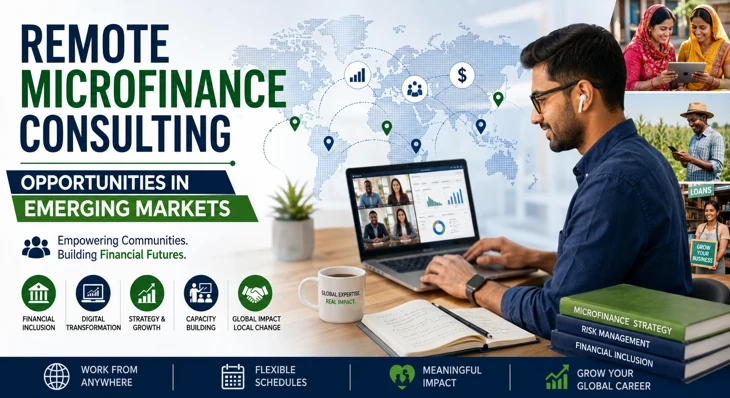
Remote Microfinance Consulting Opportunities in Emerging Markets
The demand for remote microfinance consulting is growing faster than many professionals realize. Across emerging markets, financial institutions, nonprofits, and fintech companies are seeking experienced consultants who can help them expand financial access, improve lending systems, and modernize operations without requiring in-person presence. In many developing economies, small business owners and low-income communities still struggle to access traditional banking services. Microfinance institutions play a major role in closing that gap. At the same time, the rise of digital banking and remote work has opened the door for consultants to support these organizations from anywhere in the world. Today, a consultant sitting in India may advise a lending startup in Kenya, help a nonprofit in Bangladesh improve loan recovery systems, or train teams in Latin America through virtual workshops. That shift has completely changed how the microfinance sector operates. For finance professionals, development experts, and consultants seeking meaningful global work, remote microfinance consulting offers flexibility, strong career potential, and the opportunity to contribute to real economic progress.What Is Remote Microfinance Consulting?
Remote microfinance consulting involves advising organizations that provide financial services to low-income individuals and small businesses in developing economies. Consultants work virtually to help institutions improve lending systems, financial operations, digital transformation, compliance, risk management, and customer outreach. Microfinance institutions typically serve people who may not qualify for traditional banking services. These include:- Small business owners
- Rural entrepreneurs
- Women-led businesses
- Farmers and agricultural workers
- Low-income households
- Informal sector workers
Why Emerging Markets Need Remote Microfinance Consultants
Emerging markets continue to experience rapid economic growth, but financial access still remains uneven in many regions. Millions of people operate small businesses, farms, or informal services without reliable access to loans, savings accounts, or insurance. That is exactly why remote microfinance consulting has become so important. Organizations working in financial inclusion often need outside expertise to improve operations, reduce lending risks, and adopt modern technology. Instead of hiring expensive on-site consultants, many institutions now prefer remote specialists who can support projects virtually.Financial Inclusion Is Expanding Quickly
Governments and development organizations are investing heavily in financial inclusion programs. Mobile banking apps and digital wallets are helping underserved communities access financial tools that were unavailable just a few years ago. Still, technology alone does not solve every challenge. Many institutions need guidance on building sustainable lending systems, improving customer trust, and managing repayment risks. Remote consultants often step in to solve those operational gaps.Digital Finance Is Reshaping Microfinance
The industry looks very different from what it did a decade ago. Many organizations now rely on:- Mobile payment systems
- Digital loan processing
- Cloud-based reporting tools
- AI-driven credit analysis
- Online customer onboarding
Organizations Want Flexible and Affordable Expertise
Hiring international consultants for long-term travel assignments can be costly. Remote consulting gives institutions access to specialized knowledge without paying relocation or travel expenses. For example, a microfinance startup expanding into rural markets may hire a remote consultant to improve portfolio management systems, train staff online, and create digital workflows. The organization gains global expertise while keeping operational costs manageable.Key Services Offered by Remote Microfinance Consultants
Remote consultants can specialize in different areas depending on their background and expertise.Microfinance Strategy Development
Many institutions need guidance on long-term growth strategies. Consultants help organizations:- Expand into new regions
- Improve loan products
- Increase customer retention
- Build sustainable business models
- Develop financial inclusion programs
Risk Assessment and Portfolio Management
Managing loan repayment risks is critical in microfinance. Consultants often analyze borrower data, repayment trends, and operational systems to reduce financial risk. They may also help create stronger underwriting policies and improve credit evaluation frameworks. This service is especially important for organizations operating in emerging economies facing economic uncertainty or inflation.Digital Transformation Consulting
Many microfinance institutions are moving from manual systems to digital operations. Remote consultants assist with:- Selecting software platforms
- Improving digital workflows
- Integrating mobile payment systems
- Automating reporting processes
- Training staff on digital tools
Regulatory and Compliance Support
Financial regulations vary across countries, and microfinance institutions must comply with local laws. Consultants help organizations:- Understand compliance requirements
- Improve reporting standards
- Strengthen internal controls
- Prepare for audits
- Develop anti-fraud systems
Staff Training and Capacity Building
Many remote consultants conduct virtual workshops and online training sessions for local teams. Training areas may include:- Customer service
- Loan processing
- Financial literacy
- Digital banking tools
- Risk management
- Leadership development
Skills Required for Remote Microfinance Consulting
Professionals entering this field need a combination of financial expertise, communication skills, and global awareness.Financial and Analytical Skills
A strong understanding of:- Microfinance operations
- Lending systems
- Financial analysis
- Risk management
- Budgeting and forecasting
Understanding of Emerging Markets
Successful consultants understand the social and economic realities of developing regions. For example, lending strategies that work in urban markets may fail in rural agricultural communities. Consultants must adapt recommendations to local conditions. Cultural awareness and regional research skills are extremely important.Communication and Remote Collaboration
Because consultants work virtually, communication becomes a major success factor. Professionals must be comfortable using:- Zoom
- Microsoft Teams
- Slack
- Cloud-based project tools
- Virtual presentation platforms
Problem-Solving and Adaptability
Emerging markets often face unpredictable economic conditions, infrastructure limitations, and regulatory changes. Remote consultants must be flexible and able to solve practical problems quickly.Benefits of Working in Remote Microfinance Consulting
Remote microfinance consulting appeals to professionals for several reasons. It combines flexibility with purpose-driven work, which many traditional finance roles lack.Access to International Opportunities
One of the biggest advantages is the ability to work with organizations across different countries. A consultant based in Bhopal, London, or Manila can support projects in Kenya, Peru, or Indonesia without relocating. That opens the door to a much wider range of opportunities.Flexible Work Structure
Many consultants work on a freelance or project basis. Some handle multiple clients at the same time, while others work with one organization for several months. This flexibility attracts:- Independent consultants
- Finance professionals
- Development specialists
- Digital nomads
- Experienced banking experts
Meaningful and Impact-Driven Work
Unlike many corporate consulting jobs, microfinance consulting often creates direct social impact. Helping a financial institution improve loan distribution can support local entrepreneurs, women-led businesses, and rural communities. In some cases, better financial systems allow families to expand businesses, pay school fees, or invest in farming equipment. That sense of impact is one reason many professionals stay in the field long term.Strong Industry Growth Potential
The financial inclusion sector continues to attract investment from governments, NGOs, development agencies, and fintech companies. As digital banking expands across emerging markets, the need for consultants with both financial and technological expertise is expected to rise steadily.Challenges in Remote Microfinance Consulting
Although the field offers exciting opportunities, it also comes with unique challenges.Limited Infrastructure in Some Regions
Internet connectivity and digital infrastructure may be inconsistent in rural or underserved areas. Consultants sometimes face delays in communication or difficulties accessing accurate data.Cultural and Regional Differences
Every market operates differently. A lending strategy that succeeds in one country may not work in another due to cultural behaviors, local regulations, or economic conditions. Consultants must avoid using one-size-fits-all solutions.Data Reliability Issues
Some institutions may lack modern data systems or reliable reporting processes. This can make financial analysis and forecasting more difficult.Time Zone Coordination
Working with global teams often requires managing multiple time zones. Remote consultants may need flexible schedules to coordinate with clients across different regions.Industries and Organizations Hiring Remote Microfinance Consultants
Several sectors actively hire remote microfinance experts.Microfinance Institutions
Traditional microfinance organizations frequently seek consultants for operational improvement, digital transformation, and portfolio management.Fintech Startups
Many fintech companies entering emerging markets need consultants who understand both digital finance and underserved customer segments. These companies often focus on:- Mobile lending
- Digital payments
- Alternative credit scoring
- Financial inclusion apps
Nonprofit Organizations and NGOs
International NGOs working on poverty reduction and economic development often hire microfinance consultants for project implementation and evaluation.Development Agencies
Organizations such as the World Bank and regional development programs regularly support financial inclusion projects. Remote consultants may contribute to research, training, or operational advisory work.Social Enterprises
Social enterprises focused on community development frequently use microfinance models to support entrepreneurship and local economic growth.How to Start a Career in Remote Microfinance Consulting
Entering this field requires strategic preparation.Build Relevant Experience
Professionals with backgrounds in:- Banking
- Finance
- Accounting
- Business consulting
- International development
- Fintech
Learn About Financial Inclusion
Understanding financial inclusion principles is essential. Professionals should study topics such as:- Micro-lending models
- Rural banking
- Digital finance
- Economic development
- Social entrepreneurship
Develop Remote Consulting Skills
Strong virtual collaboration skills are increasingly important. Consultants should learn how to:- Conduct virtual workshops
- Manage remote projects
- Create digital presentations
- Deliver online training
- Analyze cloud-based financial systems
Build an International Network
Networking can open doors to consulting opportunities. Professionals can connect with:- Development finance communities
- LinkedIn industry groups
- International NGOs
- Fintech organizations
- Microfinance conferences
Create a Strong Professional Portfolio
A portfolio showcasing successful projects, financial analysis work, or operational improvements can help consultants stand out. Case studies and measurable results are particularly effective.The Future of Remote Microfinance Consulting
The future of remote microfinance consulting looks extremely promising. Several long-term trends are pushing the industry forward. Digital banking continues to expand, smartphone access is increasing in developing economies, and more organizations are investing in financial inclusion programs. At the same time, remote collaboration has become normal across global industries. Microfinance institutions are now far more comfortable working with remote advisors, trainers, and financial consultants than they were a few years ago. Artificial intelligence and data analytics are also changing how lending decisions are made. Many institutions are experimenting with automated credit scoring systems, digital repayment tracking, and predictive financial analysis. Consultants who understand both finance and technology will likely see the strongest demand moving forward. Another important trend is the rise of fintech partnerships. Traditional microfinance organizations increasingly collaborate with fintech startups to improve mobile lending and digital payment systems. That creates new consulting opportunities in areas such as:- Digital transformation
- Financial data analysis
- Customer experience optimization
- Mobile banking strategy
- Loan automation systems
Practical Example of Remote Microfinance Consulting in Action
Imagine a small lending institution in rural Africa struggling to track loan repayments. The organization relies on spreadsheets and manual reporting, causing delays and repayment errors. A remote microfinance consultant steps in to:- Analyze operational weaknesses
- Recommend a cloud-based loan management platform
- Train staff virtually
- Create automated reporting systems
- Improve borrower communication workflows