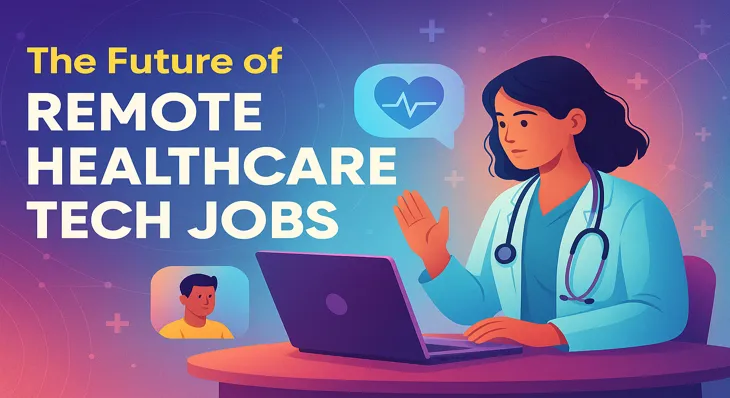
The Future of Remote Healthcare Tech Jobs
Remote healthcare isn’t some “sci-fi” idea anymore. It’s here. Think about the last time you needed to see a doctor. Did you sit in a waiting room with those stiff chairs and a stack of old magazines? Or did you hop on a video call from your couch, maybe with your Wi-Fi freezing for a second before the screen caught up? For many people, that second option is now the standard. And it’s spreading fast.
So what does this shift really mean for healthcare technology? And more importantly, what does it mean for you if you’re thinking about your career? Let’s unpack it, share a few real stories, and peek at what might be around the corner.
Why Remote Healthcare Is Growing So Fast
Healthcare has always been about people. That hasn’t changed. What’s changed is how we connect with doctors. During the pandemic,
telehealth platforms weren’t just a backup—they became the main way to see a doctor. Families leaned on them. Doctors realized they could see more patients in a shorter amount of time. Patients discovered they didn’t have to sacrifice half a day to sit in a clinic for a ten‑minute visit. Everyone benefited.
The American Medical Association reported that telehealth use more than tripled between 2020 and 2022. A leap that size doesn’t happen often in healthcare. And here’s the catch—none of it works without the tech humming in the background. Health informatics, EHRs, cloud systems—they might sound dry, but they’re the backbone. Without those, video calls and virtual checkups wouldn’t exist. Ten years ago, nobody was hiring for these roles. Now, they’re everywhere, creating brand-new
remote healthcare tech jobs.
Everyday Stories That Show the Shift
Take my friend Riya. She lives in a small town where, for years, she had to drive two hours to see a specialist. Now, she books appointments online and connects with patients through
virtual care tools. She told me, “It feels like I finally have the same access to healthcare as people in big cities.”
Or my cousin, who lives abroad. He wears a smartwatch that tracks his heart rate. One day, his doctor noticed an irregular pattern through the
wearable medical device, flagged it, and started treatment early. That wasn’t just convenient—it may have saved his life.
Stories like these make it clear. Working in this space isn’t just about writing code or crunching data. It’s about creating solutions that affect people in real, tangible ways.
Key Technologies Shaping Remote Healthcare Careers
So which jobs are making the most significant impact right now? A few stand out.
AI in medical technology is helping doctors read scans more quickly, reducing errors. Think of it like a sharp‑eyed assistant that never gets tired.
Medical data analytics is huge, too. Hospitals collect vast amounts of data, and specialists transform those numbers into valuable insights—such as identifying early warnings that some patients may require additional care.
Cybersecurity in healthcare IT is another big one. Patient data is valuable, which makes it a target. Hackers are always looking, and experts are needed to keep information safe. Then there’s
healthcare software development. Everything from
mobile health applications to scheduling platforms has to be built, updated, and patched. And don’t forget
remote patient monitoring. Doctors and nurses can now track patients at home in real time, but they rely on tech professionals to design and maintain those systems.
Challenges Creating New Opportunities
Of course, remote healthcare isn’t flawless. Connectivity? Still an issue. If your Wi‑Fi drops mid‑call, so does your appointment. That’s everyday reality for rural areas. Trust? Some people feel more secure when they see their doctor in person. Building confidence in digital care takes time and effort. Privacy? Always a concern. With sensitive health data floating online, patients ask: “Is my information safe?”
But here’s the flip side. Each of these problems fuels the creation of new
remote healthcare technology jobs. Picture an engineer trying to expand broadband in rural communities. A cybersecurity lead is running last‑minute checks on firewalls because millions of records are at stake. A UX designer tweaking a telehealth app so it doesn’t feel clunky. Those problems? They’re not dead ends. They’re openings—and someone has to walk through.
How This Impacts Your Career
If you’re after a career that lasts, this field is about as solid as it gets. Healthcare isn’t slowing down—it’s evolving. And tech is steering the wheel. You don’t need to wear a white coat to make an impact. You could be coding
telehealth platforms, designing
cloud‑based health solutions, or launching the next
mobile health app. You don’t need a medical degree either. Maybe you’re a data whiz, a designer, or someone with a knack for spotting security gaps. There’s room here.
Picture this: one week, a data analyst is buried in spreadsheets, trying to predict a sudden surge of patients. Somewhere else, a developer is still awake at 2 a.m. fixing a stubborn bug in a monitoring app. Meanwhile, a cybersecurity lead is conducting stress tests because a single weak spot could expose thousands of records. Different jobs, different pressures. But in the end, they’re all pushing toward the same thing—better care.
The Human Side of Remote Healthcare Careers
It’s easy to assume technology makes healthcare colder. When you strip it down, though, it’s never really been about machines. It’s about people. Always has been. When you’re sick, you want your doctor to be clear, fast, and kind. That’s it. Tech can speed things up, but empathy is still delivered human‑to‑human.
A doctor using
medical data analytics might detect risks early, but the way they share that news—the patience in their voice, the reassurance in their tone—matters just as much as the numbers on the screen. That’s why empathy is a key component in many
remote healthcare tech jobs. Behind every platform or app are people trying to make the experience feel human. That’s what
patient‑centered design is all about.
The Future Outlook for Remote Healthcare Tech Jobs
So, what’s likely to happen in the next five to ten years? Systems that finally sync, so you won’t have to repeat your medical history every time.
Smarter wearables that do more than count steps—they’ll predict risks before they spiral.
AI as a trusted partner, not a replacement, providing doctors with sharper tools to make informed decisions. And a broader global reach, with specialists in one country helping patients on the other side of the world.
Some forecasts predict that telehealth could reach $450 billion by 2030. Considerable number, right? What it really means: more tech, more jobs, more opportunities. Some roles don’t even have names yet. And somebody’s going to fill them. Why not you?
Final Thoughts: Why This Matters to You
When you strip it down, the future of
remote healthcare tech jobs isn’t about machines. It’s about people—patients, doctors, and professionals like you. If you’ve ever wondered whether your skills could make a difference, here’s your answer. They can. The demand is real. You’ll solve problems, support communities, and shape a healthier future.
You don’t need to change everything overnight. Start small. Explore
mobile health applications, dive into
health informatics, or take a short course in
healthcare software development. Each skill you pick up puts you closer to making an impact.
The shift is already happening. The real question is—how will you step into it? By joining this field, you’re not just building a career. You’re helping patients everywhere access better care. And that’s the kind of work that lasts.