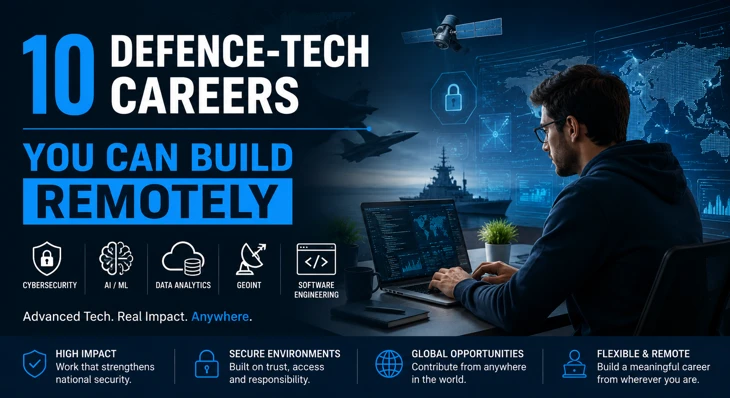
10 Defence-Tech Careers You Can Build Remotely
Introduction
A few years ago, it would have sounded unusual to imagine working in defense technology from a home office. The industry was known for restricted access, classified environments, and tightly controlled physical workplaces. But things have shifted in a very real way.
Today, defense systems are deeply digital. They rely on cloud infrastructure, encrypted communication channels, AI-driven monitoring, and massive data pipelines. Because of that, a surprising number of defense-tech careers you can build remotely are now opening up across cybersecurity, artificial intelligence, software engineering, data intelligence, and geospatial analysis.
What makes this space interesting is not just the flexibility—it’s the impact. These roles often contribute directly to national security systems, critical infrastructure protection, and global intelligence networks. In other words, remote doesn’t mean distant in responsibility.
For professionals exploring remote defense-tech jobs, this shift has created a career path that blends advanced technology with real-world purpose. And unlike traditional tech roles, the work often operates at a higher level of precision, security awareness, and accountability.
Why Defense-Tech Work Is Quietly Moving Remote
The move toward remote-friendly defense-tech roles didn’t come from a single change. It evolved gradually as defense systems became more software-driven and globally connected.
Modern defense operations now depend heavily on digital ecosystems. Satellite feeds, surveillance data, logistics platforms, and communication systems are no longer isolated—they’re integrated into cloud-based environments that authorized professionals can access securely from different locations.
At the same time, there’s a growing demand for specialized technical talent. Cybersecurity experts, AI engineers, and data analysts are in short supply globally. Defense organizations and contractors have responded by widening their hiring approach and allowing remote collaboration where possible.
Security technology has also matured in ways that support this shift. Zero-trust architectures, multi-layer encryption, and controlled virtual environments now allow sensitive systems to be accessed without exposing core infrastructure.
So instead of one centralized workplace, defense-tech work today often looks like distributed teams connected through secure digital layers, each contributing to the same mission from different parts of the world.
Skills That Matter More Than Location
Before getting into specific roles, it’s worth understanding the type of skills that consistently show up in this industry. These are not just technical requirements—they shape how you think and work in high-security environments.
Technical depth
Most defense-tech careers require a strong foundation in areas like cybersecurity, programming, cloud systems, AI, and data analytics. Python, C++, and Java often come up, along with familiarity with secure cloud platforms and encryption systems.
Analytical thinking
The work is rarely straightforward. You may be dealing with incomplete data, unusual patterns, or high-pressure situations where decisions must be made quickly yet carefully.
Discipline and accuracy
Small mistakes can have large consequences. Whether it’s code, analysis, or documentation, precision is part of the job description—even when it’s not written explicitly.
Security-first mindset
Understanding how sensitive systems operate is essential. It’s not just about protecting data—it’s about respecting the structure and protocols that keep entire systems stable.
Clear communication
Remote defense-tech teams rely heavily on written communication. Reports, logs, documentation, and structured updates often carry as much weight as meetings.
10 Defense-Tech Careers You Can Build Remotely
Instead of treating these as rigid job titles, it helps to see them as evolving roles within a larger ecosystem. Each one connects to modern defense systems in a different but meaningful way.
Cybersecurity Analyst
Cybersecurity analysts work at the front line of digital defense. In remote environments, they monitor systems for unusual activity, investigate alerts, and respond to potential threats before they escalate.
A typical workday might involve reviewing security dashboards, analyzing suspicious network behavior, or identifying vulnerabilities in system architecture. It’s a role that requires focus, patience, and a strong understanding of attack patterns.
Defense Data Analyst
Defense data analysts deal with large, often complex datasets coming from multiple intelligence sources. Their work is less about numbers and more about interpretation.
They might study movement patterns, communication signals, or system anomalies to support decision-making. Much of this happens through secure analytics platforms where raw data is transformed into actionable insights.
AI/ML Engineer in Defense Systems
Artificial intelligence is becoming deeply embedded in defense operations. AI engineers design models that help detect threats, analyze surveillance data, and improve prediction systems.
In remote setups, the work often involves training models in secure environments, testing model outputs, and refining algorithms for real-time defense applications.
Software developers in this field build applications that support mission-critical operations—everything from logistics systems to command interfaces.
Unlike typical development roles, the emphasis here is on stability, security, and long-term reliability. Clean architecture and strict coding standards are part of everyday work.
Cyber Threat Intelligence Specialist
This role focuses on understanding threats before they become incidents. Specialists track cybercriminal groups, analyze global attack trends, and identify potential risks to defense infrastructure.
Their insights often help organizations adjust their security posture proactively rather than reactively.
Cloud Security Architect
As defense systems move into cloud environments, security architects become essential. They design infrastructure that ensures sensitive data remains protected across distributed systems.
This includes implementing encryption layers, access control models, and zero-trust frameworks that limit exposure while maintaining usability for authorized users.
GIS and Remote Sensing Analyst
GIS analysts work with satellite imagery and geospatial data to support operational planning and monitoring.
They help interpret terrain conditions, track environmental changes, and support strategic planning. Since all data is digital, this role naturally fits remote work environments.
Defense Simulation Engineer
Simulation engineers create digital environments that replicate real-world scenarios for training and planning.
These simulations allow teams to test strategies without real-world risk. Working remotely, engineers collaborate with developers and analysts to refine accuracy and realism.
Network Security Engineer
Network security engineers protect communication systems that defense operations rely on. They monitor traffic, configure secure networks, and ensure systems remain protected against intrusion attempts.
Even remotely, they operate through secure monitoring tools that provide real-time visibility into system health.
Technical Documentation Specialist
Not every defense-tech role is highly technical in execution, but still critical in impact. Documentation specialists translate complex systems into clear, usable guides.
Their work ensures engineers, analysts, and operational teams can understand and correctly use sophisticated defense technologies.
What Makes These Roles High-Impact Even Remotely
One of the most interesting things about defense-tech careers you can build remotely is that physical distance doesn’t reduce responsibility.
A cybersecurity analyst working from another country might stop a major intrusion attempt. A GIS analyst might help identify unusual movement patterns near a sensitive zone. An AI engineer might improve a model that enhances early threat detection.
The work feels distant in its setup, but very real in its consequences. That’s what makes this field different from many traditional remote jobs.
Challenges You Should Expect
Like any specialized field, defense-tech comes with its own set of challenges.
Security clearance requirements can be strict and time-consuming. Not every role is immediately accessible, and onboarding may involve detailed verification processes.
There’s also the constant need to stay up to date. Threat landscapes evolve quickly, and tools used today may be replaced or upgraded within a short span.
Finally, working across global teams means adjusting to different time zones and communication styles, especially during urgent situations.
Still, many professionals find the learning curve worth it because of the work's complexity and impact.
FAQs
1. Can I really work in defense-tech remotely?
Yes. Many roles in cybersecurity, AI, software engineering, and data analysis now support remote or hybrid work models depending on security requirements.
2. Do I need a military background?
No. Most roles are open to civilians with strong technical skills and relevant certifications.
3. What qualifications help most?
Degrees in computer science, cybersecurity, or data science are useful. Certifications like CISSP, CEH, and AWS Security are widely recognized.
4. Is remote defense work safe and secure?
Yes. These roles use encrypted systems, strict access controls, and secure cloud environments designed specifically for sensitive operations.
5. Which roles pay the most?
Cloud security architects, AI engineers, and senior cybersecurity professionals are typically among the highest-paying.
6. How do I start building a career in this field?
Focus on core technical skills, work on real-world projects, and pursue certifications that align with cybersecurity, AI, or cloud systems.
Conclusion
Defense technology is no longer confined to closed environments or specialized facilities. It has evolved into a distributed digital ecosystem where skilled professionals contribute from across the world.
From cybersecurity analysts to AI engineers, these defense-tech careers you can build remotely offer a rare combination of technical depth, global relevance, and meaningful impact.
As digital defense systems continue to expand, the demand for skilled professionals will only grow stronger. For anyone looking to enter a field where technology meets purpose, this space offers long-term opportunity and continuous evolution.