local-healthcare-jobs-beyond-metros

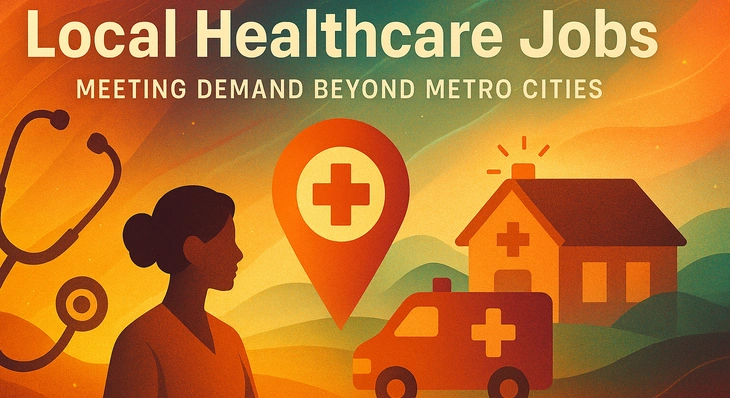
Local Healthcare Jobs: Meeting Demand Beyond Metro Cities

Local Healthcare Jobs: Meeting Demand Beyond Metro Cities

Introduction

Step into a clinic in a tier-2 city at 9 a.m., and the benches are already full. Kids fidgeting, old men leaning on canes, women carrying steel tiffins because they know the wait will stretch into the afternoon. The fan squeaks overhead, papers pile on the desk, but the doctor hasn’t shown yet—he’s covering two centers at once. This isn’t a rare scene; it’s Tuesday. It’s every week. And the posters on the wall about “affordable care” feel like a joke when the line outside runs down the steps and onto the road.

Real Experiences & Storytelling

Picture this: a small village where the nearest hospital is 50 kilometers away. When emergencies strike, families often rely on local hospitals hiring part-time doctors or paramedical staff through recruitment drives. One nurse, managing dozens of patients daily, becomes the lifeline of an entire community. These aren’t statistics—they’re survival stories.

Take the example of allied health professionals who bridge the gap between doctors and patients. From lab technicians to physiotherapists, they ensure people get timely care. In many regional healthcare facilities, a single technician handles everything—blood tests, scans, and reports—because trained staff are so scarce. These stories highlight the very real struggles faced by rural health infrastructure.

Another real-life story comes from Maharashtra, where a mobile health unit staffed with just two nurses and one doctor serves over 20 villages. On average, they see 200 patients a week. The resilience of such teams shows both the burden and the dedication of healthcare workers beyond metro areas.

Why Attracting Medical Talent to Small Towns is Hard

Ever wondered why small towns struggle to attract medical talent? The pay may not always compete with that of metro hospitals, but the impact is substantial. Local healthcare roles offer professionals the opportunity to transform lives in ways that city jobs rarely can. Still, the challenge is this: how do you convince skilled doctors and nurses to relocate to areas with fewer resources? The question is tricky, but the answer lies in providing genuine medical career opportunities in these regions. Without it, affordable healthcare access stays out of reach for millions.

The Ground Reality in Smaller Cities

No speeches needed. Walk into a community clinic in a small town on any Monday morning—the line is already spilling out the gate. A child wails in the corner, and an old woman fans herself with a folded prescription. The paint on the walls is chipped, the X-ray machine is covered with a cloth, waiting for a technician who never comes. By lunch, the nurse looks exhausted, the crowd hasn’t thinned, and half the patients are still waiting with tokens in their hands. That’s the “system” most days.

The Human Side of the Shortage

It’s brutal, honestly. Picture sitting on a hard bench, clutching your stomach, waiting hours because there’s only one doctor that day. Or a young nurse rushing between wards, her phone buzzing nonstop, because she’s covering for three others who quit last month. This isn’t a line in some report—it’s human pain. Missed treatments. Late diagnoses. Families are stuck waiting. And in the smaller towns, where a so-called remote service on a shaky internet line is all people can hope for, it hits even harder. Filling doctor vacancies in tier-2 cities and boosting paramedical staff recruitment aren’t statistics—they’re survival moves.

Relatable Examples

Think about schools. If one teacher had to handle 100 kids, what would learning look like? Chaos, right? That’s what happens in healthcare when staff numbers are low. Primary care centers are like classrooms—they need sufficient staff (or, in this case, nurses and doctors) to keep things running smoothly. Without them, students—or patients—fall behind. Just as schools rely on support staff, hospitals rely on allied health professionals to keep their operations alive.

Another way to picture it: think about a sports team. If only a few players show up, the whole game collapses. The same applies to hospitals—without enough staff, even the best facilities grind to a halt.

What You Actually See in a Rural Clinic

No sugarcoating here. Rural health systems are gasping for staff—it’s evident if you spend even an hour in one. Empty desks, dusty equipment, nurses juggling three wards. The demand isn’t in reports—it’s painted on chalkboards, taped to walls, posted on notice boards outside clinics. Job openings no one answers.

Skills You Only Learn Once You’re There

Degrees help, but they don’t keep the ward running. Out here, you learn on the fly. Morning might be a delivery, afternoon a broken BP machine, evening a family that needs someone to explain test results in plain words. Nurses often end up serving as counselors, translators, and sometimes even ambulance drivers. Nobody tells you that in the brochure.

Doctor vacancies in tier-2 cities aren’t just about filling rosters. They need people who know the culture, speak the dialect, and can handle working with half the equipment missing. Paramedical staff recruitment is just as critical because they hold the system together when everything else falters. At Naukri Mitra, we track the skills that truly matter, and adaptability consistently tops the list.

Future? Depends on Who Shows Up to Work

The government’s big bet is Ayushman Bharat—lakhs of health centers promised. Sounds neat in press releases, but walk by the half-built structures and you’ll see the real snag: staff. Posters are printed, ribbon cuttings happen, but without people in white coats, they’re just empty shells. Still, if you’re willing to step outside the metros, the opportunities are there—steady jobs, incentives, and a career that actually feels worthwhile.

Public health careers are gaining momentum, particularly as communities increasingly rely on prevention. Telemedicine is intended to help, but power outages and unstable internet connections can cause video calls to freeze mid-consultation. Nevertheless, demand is skyrocketing. Insights from Naukri Mitra reveal that tier-2 and tier-3 cities are catching up, even outpacing metros in job openings. If you’re ready to ride a rickshaw to a district hospital or work out of a community clinic, the future is waiting.

How People Actually Get Started

So where do you even begin? People in the field will tell you straight:

– Start with what you’re good at. If you’re a lab tech, lean on it. If you’re a nurse, don’t downplay it—rural setups run on you.
– Ask around. Half the jobs never hit the internet; they’re chalked up on boards, spread over chai, or passed through word of mouth.
– Don’t just email a CV. Show up, talk, prove you know what it means to work short-staffed, with queues out the door and machines breaking down.
– Keep adding skills. This week it’s a BP machine, next week you’re helping with a delivery. That’s how people grow into roles out here.
– And yes, use trusted portals. Sites like Naukri Mitra connect you with real hospitals and clinics hiring right now.

It’s not neat, it’s not linear, but that’s how careers in local healthcare actually start.

Conclusion & Next Steps

Out here, a “job” isn’t a bullet on a website—it’s whether someone gets help or not. A nurse showing up on time can mean a baby makes it through the night. A doctor staying an extra hour can spare an old man another week of pain. Clinics, hospitals, shiny new centers—they’re just buildings until people step in. And right now, too many chairs sit empty.

If you want a career with weight, look past the metros. The most significant changes happen beyond them. Check the job boards and drop by the clinics to see who’s hiring. Start exploring opportunities with Naukri Mitra and take your place in fixing India’s healthcare shortage.


Share this article:
Previous Post: Local Logistics & Delivery Jobs in India’s Growing E-Commerce

September 25, 2025 - In Uncategorized

Next Post: Opportunities in Local Handicraft and Artisan Industries

September 25, 2025 - In Uncategorized

Related Posts

Leave a Reply

Your email address will not be published.