📚 Table of Contents
- Introduction
- Real People, Real Farming Tech Stories
- Why Modern Farming Doesn’t Fit Old Labels
- Straight Talk: Tech on the Farm
- Worried This Isn’t ‘Cool’ Work?
- Everyday Examples You’ll Recognize
- This Isn’t Another Job Ad
- Skills That Actually Help on the Job
- Where This Agri-Tech Thing Is Headed
- How to Begin Your Career in Agri-Tech
- Ready to Jump In?
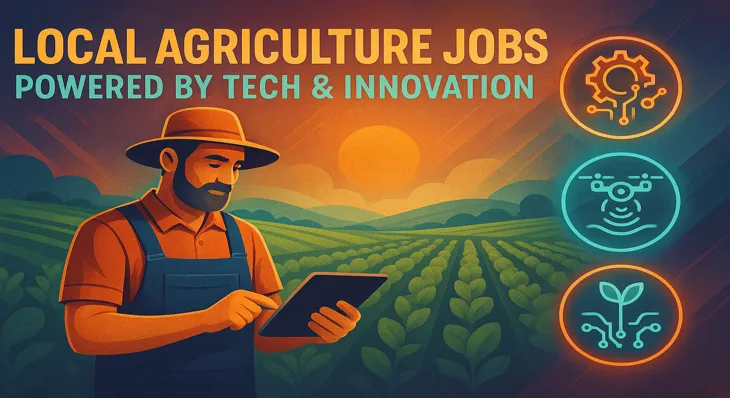
Local Agriculture Jobs Powered by Tech & Innovation
Introduction
What if the next wave of work isn’t in glass towers or shiny tech parks but right in your backyard? Farming sounded old-school, maybe even boring. Then tech showed up and crashed the party. Now, local agriculture jobs powered by technology and innovation are pulling in people who never pictured “farm” on a résumé. Some jobs feel like pulling a coding all-nighter. Others? Charts that look more Wall Street than wheat field. Soil’s still around, sure. But now it’s dashboards, drones, and sensors—stuff you wouldn’t expect. You might be tinkering with innovative irrigation systems, dripping water drop by drop, or running into a greenhouse at 2 a.m. with a flashlight when heaters fail. Farming’s flipped on its head. Feels wild—and it’s only picking up speed.Real People, Real Farming Tech Stories
Ravi grew up thinking he had two paths: to leave his village or take whatever local work came his way. Then drones happened. He trained in drone technology for farming, and now he zips machines over fields. He spots problems early, saves farmers money, and boosts yields. “I never thought flying drones would pay bills,” he says. “Now it’s all I do.” His neighbors even call him when their crops look sick—his drone’s the first check before a doctor. Aisha’s path? Different. She started small, showing farmers how to use mobile apps. Her startup promoted sustainable farming practices, so she ended up teaching organic methods, visiting fields, and troubleshooting issues via WhatsApp. At first, side work. Then, before she knew it, she was paying the bills. “It’s not just apps,” she says. “It’s trust.” And Luis—ex-mechanic. Thought tractors were just machines. Then he worked on self-driving versions. “Feels like fixing cars and coding at the same time,” he laughs. Robotics in fields, dashboards in barns—it’s already here. And when it shows up, you don’t just see new work. You see food, energy, and cash bouncing through the same streets.Why Modern Farming Doesn’t Fit Old Labels
Heard someone say farming is outdated? Not anymore. Fixing farm management software bugs is basically IT support. Keeping food chains moving feels like logistics on steroids. Farmers? Half data analyst, half engineer, half entrepreneur. (Yeah, math’s off—but you get it.) This work throws curveballs. One day, coding. Next? Soil readings that look like nonsense. It’s messy, frustrating, but addictive. Water shortages, greenhouse hacks, delivery delays—you’re troubleshooting nonstop. Some days, the ground feels like it’s working against you. Then out of nowhere, one quick fix saves a whole crop—and you’re grinning like an idiot.Straight Talk: Tech on the Farm
Farming now = drones buzzing, sensors blinking, apps dinging. People in muddy gloves holding tablets. And you don’t need farm roots to join. Got curiosity? Like puzzles? Numbers? You’ll fit. Forget dusty field stereotypes—think glowing greenhouses, vertical towers, blinking dashboards. Some farms look like labs. Feels odd. Works anyway. The first time you watch a robot chase weeds, it feels like a sci-fi prank. Then you realize—that’s just farming now.Worried This Isn’t ‘Cool’ Work?
Maybe “farming” doesn’t sound cool. Fair. However, check again—renewable energy in agriculture is experiencing a surge. Solar pumps, wind-powered barns, biogas setups. All paying gigs. And modern farm equipment operators? Shortage everywhere. This industry’s sprinting. It needs coders, engineers, planners, and logistics folks. People wander in from other fields, realize it clicks, and stick. You’ll find ex-gamers piloting drones and finance majors running greenhouse dashboards.Everyday Examples You’ll Recognize
Remember school science projects? Half worked, half bombed. That’s urban farming. Hydroponics, DIY grow lights, vertical towers. Trial and error. Or picture teamwork at the office, except instead of slide decks, you’re stress-testing tools to help farms cope with unusual weather. Same teamwork, greener outcome. Rooftops, basements, backyards—people are experimenting everywhere. Looks silly one week, flops the next—then suddenly, it works. You’d be shocked at how many people grow food in spaces smaller than a table.This Isn’t Another Job Ad
Forget HR fluff. This stuff’s messy. Scrappy. Half the time, it breaks before it works. The payoff? Plants grow, water’s saved, barns churn power. Weird but true. Way more fun than spreadsheets. Communities also become stronger—food, power, and jobs are interconnected.Skills That Actually Help on the Job
Want in on local agriculture jobs powered by tech & innovation? Forget tidy checklists—here’s what really counts:- Tinkering with cheap IoT gadgets—half of them break, and that’s the point
- Staring at soil data for hours, swearing it’s gibberish… until suddenly it clicks
- Greenhouses? Think heaters failing at 2 a.m., and you're running in with a flashlight
- Robots steering tractors, sensors buzzing—you’re more mechanic than farmer some days
- Mud. Everywhere.
- Fixing “tiny” breakdowns before they blow up into disasters
- Convincing a farmer who hates tech to try your tool—then watching them trust it
Where This Agri-Tech Thing Is Headed
This isn’t a trickle—it’s a fire hose. FAO and the World Bank say farmers in Africa and Asia are adopting new tools at a rate much faster than anyone expected. Data-driven farming work? Already here. Climate-smart agriculture gigs? Growing fast. Governments and investors are throwing money at it. All that adds up to more gigs, better pay, and a career path that doesn’t crawl—it sprints. On Naukri Mitra, you’ll see climate-smart listings and supply chain gigs climbing every month. And here’s the kicker—it’s global. Tools cross borders, knowledge spreads, systems ship abroad. Farming could put you on a plane before you know it. Stick around and it sneaks into your life—you’ll catch yourself eating dinner and thinking, “yep, that greenhouse sensor probably had a hand in this.”How to Begin Your Career in Agri-Tech
No perfect roadmap, but it usually starts like this:- Start small. Watch farm machines at work. Try an online drone course—even the cheapest ones teach a lot.
- Pick a lane—solar pumps, hydroponics, robotics, greenhouse hacks.
- Keep learning: certifications, workshops, random YouTube deep dives.
- Get hands-on. Intern, volunteer, mess around. Mistakes teach the fastest.
- And yeah—scan Naukri Mitra. Gigs pop up more than you’d think.