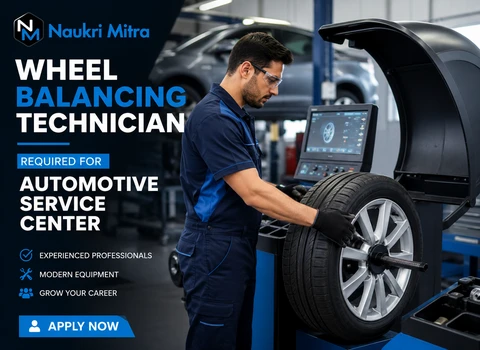
What It Actually Means to Balance a Wheel for a Living
Drive any car long enough and eventually the steering starts to shudder a little at highway speed, or one tire wears down faster than the rest. That's usually a balance problem, and fixing it is the daily job of a Wheel Balancing Technician. This particular opening, based in Pune, Maharashtra, India, is a Full-time position for someone ready to work with their hands and learn the rhythm of a busy service floor.
Why Service Centers Bother Hiring for This Specifically
You might think any mechanic could just balance a wheel between other tasks. In practice, service centers keep it as a dedicated role because customers notice vibration problems almost immediately, and a poorly balanced wheel wears out tires quickly. With more vehicles on Pune's roads every year, workshops need someone who can move through balancing jobs quickly without cutting corners, because a rushed job usually comes back as a complaint.
Walking Through an Actual Shift
Mornings tend to start with vehicles already lined up from overnight bookings. A technician pulls each wheel off, mounts it on the balancing machine, and lets it spin through a test cycle. The machine points out exactly where weight is missing. From there it's a matter of clipping on lead or stick-on weights and running the wheel again to confirm it's clean. Between jobs, there are also tire pressure checks, quick visual inspections for cracks or bulges, and passing notes to the service advisor if something else needs attention.
What the Job Actually Involves Day to Day
- Taking wheels on and off vehicles safely, including heavier ones from SUVs
- Running the balancing machine and reading its output correctly
- Figuring out where vibration is coming from before assuming it's a balance issue
- Fitting weights precisely rather than guessing
- Keeping the machine and hand tools in decent working order
- Writing up what was done so records stay accurate
The Machines and Tools You'll End Up Knowing Well
The wheel balancing machine itself is the centerpiece — most modern ones in Pune's better-equipped centers now come with digital readouts instead of the older dial types. Alongside that, a technician works with tire changers, torque wrenches for wheel nuts, pressure gauges, and small hand tools like weight pliers and rubber mallets. Getting comfortable reading a digital display quickly, rather than staring at it in confusion, comes with a few weeks of practice.
Skills That Separate a Decent Technician From a Good One
Technical know-how matters, but honestly, a lot of this job comes down to habits. Does the person double-check their work instead of rushing to the next car? Can they stay sharp on a Saturday afternoon when ten vehicles are waiting? Patience with repetition counts for more than people expect, and being able to explain a vibration issue to a confused customer in plain language helps too.
What Employers Usually Look For on Paper
An ITI certificate in a mechanical or automotive trade is commonly preferred, though it's not always a strict requirement. Some centers are open to freshers who show real interest in vehicles and are willing to be trained from scratch. Anyone who has already spent time around a garage, even informally, tends to pick up machine work more quickly.
The Physical Side Nobody Mentions in Interviews
This isn't a desk job. Expect to be on your feet most of the shift, lifting wheels that get heavy by the twentieth vehicle, and working in a space that's noisy and often smells faintly of rubber and grease. Shift work is common, and weekends can be busier than weekdays since that's when most people bring their vehicles in.
Staying Safe Around the Machines
Gloves and safety shoes are standard in most workshops, and goggles come into play when there's any risk of debris. Lifting wheels the wrong way is a common cause of back strain, so proper technique matters more than people realize early on. Keeping the floor clear of oil and stray tools also cuts down on slips, which happen more often than you'd think in a busy bay.
Where New Technicians Usually Trip Up
Reading the balancing machine's output correctly takes a bit of time, especially with heavier commercial tires, where the readings can be less forgiving. The other common struggle is speed — keeping accuracy up while the queue outside keeps growing. Most people get past both with a few months of steady practice and a bit of guidance from whoever's been doing it longer.
Where This Can Lead Over Time
Technicians who stick with it for a couple of years often move into wheel alignment work or broader suspension checks, since the skills overlap. Some end up training new hires or taking on more responsibility for how the service bay runs day-to-day. It's a trade where experience genuinely shows in how quickly and cleanly the work gets done.
What the Pay Looks Like
The role pays ₹ 24,000 per month. Depending on the specific service center, there may also be extras like overtime pay, PF, ESI coverage, uniforms, or a bonus around festival season — none of that is guaranteed, and it varies from one employer to another.
Is This the Right Fit for You
If you're in or around Pune, Maharashtra, and want work that's practical rather than deskbound, this Full-time role is a reasonable place to start or continue in the automotive trade. It works for freshers ready to learn on the floor as much as for experienced hands looking for steady, skill-based work.