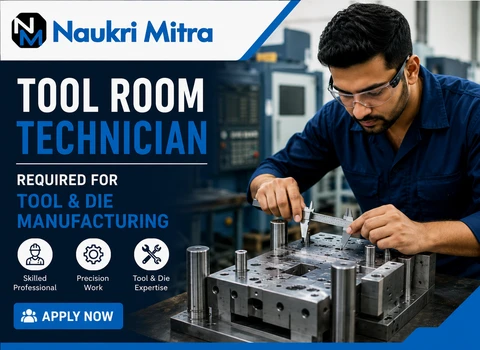
Precision work that keeps a factory running
A
Tool Room Technician Required for Tool & Die Manufacturing is the kind of person who keeps production accurate, steady, and on schedule. In simple terms, this technician makes, repairs, and maintains the tools that factories use to shape metal or plastic parts. Those tools include dies, jigs, fixtures, molds, and other precision items that must fit and work exactly as designed.
This
Full-time role in
Hosur, Tamil Nadu, India, is a practical career choice for freshers, experienced workers, ITI candidates, Diploma holders, and other technical job seekers seeking hands-on work in manufacturing. The job suits people who prefer machines, measurements, drawings, and careful work to fast, rough production.
If you are researching this career for the first time, the main thing to understand is this: the work may look small from outside, but it has a big effect on the whole plant. A tiny error in a tool can affect thousands of finished parts.
Why factories depend on tool room technicians
Manufacturing companies hire skilled tool room staff because production cannot run smoothly without accurate tooling. A press machine, molding machine, or machining line may be powerful, but it still depends on the tool fitted into it. If that tool is worn, damaged, or misaligned, the output quality drops quickly.
That is why employers look for technicians who can:
- build precision tools for production use
- repair worn dies and molds before they fail
- reduce machine stoppage
- keep part dimensions within tolerance
- support quality control with accurate tooling
- help production teams avoid waste and rework
In many plants, the tool room is the place people turn to when production stalls due to a tooling issue. A good technician can save hours of downtime by finding the fault and fixing it correctly.
What a normal shift looks like on the shop floor
The daily routine usually involves machining, inspection, assembly, and problem-solving. Some days are planned, while others become urgent when a tool breaks or a production line needs quick support.
A typical day may include:
- checking drawings and job cards
- selecting the right material for the tool or die
- setting up machines for cutting or grinding
- machining parts to exact size
- checking dimensions with gauges and measuring tools
- assembling tool components carefully
- testing fit and alignment
- repairing damaged tooling
- cleaning and maintaining machines
- sharing updates with production or quality teams
Sometimes the work is about making a new tool from scratch. On other days, the job is to restore an old tool, so the plant can keep running. That mix keeps the work interesting, but it also means the technician must stay alert and organized.
Machines, dies, and measuring tools you will use
Tool room work is built around precision. The machines used here are chosen because they can shape metal accurately and consistently produce the same result.
Common machines include:
- milling machines
- CNC milling machines
- lathe machines
- surface grinding machines
- cylindrical grinding machines
- drill machines
- EDM machines
- wire-cut EDM machines
- tool and cutter grinders
- band saw machines
EDM, or Electrical Discharge Machining, is especially useful in tool and die manufacturing. It removes metal using controlled electrical sparks instead of a cutting blade. That makes it useful for hard materials and complex shapes that are difficult to machine in the usual way. Industries use EDM when they need fine detail, sharp corners, or hardened steel parts.
Measuring tools are just as important as the machines. A technician may use:
- vernier calipers
- micrometers
- height gauges
- dial indicators
- bore gauges
- slip gauges
- surface plates
- bevel protractors
- radius gauges
These instruments help confirm whether a part is within the required size. In this line of work, “close enough” is not enough. The part must match the drawing.
Skills that matter more than certificates alone
Formal education helps, but tool room work also depends heavily on practical ability. Employers may prefer candidates with relevant machining or tool room training. Depending on the complexity of the work, an ITI in a machining-related trade, a Diploma in Mechanical or Tool and Die Engineering, or equivalent vocational training may be considered suitable. Practical experience with EDM machines, engineering drawings, and precision measuring instruments is often valued as much as formal education.
Useful technical skills include:
- reading engineering drawings correctly
- understanding tolerances and fits
- using measuring instruments without error
- grinding and finishing metal surfaces
- basic lathe and milling work
- tool and die assembly
- machine setup and adjustment
- basic CNC awareness
- EDM operation
- heat treatment awareness
- simple machine maintenance
Practical workplace skills matter too. A technician who stays calm, checks work twice, and keeps the bench clean often performs better than someone who rushes through the job.
Some qualities that help in this profession are:
- patience
- concentration
- steady hands
- problem-solving ability
- teamwork
- clear communication during shift changes
- discipline in following instructions
A tool room is not the place for guesswork. Small mistakes can become expensive very quickly.
Where this work is done and how the environment feels
People in this profession usually work in manufacturing plants, tool rooms, machine shops, maintenance workshops, and precision production sections. The industries that hire them are often connected to metal forming, plastic molding, automotive parts, industrial equipment, and general engineering.
Typical workplaces include:
- automotive component factories
- tool and die manufacturing units
- plastic molding plants
- sheet metal fabrication shops
- precision machining facilities
- heavy engineering units
- industrial equipment plants
- consumer appliance manufacturing units
The environment is usually cleaner than a heavy fabrication area, but it still involves oil, metal chips, cutting fluids, noise, and moving machine parts. The work is often done standing, and the technician may need to lift moderate-weight tool parts, bend frequently, or work in a fixed position for long periods.
Shift work is common in many manufacturing setups. Depending on the plant, the technician may work day, evening, night, or rotating shifts, weekends, or overtime when urgent tooling repairs are needed. In a busy factory, a broken die can stop production, so quick response matters.
Safety habits that cannot be skipped
Tool room work is precise, but it is also a machine-based job. Safety must stay part of the routine every single day.
Personal protective equipment (PPE) may include:
- safety shoes
- safety glasses
- protective gloves when suitable
- ear protection in noisy areas
- protective uniforms
- face shields during grinding or similar tasks
Good safety habits include:
- checking the machine before starting work
- keeping guards in place
- using the correct speed and feed
- clamping the workpiece properly
- removing chips with the right tool, not by hand
- keeping gauges and measuring tools clean
- reporting damaged equipment quickly
- keeping the floor dry and free from clutter
A clean tool room is not just about appearance. It helps prevent slips, measurement errors, and damage to expensive tools.
The hard parts of the job and how workers handle them
This profession is rewarding, but it is not easy. The biggest challenge is accuracy. A part may look fine to the eye and still fail the measurement check. That is why technicians must stay careful even when the job feels repetitive.
Common challenges include:
- holding very tight tolerances
- repairing worn tools under time pressure
- working with hardened materials
- finding the real cause of a tooling fault
- avoiding measurement mistakes
- handling urgent production requests
- staying focused during long precision tasks
A simple example: if a die is slightly off, the press may still run, but the finished parts may come out defective. That means more scrap, more delay, and more pressure on the team. A skilled technician learns to spot such issues early.
The best way to handle these challenges is to work methodically. Measure, verify, adjust, and measure again. That habit saves time in the long run.
How experience can build a long career in tool room work
This field offers steady growth for people who keep learning. A fresher may begin with basic machine handling, measurement, cleaning, or support work. With time, the same person can move into more complex tool assembly, die repair, EDM work, or precision inspection.
Career growth within the same profession may include:
- handling more advanced tool manufacturing jobs
- working on complex die assembly
- supporting mold maintenance
- moving into CNC tool room operations
- taking responsibility for prototype tooling
- checking finished tools for quality
- guiding junior technicians
- supporting planning and production coordination
The strongest technicians usually keep improving their skills in drawing reading, machine setup, EDM, grinding, and inspection. Learning never really stops in this field because machines, materials, and production methods keep changing.
Salary, allowances, and what job seekers usually ask about pay
For this position, the
monthly salary is ₹ 32000.
In India, pay for similar tool room jobs can vary based on experience, technical skill, machine knowledge, shift duty, and the size of the manufacturing unit. A fresher may start differently from an experienced technician, especially if the person already knows EDM work, precision measurement, or die maintenance.
Employers may also offer some additional benefits, depending on company policy. These can include:
- overtime payment
- Provident Fund (PF)
- Employee State Insurance (ESI)
- bonus
- uniforms
- safety gear
- transport facility
- canteen facility
- paid leave
- training support
These are only possible benefits, not guarantees. Each employer decides its own package.
A realistic path for candidates in Hosur
For job seekers in
Hosur, Tamil Nadu, India, this
Full-time role is a practical entry into the manufacturing sector. Hosur is known for industrial activity, so technical workers with toolroom knowledge often find their precision skills valued there.
If you are applying for this
Tool Room Technician Required for Tool & Die Manufacturing position, focus on the basics that matter most:
- understand drawings clearly
- practice measurement carefully
- learn machine setup step by step
- respect safety rules
- keep tools and work areas organized
- build confidence with real shop-floor work
This is not a job for people who want shortcuts. It suits those who are steady, observant, and willing to learn from every job. For the right candidate, it can become a stable and respected career in tool and die manufacturing.