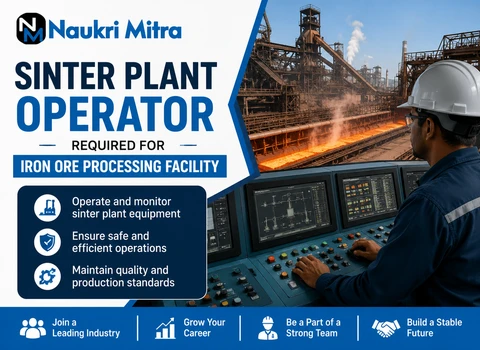
What Does a Sinter Plant Operator Actually Do?
A Sinter Plant Operator works inside the sintering section of an iron ore processing facility, turning fine iron ore, coke breeze, limestone, and other raw materials into sinter, a strong lump material that is later fed into a blast furnace. Without this step, raw iron ore fines cannot be efficiently used in ironmaking, which is why this role sits at the heart of iron and steel production. This particular opening is based in Burnpur, West Bengal, India, an area long associated with iron and steel processing, and the position is full-time.
Why Iron Ore Processing Plants Need This Role
Blast furnaces cannot efficiently process loose iron ore powder. Sintering solves this by heating and fusing fine ore particles into a porous, permeable material. A skilled operator ensures the sintering machine runs at the right temperature, speed, and material mix, directly affecting the quality of sinter and, in turn, the efficiency of the entire ironmaking chain. This is why iron ore processing units continue to hire trained operators rather than leaving the process unattended.
A Typical Shift on the Sintering Floor
A regular day starts with checking the sinter machine, conveyor belts, ignition furnace and exhaust fans before production begins. The operator monitors raw material feed rates, bed height, ignition temperature and strand speed from the control panel, while also walking the floor to visually check for material spillage, belt slippage or unusual smoke patterns. Adjustments are made continuously, since even small changes in moisture or mix ratio can affect sinter strength.
Core Duties Handled Daily
- Operating and monitoring the sinter strand and ignition furnace
- Controlling raw material blending ratios along with the mixing team
- Checking crusher, screen and cooler performance
- Recording production data, temperature logs and downtime reasons
- Coordinating with maintenance staff during breakdowns
- Following start-up and shutdown procedures correctly
Where This Type of Work Happens
Sinter plant operators are employed in iron ore processing facilities, integrated steel plants, and pelletization or agglomeration units. These workplaces are usually large industrial complexes with heavy machinery, high-temperature zones, dust-extraction systems, and continuous material-handling equipment running around the clock.
Equipment and Instruments Used on the Job
Operators work with sinter strand machines, ignition furnaces, hot and cold screens, crushers, conveyor systems and cooling units. Control room instruments, such as temperature indicators, pressure gauges, belt weighers, and DCS or PLC panels, are used to monitor and adjust the process. Basic hand tools are also used for minor on-floor checks and material sampling.
Educational Background and Technical Skills
Most employers prefer candidates with an ITI qualification in a relevant trade, or a Diploma in Mechanical, Metallurgical or Electrical Engineering. Familiarity with reading process charts, understanding basic instrumentation, and following standard operating procedures is important. Prior experience in a sintering, pelletization or blast furnace environment is often considered valuable alongside formal education.
Practical Skills That Set Good Operators Apart
Beyond technical knowledge, successful operators develop a sharp eye for abnormal sounds, vibrations, smoke color or belt behavior that indicate a developing fault. Quick decision-making, clear communication with the control room, and the discipline to follow checklists under time pressure separate an average operator from a dependable one.
Physical Demands and Working Conditions
This is physically active work involving standing for long periods, climbing platforms, and working near hot equipment and dust. Operators should be reasonably fit, comfortable working at height on inspection platforms, and able to manage heat and noise typical of iron ore processing units. The role is full-time and generally follows a rotational shift pattern, including night shifts, since sintering operations usually run continuously.
Safety Practices and Protective Gear
Given the presence of heat, dust, and moving machinery, safety awareness is non-negotiable. Operators are expected to use PPE such as helmets, safety shoes, dust masks, hand gloves, and heat-resistant clothing while on the floor. Lock-out/tag-out procedures during maintenance, careful handling near conveyor belts, and immediate reporting of gas or smoke leaks are standard safety practices in this environment.
Challenges Operators Commonly Face
Heat stress during summer months, dust exposure, and the mental alertness needed during long shifts are common challenges. Unexpected breakdowns can also disrupt planned schedules, requiring operators to stay calm and coordinate quickly with maintenance teams to restore production.
Building a Long-Term Career in This Field
With experience, operators can progress toward senior operator, shift-in-charge or sinter plant supervisor roles. Those who build strong technical understanding of the sintering process sometimes move into process control or plant coordination positions over time, staying within the same iron ore processing and steel-making industry.
Salary and Benefits Overview
This full-time Sinter Plant Operator position in Burnpur, West Bengal, India offers a monthly salary of ₹36,800. Depending on the employer, additional benefits may possibly include overtime pay, Provident Fund (PF), ESI coverage, annual bonus, uniforms, and transport or canteen facilities, though these vary by organization and are not guaranteed.