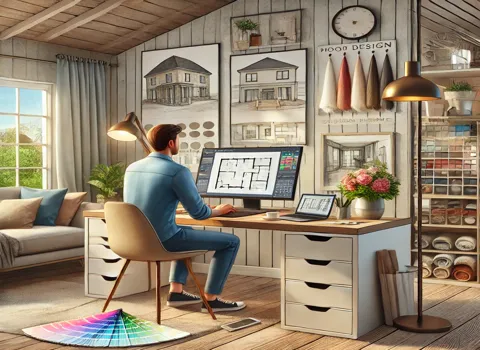
There's a specific kind of satisfaction that comes from fixing a room that never quite worked. You walk in, something's off — the couch is fighting the window, the kitchen feels smaller than it is — and by the time you leave, it clicks. That's the job. As a
Remote Interior Design Assistant, you'll do this from home, for $75,000 a year, without ever setting foot in the client's actual living room.
Most of the work happens on a screen: renderings, floor plans, video calls. But the goal isn't screen-based at all. It's a family finally liking their own house. A first-time buyer who stops dreading their kitchen. If you're the person friends already ask for decorating advice, you already know the instinct this role runs on.
What the Job Is Really About
Nobody hires a designer because they want something trendy. They hire one because their space doesn't work for their life yet. Maybe the layout's wrong. Maybe it's just cluttered in a way they can't fix themselves. You'll use 3D visualization and floor-plan software to show them what's possible before they spend a dollar — and there's a specific moment, almost every project, where a client sees the render and says something like "oh, that's exactly it," even though they couldn't have described it themselves.
The tricky part of remote design is trust. It's easier to build rapport across a table than across a Zoom call. So the job leans on things that close that gap: video walkthroughs, personal notes on décor choices, and presentations a client can actually flip through instead of just glancing at.
A Rough Sketch of a Day
Mornings start with a short check-in, ten or fifteen minutes, mostly updates and the occasional dog barking somewhere off-camera. Then you're into a new brief — a client stuck between two sofas, say — and you build a mood board that shows what each one actually does to the room. Midday might be a tight apartment layout where six inches matter more than they should. Later, a renovation client wants to talk materials and timelines, and you're the one keeping both realistic. Some days are quick and reactive. Others slow way down for detail work. It varies more than people expect.
What You'll Be Doing
- Putting together digital presentations clients can revisit on their own
- Building floor plans and virtual staging so people see the outcome before buying anything
- Answering the small design questions — palette, layout, storage tricks — as they come up
- Adjusting plans on the fly during remote check-ins based on client feedback
- Making mood boards and 3D visuals that turn a vague idea into something specific
- Helping renovation clients pick materials and stay on a workable timeline
- Running virtual consultations and keeping every detail from slipping through
Who Fits This Role
Education-wise, we're asking for a
high school diploma or equivalent — that's the floor. Formal training in design helps, but plenty of great designers developed their eye in different ways, and we're not going to filter them out because of a degree. Experience-wise, you'll need at least a year of design-adjacent work: interior styling, visual merchandising, freelance decorating, or retail display work. It doesn't need to be a corporate title.
Skills That Actually Help
- Comfort with tools like AutoCAD, SketchUp, or even just Canva for quick mockups
- An eye that notices small things — how one lamp changes the whole feel of a room
- Real communication skills, meaning you listen before you suggest
- A tolerance for change, because clients rethink things constantly
- The ability to juggle a few projects at once without dropping any of them
Nice to Have, Not Required
- Remote work experience, especially anything client-facing
- Some background in 3D rendering or virtual staging tools
- A portfolio that shows range, not just one style repeated
- Experience mentoring newer designers
One Story Worth Telling
A couple of months ago, one of our assistants worked with a young couple in their first house. Small budget, small rooms, and expectations that didn't quite match either. Instead of piling on options, she narrowed it down — a few affordable décor swaps, a floor plan that opened up the space, and a presentation they could keep coming back to. They told her, more or less, "you made this feel doable." That's the whole job in one sentence, honestly. This posting comes through Naukri Mitra, but the work itself is the same wherever you find it: helping real people with real houses, not chasing trends.
Where This Can Lead
- Running remote design collaborations across several projects at once
- Taking full ownership of larger renovation assistance work
- Becoming a styling consultant with a recognizable point of view
- Training newer assistants once you've got your footing
The Setup You'll Use
Everything runs through your laptop — client video calls, 3D visualization software, mood-board tools, whatever collaboration platform the team's using that month. You don't need to know all of it going in. Most people pick it up within the first few weeks.
Working Remotely Without the Isolation
Remote jobs can feel lonely if nobody bothers to fix that. This team pushes against it on purpose — weekly huddles that include actual small wins, not just status updates; a chat channel people use for inspiration photos as much as questions; occasional virtual coffee breaks that have nothing to do with work. It's not perfect, but it's better than being a name on a screen.
Pay and Benefits
- $75,000 a year
- A schedule you largely control
- Access to design tools and training resources
- A real path toward styling consultant or project-lead roles
- A team that reads feedback instead of just collecting it
Worth Asking Yourself
Do you like solving color and layout problems more than most people do? Can you stay on task at home without someone hovering? Do you get something out of helping someone see their space differently? If yes to most of that, you'll probably be fine here. We're not after someone formal or stiff — just someone a client feels okay texting "what do you think of this rug?" without overthinking it.
Applying
If any of this sounds like your kind of work, apply. You don't need every answer ready — just enough curiosity to ask good questions and enough confidence to share what you think. Open to applicants from the United States, Canada, the United Kingdom, the European Union, Australia, India, and other eligible regions.