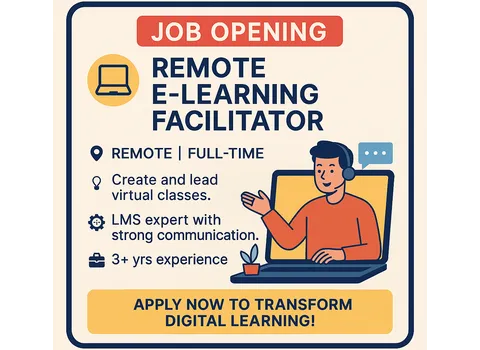
Remote E-Learning Facilitator
Let’s talk about something exciting—building learning experiences that actually stick. This role isn’t about clicking through slides or repeating the same scripts. It’s about shaping how people learn, connect, and grow in a remote-first world. As a
Remote E-learning Facilitator, you’ll be the spark that turns online sessions into lively, engaging, and meaningful experiences. And yes, it comes with an annual salary of
$75,500.
Why Remote E-Learning Matters
Remote learning has its perks—you can teach anyone, anywhere. But here’s the reality—it also has its challenges. People get distracted. Screens feel cold. Engagement dips quickly if the session isn’t well-structured. That’s where you come in. You’ll be the one making sure learners don’t just
log in, but actually stay, participate, and leave with something valuable.
We’ve seen what happens when a session clicks—folks laugh, share, debate, and actually apply what they’ve learned. That’s what we’re aiming for. And your work will make that possible.
A Typical Day as a Remote Learning Facilitator
Ever wonder what this job looks like in action? Picture this:
- Lead engaging sessions that feel like conversations, not lectures.
- Troubleshoot tech hiccups when someone’s mic goes mute at the wrong time.
- Spark lively chats with quick polls and fun questions.
- Adjust smoothly when a lesson feels too heavy or too light.
- Collaborate with content designers to transform ordinary modules into engaging, interactive lessons.
You’ll juggle being a
virtual online learning facilitator, a tech support buddy, and an engagement coach—all rolled into one.
Key Responsibilities in Online Facilitation
Facilitating Live Learning
- Host sessions that engage learners, not disengage them.
- Utilize interactive tools—such as polls, breakout rooms, and Q&A sessions—to maintain high energy levels.
- Step in as a remote digital training coordinator when teams need structured guidance.
Supporting Learners
- Be the approachable person learners know they can message for help.
- Act as a remote student learning support facilitator who guides without overwhelming.
- Offer quick, clear fixes when tech gets tricky.
Designing Engagement
- Partner with teams as a virtual eLearning support consultant to build smooth, clear lessons.
- Add games, challenges, and relatable stories to make sessions more engaging and memorable.
- Blend interactive online teaching methods to cater to different learning styles.
Tracking Progress
- Keep tabs on attendance, participation, and completion rates.
- Step into your online course delivery specialist hat to tweak sessions based on results.
- Share feedback with leaders to improve the learning journey.
Skills That Make You Shine
Here’s what sets strong facilitators apart:
- Clear communication. Simplify complex topics.
- Empathy. Support learners without judgment.
- Tech confidence. Platforms like Zoom and LMS should feel natural.
- Energy. Bring life to a quiet virtual room.
- Adaptability. When things shift, you adjust with ease.
Digital Tools for Remote Teaching
You’ll have a complete digital toolbox, including:
- Video platforms like Zoom, Teams, or Meet.
- Learning management systems (LMS) for tracking sessions.
- Polling tools like Kahoot! or Slido.
- Messaging platforms to stay connected with learners.
Real-Life Impact of Online Facilitation
Impact shows up in small but powerful ways. Like when Sam, a shy learner, finally unmuted and shared a story that made the whole group pause. Or when a team from three time zones built something together in a breakout room and said, “We didn’t think this was possible online.”
Or the time a session dropped mid-way due to an outage—our facilitator improvised with a recorded recap that actually boosted completion by 30%. Those moments prove this role matters.
Did you know? Over 70% of companies now invest in remote learning programs, and interactive sessions with polls and breakout activities can raise engagement by 25% or more. That’s the scale of impact you’ll have.
Our Remote-First Team Culture
Our culture is relaxed, collaborative, and built on real connection—even across screens. Remote work can feel lonely sometimes, right? We fix that with weekly huddles, casual coffee chats, and shared wins boards. You’ll work closely with
virtual digital education trainers,
online training and development facilitators, and others who share a passion for making learning more human.
Growth Opportunities in Online Learning
This role is a doorway. From here, you could grow into:
- Virtual classroom management specialist running global programs.
- Remote Workforce Learning Coordinator: Shaping Learning Strategies.
- Online teaching and facilitation exper,t mentoring new facilitators.
- Virtual eLearning program advisor designing long-term programs.
- Even a digital learning strategist leading enterprise-level education plans.
Remote training jobs are projected to grow steadily over the next decade, making this a career with serious long-term potential. Whether you see yourself as an
online training facilitator or a
remote teaching professional, the path is wide open.
Defining Success as a Facilitator
Success isn’t about screen time—it’s about what learners actually take away:
- Learners say sessions feel helpful, not dull.
- Participation increases because people genuinely want to attend.
- Leaders notice teams applying what they’ve learned.
- You feel like you’re growing, not stuck.
The real reward? Watching people put new skills into practice and thrive. On average, our sessions see 85% participation—well above the industry norm.
Overcoming Challenges in Remote Learning
Here’s the reality—remote learning has its bumps:
- Glitches happen. Internet drops? Use recorded recaps to keep learners on track.
- Quiet rooms. Some learners keep cameras off. Creative icebreakers help them open up.
- Time zones clash. Scheduling can be tricky. Rotating session times keeps it fair.
Challenges will come, but you’ll never face them alone. We solve them as a team.
Who You’ll Work With
You won’t be solo. You’ll collaborate with:
- Content designers make the lessons.
- Tech teams are ensuring smooth delivery.
- Fellow facilitators, like remote instructional facilitators and remote digital education support specialists, who share tips and tricks.
- Learners themselves, who bring every session to life.
What You Bring
Here’s what helps:
- Proven online session experience—education, training, or workshops all count.
- Comfort with digital tools and troubleshooting basics.
- A knack for engaging people—even over a screen.
- The mindset of a Remote E-learning Facilitator: supportive, adaptive, and learner-first.
- Experience with remote training is a significant advantage.
The Pay & Perks
We
stated it upfront: $75,500 per year. Along with that, you’ll enjoy:
- Flexible hours, generous time off, and ongoing training that keeps you growing.
- A community that values balance, not burnout.
How This Role Shapes the Future
Remote learning isn’t going away. In fact, it’s only growing. By stepping into this role, you’re not just taking a job—you’re shaping how people learn, work, and grow worldwide. You’ll be part of building experiences that help people step up, feel capable, and stay connected.
Why This Role Could Be Your Next Big Step
Being a
Remote E-learning Facilitator is about more than managing a Zoom room. It’s about sparking connections, keeping learning human, and helping people actually derive something valuable from online sessions. It’s challenging, rewarding, and yes—sometimes unpredictable. But if you’re ready to bring energy, empathy, and adaptability, this could be the career step that changes everything.
So, are you ready to shape the future of remote learning with us?