Exploring the Impact of a Public Sector Research Analyst in Modern Government and Community Programs
The
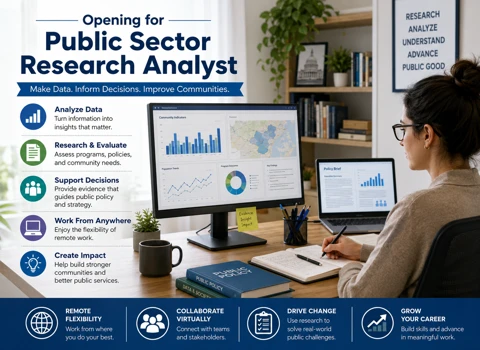
Opening for Public Sector Research Analyst is a
remote position for professionals who enjoy analyzing data, studying public issues, and helping organizations make informed decisions. Research analysts in the public sector support decision-makers by turning large amounts of data, reports, and policy information into clear findings that can guide future actions.
This role is found across government agencies, nonprofit organizations, policy institutes, consulting firms, educational institutions, and community-focused organizations. The work often contributes to projects involving healthcare, education, transportation, housing, economic development, and public services.
The position offers a salary of
$1,600 per week, remote work flexibility, and the opportunity to contribute to projects that can influence communities and public programs.
Why Public Organizations Depend on Research Professionals
Public institutions face complex challenges. Leaders must decide how to allocate resources, improve services, evaluate programs, and respond to changing community needs. Reliable research helps them make those decisions with greater confidence.
A Public Sector Research Analyst may be asked to investigate questions such as:
- Are public programs meeting their intended goals?
- Which communities need additional support?
- What trends are affecting local or national populations?
- How effective are current policies?
- What evidence supports a proposed initiative?
Research helps organizations move beyond assumptions and base decisions on facts, measurable outcomes, and documented trends.
What the Position Involves on a Regular Basis
The responsibilities of a Public Sector Research Analyst can vary depending on the employer and project scope. Some assignments focus heavily on data analysis, while others involve policy reviews, program evaluations, or stakeholder research.
Typical duties often include:
- Collecting information from trusted sources
- Reviewing policy documents and government publications
- Analyzing demographic, economic, and social data
- Monitoring legislative developments
- Preparing reports and briefing materials
- Summarizing research findings for leadership teams
- Supporting strategic planning initiatives
- Evaluating public programs and services
- Identifying emerging issues and trends
- Working with internal teams and external partners
The role requires more than gathering information. Analysts are expected to explain what the findings mean and how they may affect future decisions.
What a Remote Workday Often Looks Like
Because much of the work is conducted through digital platforms, remote arrangements are common for research professionals.
Reviewing Current Information
Many analysts begin the day by checking new publications and updates from sources such as:
- Government agencies
- Research institutions
- Economic reports
- Census databases
- Legislative tracking systems
- Academic journals
Keeping current with developments is an important part of the profession.
Examining Data and Trends
A large portion of the day may involve reviewing datasets, identifying patterns, and comparing findings across multiple sources.
Preparing Written Deliverables
Research findings are often presented through reports, policy briefs, presentations, and executive summaries. Strong writing skills are essential because decision-makers need information that is both accurate and easy to understand.
Collaborating Virtually
Remote analysts frequently participate in online meetings involving:
- Project planning
- Stakeholder discussions
- Research reviews
- Program evaluations
- Strategic planning sessions
Clear communication helps ensure that research findings are understood and applied effectively.
Areas of Knowledge That Strengthen Performance
Employers hiring for an Opening for a Public Sector Research Analyst often look for candidates with broad knowledge across several disciplines.
Useful areas of expertise include:
- Public administration
- Public policy
- Economics
- Political science
- Statistics
- Sociology
- Government operations
- Community development
- Regulatory systems
- Program evaluation methods
Understanding how policies affect communities can be just as important as technical research skills.
Skills That Help Analysts Produce Valuable Insights
Successful analysts combine technical abilities with strong communication and problem-solving skills.
Interpreting Data
Numbers alone rarely tell the full story. Analysts must identify trends, explain findings, and connect data to real-world outcomes.
Critical Evaluation
Research often involves reviewing conflicting information. Analysts must assess source quality, identify limitations, and draw balanced conclusions.
Written Communication
Reports and summaries should be clear, concise, and useful for audiences with varying levels of technical knowledge.
Research Techniques
Finding reliable information quickly is a valuable skill. Analysts regularly work with databases, reports, surveys, and public records.
Organization and Time Management
Research projects frequently involve multiple deadlines and competing priorities.
Presenting Findings
Analysts may need to explain technical information to executives, policymakers, community leaders, or project teams.
Educational Paths Commonly Seen in the Profession
No single degree is required for every Public Sector Research Analyst position. Employers often seek candidates with educational backgrounds related to policy, research, or analytics.
Common fields of study include:
- Public Administration
- Public Policy
- Political Science
- Economics
- Statistics
- Sociology
- Urban Planning
- International Relations
- Business Administration
- Data Analytics
Some specialized positions may prefer graduate-level education, particularly when research projects involve advanced policy analysis or complex statistical methods.
Technology and Research Platforms Used in the Field
Research professionals rely on a variety of software tools to organize information, analyze data, and communicate findings.
Frequently used tools include:
- Microsoft Excel
- Microsoft Power BI
- Tableau
- SPSS
- R
- Python
- Microsoft Office
- Google Workspace
- Survey software
- Data management platforms
The specific technology stack depends on the organization's needs, but comfort with digital tools is increasingly important.
Professionals who understand both policy issues and data analysis software often have an advantage when pursuing career opportunities.
Challenges Commonly Encountered in Public Sector Research
Like many analytical professions, public sector research comes with its own set of obstacles.
Handling Large Volumes of Information
Research projects often require reviewing extensive documentation from multiple sources. Organizing information efficiently is essential.
Working with Imperfect Data
Not every dataset is complete. Analysts sometimes need to identify limitations and explain how those limitations affect conclusions.
Remaining Objective
Public issues can be politically sensitive. Analysts are expected to focus on evidence and maintain professional neutrality.
Meeting Project Deadlines
Government initiatives and program evaluations frequently operate on fixed schedules, requiring careful planning and prioritization.
Explaining Complex Findings
One of the most valuable skills in this profession is the ability to make complicated information understandable without oversimplifying important details.
Where Public Sector Research Analysts Find Employment
Although government agencies are major employers, opportunities exist across many sectors.
Organizations that commonly hire professionals for this type of work include:
- Federal agencies
- State governments
- Local municipalities
- Public policy organizations
- Research institutes
- Consulting firms
- Nonprofit organizations
- Universities
- Healthcare policy groups
- International development organizations
The versatility of research skills allows professionals to move between industries while applying similar analytical methods.
Characteristics of People Who Often Enjoy This Work
The Opening for Public Sector Research Analyst tends to appeal to individuals who enjoy learning, investigating issues, and solving problems through evidence-based analysis.
People who often succeed in this profession typically:
- Enjoy reading and research
- Have strong attention to detail
- Like working with data
- Think critically about complex issues
- Communicate effectively in writing
- Stay organized under deadlines
- Work well independently
- Remain curious about public affairs
- Appreciate fact-based decision-making
Those who enjoy uncovering patterns and explaining their significance often find the work especially rewarding.
Opportunities for Advancement and Professional Growth
Experience gained as a Public Sector Research Analyst can lead to a variety of career paths.
Potential advancement opportunities include:
- Senior Research Analyst
- Policy Analyst
- Program Evaluation Specialist
- Government Affairs Analyst
- Strategic Planning Manager
- Public Policy Advisor
- Research Manager
- Director of Research
- Public Administration Consultant
- Policy Development Specialist
As professionals gain expertise, they may take on larger projects, supervise research teams, or contribute directly to policy development and organizational strategy.
Ways to Strengthen Your Qualifications
Individuals interested in pursuing an Opening for a Public Sector Research Analyst can improve their prospects by building both technical and communication skills.
Helpful steps include:
- Learning research methodologies
- Developing statistical analysis skills
- Practicing professional writing
- Building experience with data visualization tools
- Following public policy developments
- Creating research samples or portfolios
- Becoming familiar with government data sources
- Expanding knowledge of analytical software
Employers often value candidates who can demonstrate practical research experience and the ability to communicate findings clearly.
The Growing Importance of Evidence-Based Analysis
Public organizations increasingly rely on research to evaluate programs, manage resources, and address community challenges. As governments and institutions seek measurable results and greater accountability, skilled analysts continue to play an important role.
The
Opening for Public Sector Research Analyst offers a career path that combines research, critical thinking, communication, and public impact. For professionals who enjoy analyzing data, identifying trends, and helping organizations make informed decisions, this remote position offers an opportunity to contribute meaningful insights while building a long-term career in research and policy.