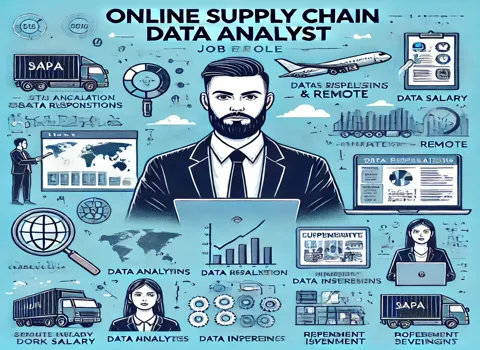
Online Supply Chain Data Analyst (Remote)
The world of supply chain has changed forever. Today, it’s not just about moving goods from point A to B—it’s about understanding patterns, predicting needs, and making smarter choices in real time. That’s where you step in. As an
Online Supply Chain Data Analyst, you’ll bring numbers to life, turning data into insights that help teams across the globe get things done faster, smoother, and smarter. And yes, you’ll do it all from the comfort of your remote setup, with an annual salary of
$107,330.
Why This Role Matters
Every package that arrives at someone’s door, every shipment that leaves a warehouse, every demand forecast that keeps businesses stocked—it all depends on data. And that data needs sharp minds to analyze it. Here, you’ll take complex supply chain numbers and break them down into clear, actionable steps. You won’t just crunch numbers—you’ll shape how operations flow.
Consider this: when demand surges for a trending product or a shipping lane becomes congested, your insights will inform the next step. You’ll keep things running smoothly, helping teams avoid delays, reduce costs, and meet customer expectations.
What Your Day Will Look Like
Wondering how a typical day goes? Let’s walk through it.
- Morning starts with checking performance dashboards. You notice that one distribution center is showing higher-than-usual lead times.
- You dig into the data, maybe with a coffee in hand, and realize a supplier’s delayed shipment is the cause.
- By lunchtime, you’re sharing quick solutions with the team, suggesting rerouting through another hub.
- Afternoon? You’re building a demand forecast model for next quarter, ensuring everyone is ready for holiday surges.
- Before you log off, you join a short team call—remote, of course—where you swap ideas with colleagues across time zones.
Your work isn’t just about spotting problems; it’s about telling the story behind the data and helping people act on it.
Core Responsibilities
Here’s what you’ll be diving into regularly:
Data Analysis That Drives Action
- Collect, clean, and interpret supply chain datasets.
- Spot trends, bottlenecks, and hidden opportunities.
- Share findings in a way that’s clear for everyone, not just data experts.
Forecasting & Planning
- Build demand forecasting models to predict product needs.
- Help teams plan inventory so nothing’s overstocked—or worse, out of stock.
- Support better decision-making for procurement and production.
Performance Monitoring
- Track KPIs across logistics, inventory, and transport.
- Partner with remote teams to enhance efficiency based on data-driven insights.
- Step in when things drift off-track and suggest ways to optimize.
Reporting & Storytelling
- Turn raw data into dashboards, charts, and reports.
- Make insights easy to understand for leadership and operations staff.
- Share stories that connect the dots—why numbers matter and what they mean.
Skills That Will Help You Shine
This role isn’t about ticking boxes. It’s about blending technical skills with real-world problem-solving. Here are the essentials:
- Analytical mindset: You love diving into spreadsheets, databases, or dashboards to uncover insights.
- Tech comfort: Experience with SQL, Python, or data visualization tools (like Power BI or Tableau) makes your life easier.
- Supply chain knowledge: You understand how procurement, logistics, and warehousing fit together.
- Communication chops: You explain data so clearly that anyone—even without a numbers background—gets it.
- Adaptability: Things shift fast in global supply chains. You stay calm and adjust quickly.
Tools You’ll Use Often
We believe in giving you the right toolkit to make your work smoother:
- Excel/Google Sheets for quick calculations.
- Power BI / Tableau for dashboards.
- SQL & Python for deeper analysis.
- Collaboration tools like Slack, Teams, or Zoom to stay connected remotely.
- ERP and SCM platforms for real-time supply chain data.
Real-World Scenarios You’ll Handle
Spotting Hidden Issues
Imagine customer deliveries start arriving late. At first glance, it appears to be a warehouse problem. But after digging in, you see it’s actually a supplier’s transport delay. That’s the kind of detective work you’ll do—and your quick reporting helps leadership fix the root issue.
Preparing for Surges
Holidays or product launches always bring spikes in demand. As the
remote supply chain performance analyst, you’ll run forecasts and help teams prepare, making sure inventory and transport are lined up.
Optimizing Operations
Data might show that one region’s shipping route is consistently slow. Instead of just flagging it, you’ll propose alternatives, working as a
remote supply chain optimization consultant who drives better decisions.
The Team You’ll Join
Remote doesn’t mean isolated. You’ll work with folks who care about making supply chains better every day. Think of a small group of curious problem-solvers who laugh during calls, celebrate team wins, and share stories about tricky data puzzles.
Sometimes you’ll chat with the
virtual supply chain analytics consultant who focuses on global strategy. Other times, you’ll team up with a
remote inventory analytics expert working on stock levels. Everyone brings a piece of the puzzle, and together you’ll solve it.
Who You Are
This isn’t just about experience—it’s about mindset.
- You’ve got a background in data analytics, statistics, or supply chain management.
- You enjoy working independently but know the power of teamwork.
- You’re comfortable being the go-to person when people say, “Can you help us make sense of this data?”
- You’re curious, always asking “why” behind the numbers.
Growth Opportunities
Joining us means you’re not stuck in one lane. Over time, you could step into roles like:
- Virtual supply chain operations analyst leading global projects.
- Digital supply chain reporting specialist building advanced dashboards.
- Remote supply planning analytics specialist shaping how companies plan.
- Or even becoming a virtual supply chain business intelligence analyst, driving strategy at the top level.
The skills you gain here open doors in logistics, analytics, and business strategy worldwide.
What Makes This Remote Role Unique
- Flexibility: Work from anywhere. Whether it’s your home office, a café, or while traveling.
- Global exposure: Your data insights will support teams in different countries.
- Supportive culture: Weekly huddles, team shout-outs, and a focus on learning together.
- Stability: A competitive annual salary of $107,330 means you can focus on impact, not stress about bills.
Everyday Challenges We Face (and How You’ll Help)
- Data overload: There’s a mountain of information. You’ll help sort what matters most.
- Changing trends: Demand shifts quickly. You’ll guide teams with timely forecasts.
- Remote collaboration: It’s easy to feel distant, but with tools and regular check-ins, you’ll stay connected.
Your Impact in Numbers
- Reduce supply chain costs by finding inefficiencies.
- Improve on-time delivery rates with better forecasting.
- Increase inventory accuracy with intelligent analytics.
- Support smoother operations by turning data into clear actions.
Salary & Benefits
- Annual salary: $107,330
- Remote-first setup—work from anywhere
- Flexible hours to match your life
- Access to online training and certifications
- Team celebrations, even if they’re virtual
Wrapping It Up
This isn’t a job where you’re lost in spreadsheets all day. As an
Online Supply Chain Data Analyst, you’ll be shaping how products move, how people receive goods, and how companies grow. Your insights will have real-world impact, and you’ll be part of a team that values curiosity, collaboration, and creativity.
Yes, remote work comes with challenges—but here, you’ll never feel like you’re working alone. With open communication, shared wins, and a spirit of problem-solving, you’ll always feel connected.
So, if you’re ready to dive into supply chain data, help teams make more intelligent choices, and see the results play out worldwide—this role’s for you.
Final Word
Data can be dry, but in the right hands, it tells powerful stories. And here, you’ll be the storyteller. You’ll turn numbers into actions that keep supply chains flowing, customers happy, and businesses thriving. Let’s make it happen—together.