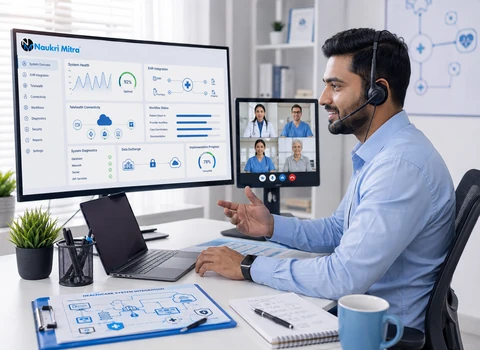
A hospital doesn't usually fail because the doctors stop caring. It's the stuff around them — a login that takes three tries, a video visit that drops halfway through, records that won't talk to each other. We're hiring an Online Health Systems Consultant to sort that out. Remote role, working directly with clinics and health teams who need their tech to actually help instead of getting in the way.
Why It Matters
Nobody wants to wait three weeks for a simple answer. Doctors don't want to fight their own software all day. You'll sit in between — figuring out what a system can realistically do, and what a care team actually needs from it — and try to make the technology disappear so the care itself comes forward.
What You'll Handle
- Working with clinical and admin teams on tools they'll actually use, not just install and ignore
- Setting up telehealth so video visits run clean on both ends
- Untangling the mess when a new platform won't talk to whatever old system is already in place
- Turning a complicated health IT platform into something busy staff can follow without a manual
- Helping providers reach patients they couldn't otherwise reach, city or rural
- Writing down what worked and what didn't after each project so the next one goes better
What Gets You in the Door
A
Bachelor's degree is the minimum. Past that, we want
4 years of experience in clinical informatics, health IT consulting, or something similar, ideally with real-world time spent on EHR systems and telemedicine platforms.
- You can walk a stressed-out clinical team through a rocky transition without making it worse
- You know roughly how patient data moves between systems and where it usually breaks
- You've used telemedicine tools enough to know what makes a virtual visit run smoothly
- You can explain a technical fix to someone who has zero interest in the technical part
- You can go from a strategy conversation to hands-on troubleshooting in the same afternoon without losing steam
What Stands Out
- Having led a full EHR rollout, start to finish, not just pieces of one
- A history of improving patient engagement through changes people actually noticed
- Thinking past the immediate fix toward where an organization's tech needs to be a year from now
Pay and Support
- Remote, paying $110,000 a year
- Ongoing training so you're not falling behind on healthcare tech or regulation changes
- People around you who've handled similar rollouts and can talk through a rough case
- Scheduling built around client needs, not a rigid office clock
- Internal tools that are actually kept up, not left to rot
What This Actually Looks Like
Sometimes it starts with a clinic mid-panic — their telehealth platform froze during patient visits, and someone needs a calm voice on the line while a real fix gets planned. Other days it's quieter, like reviewing a growing telehealth startup's systems and figuring out where they'll need to invest over the next year. A provider who's been scribbling notes on paper because the EHR felt too slow might eventually admit they can't imagine going back. That shift from resistance to relief is usually the real sign the work landed.
Staying Connected While Remote
Remote doesn't mean cut off here. Weekly check-ins cover live projects and the ordinary stuff, too — what someone's stuck on and what they learned. If you found this listing through Naukri Mitra and are wondering what remote consulting culture is actually like, it's less about back-to-back meetings and more about knowing someone will pick up when a client call goes sideways.
Where It Can Go
Beyond the day-to-day, this role builds a reputation as someone who can drive real change within healthcare organizations — the kind of track record that opens doors to leading larger tech initiatives or shaping an organization's health IT strategy down the line.
Apply
Send your resume with a short note about a system rollout or transition you've guided a team through — what went sideways, and what you did about it. We're more interested in how you handled the part that didn't go as planned than a spotless story. Applications are processed on a rolling basis, and we follow up directly when someone's background is a good fit.