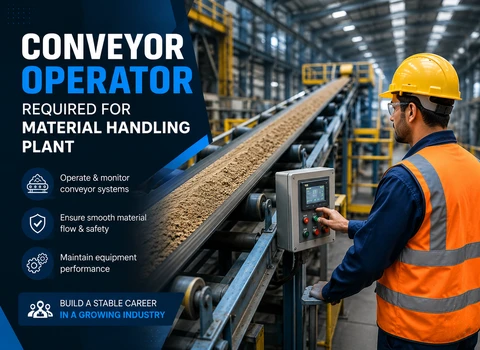
What a Conveyor Operator Actually Does at a Material Handling Plant
Walk into any material-handling plant, and you'll notice one thing running almost nonstop: the conveyor system. Someone has to keep it that way. That's where a Conveyor Operator comes in. There's currently a Full-time opening for this role in Mundra, Gujarat, India, and it's a good fit for people who like working with machines rather than sitting behind a desk all day.
The job title makes it sound simple, but there's more to it. An operator isn't just watching a belt move. They're reading the machine's rhythm, catching problems before they turn into breakdowns, and making sure materials reach the right place without getting stuck, spilled, or damaged along the way.
A Look at the Daily Routine
No two shifts look exactly alike, but certain tasks show up every day. Starting and stopping conveyor lines, adjusting speed based on load, checking belt alignment, and clearing minor jams are all part of the routine. Operators also monitor feeder systems that push bulk cargo or packaged material onto the main line.
Here's something people don't always realize before taking this job: much of the work involves listening and observing. A belt that suddenly sounds different, a motor running slightly hotter than usual, a roller that's started to wobble — these small signs matter. Catching them early often saves hours of downtime later.
Why This Role Exists in the First Place
Moving bulk material by hand simply doesn't work at industrial scale. Conveyor systems solve that problem, but only if someone competent is running them. Plants hire dedicated operators because a poorly managed conveyor line slows down everything downstream — production, dispatch, loading, all of it.
The Kind of Places Where This Work Happens
Conveyor operators are needed across material handling plants, ports, bulk storage yards, and warehouses. Mundra, being a major coastal industrial hub, sees a fair amount of cargo handling and bulk material transfer, so roles related to logistics support and continuous material movement are fairly common in the area.
Equipment You'll Get Familiar With
Belt conveyors, roller systems, motor units, and control panels form the core of daily work. Some plants also use hydraulic lifting mechanisms for heavier loads. For maintenance and checks, expect to use basic tools like spanners and grease guns, along with instruments such as tachometers or belt tension gauges to confirm the equipment is performing within normal range.
What Makes Someone Good at This Job
Technical know-how helps, but it's not the whole picture. The operators who tend to do well share a few habits:
- They understand how motors, belts, and pulleys interact, at least at a working level
- They can read gauges and basic instructions without needing constant guidance
- They notice unusual sounds or vibrations quickly, instead of ignoring them
- They stay alert around moving machinery, even during repetitive shifts
- They coordinate well with supervisors and maintenance teams when something needs fixing
Who Can Apply for This Position
This role welcomes freshers as much as experienced hands. ITI-trained candidates and diploma holders are often preferred, particularly those with a background in mechanical or electrical trades. An ITI in a mechanical or electrical trade, or a Diploma in Mechanical Engineering, tends to give candidates a head start. That said, plants also value practical exposure — someone who's actually worked around conveyor systems or general plant machinery often stands out just as much as someone with formal certificates alone.
What the Body Goes Through on This Job
Expect to be on your feet most of the shift. There's walking involved, some standing in one place for stretches at a time, and occasional lifting of light-to-moderate loads. Shift work is part of the deal too — rotational shifts, sometimes night shifts, depending on how the plant schedules its operations. The environment is often noisy, and dust exposure is common, especially near bulk material sections.
Safety Isn't Optional Here
Working near moving belts means safety has to be second nature, not an afterthought. Most plants require PPE — safety shoes, helmets, gloves, and ear protection are standard. Lockout-tagout procedures during maintenance work and simply keeping a safe distance from active machinery are the kinds of habits that prevent accidents before they happen.
Problems You're Likely to Run Into
Jams happen. So do belt misalignment and the occasional motor running hotter than it should. In a coastal industrial setting like Mundra, humidity and dust can add extra strain on both the equipment and the person operating it, which is why regular breaks and staying hydrated actually matter more than they sound.
Where This Job Can Take You
Stick with it long enough, and there's real room to move up — senior operator, shift supervisor, or maintenance technician roles are realistic next steps within the same industry. Operators who take the time to learn about automated control systems and preventive maintenance tend to advance faster than those who don't.
Pay and What Might Come With It
The monthly salary for this position is ₹27,000. Depending on how the employer structures things, there could be additional benefits such as overtime pay, PF, ESI, bonuses, uniforms, transport, or canteen access. None of these are guaranteed across every employer, so it's worth confirming specifics during the hiring process.