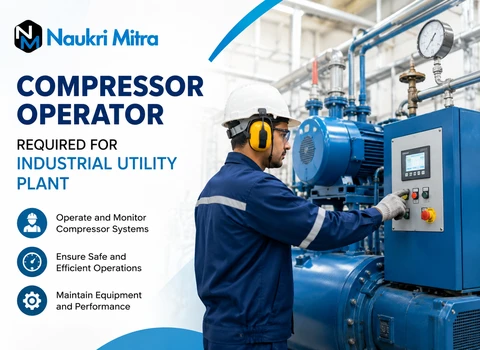
Understanding the Role of a Compressor Operator in Industrial Plants
A Compressor Operator keeps the compressed air and gas systems of a plant running smoothly. Almost every industrial unit, from utility plants to processing units, depends on compressed air for machinery, pneumatic tools, and process operations. Without a trained operator monitoring pressure levels, temperature, and airflow, production can slow down or stop entirely. This is why industrial utility plants in Vadodara, Gujarat, India, regularly seek skilled workers to fill this Full-time position.
Why Industries Need Skilled Compressor Operators
Compressors are the backbone of many manufacturing and utility operations. They supply the pressurized air or gas needed for pneumatic equipment, cooling systems, and process lines. A plant operator who understands how to start, monitor, and shut down these machines safely helps avoid costly breakdowns. Companies recruit for this role because even a small pressure fluctuation or overheating issue can affect an entire production line, so having someone dedicated to watching these systems closely matters a great deal.
What a Typical Workday Looks Like
The daily routine of an equipment operator in this field usually begins with a walkaround inspection of the compressor unit, checking oil levels, air filters, and pressure gauges. Throughout the shift, the technician records readings, listens for unusual sounds, and watches for vibration or leaks. Adjustments are made when pressure falls outside the required range, and minor issues are reported before they become major faults.
Core Responsibilities on the Floor
- Starting, monitoring, and stopping compressor units as per the production schedule
- Reading pressure gauges, temperature indicators, and flow meters accurately
- Performing routine lubrication and filter checks
- Identifying abnormal noise, vibration, or air leakage
- Maintaining logbooks and shift handover reports
- Coordinating with the maintenance team for repairs or servicing
Where This Kind of Work Happens
Compressor operators are commonly hired across utility plants, chemical and petrochemical units, pharmaceutical factories, textile mills, and general manufacturing workshops. Vadodara, an industrial hub in Gujarat, hosts many such plants that rely on a continuous compressed air supply for their processes, making it a steady source of employment for machine operators with the right training.
Machines, Tools, and Instruments Used Daily
An operator in this trade works closely with reciprocating or rotary screw compressors, air receivers, pressure relief valves, and control panels. Measuring instruments such as pressure gauges, thermometers, and flow meters are used constantly to track machine performance. Basic hand tools are needed for minor adjustments, while spanners, wrenches, and lubrication equipment support routine upkeep between scheduled maintenance visits.
Skills That Make a Strong Candidate
Technical understanding of compressor systems, basic knowledge of mechanical and electrical components, and the ability to read engineering drawings are valuable. Employers often prefer candidates with an ITI qualification in Mechanical, Electrical, or a related trade, or a Diploma in Mechanical Engineering. Practical exposure to compressed air systems, pressure gauges, and precision measuring instruments is often valued just as much as formal certification, especially for freshers entering this field.
Practical Workplace Skills
Beyond technical knowledge, a production worker in this role needs alertness, patience, and the discipline to follow standard operating procedures. Good communication during shift handovers and the ability to stay calm during equipment alarms are equally important qualities.
Physical Demands and Working Conditions
The job involves standing for long periods, occasional bending to inspect lower panels, and working near machinery that generates noise and heat. Since utility plants often run continuously, shift work, including night shifts, may be part of the schedule. The working environment can be humid or warm depending on the season and plant location.
Safety Practices and Protective Gear
Safety remains a top priority in compressor operations because of the pressurized systems involved. Operators are generally expected to use PPE such as safety shoes, ear protection, gloves, and safety goggles. Following lockout-tagout procedures before maintenance and never bypassing safety valves are essential habits every technician must build early in their career.
Challenges Faced on the Job
Sudden pressure drops, unexpected shutdowns, or minor leaks can create pressure on the operator to respond quickly. Working in noisy environments for long hours can also be tiring, which is why taking scheduled breaks and staying hydrated matter, especially during summer shifts in Gujarat.
Tips for Building a Long-Term Career
Staying updated with basic troubleshooting techniques, maintaining accurate logs, and building a habit of reporting issues early can set an operator apart. Many experienced professionals move into senior operator or shift-in-charge roles within the same plant after a few years of consistent, safe performance.
Salary and Benefits Overview
This Compressor Operator position in Vadodara, Gujarat, India offers a monthly salary of ₹34,000 on a Full-time basis. Depending on the employer, additional benefits such as overtime pay, Provident Fund (PF), Employee State Insurance (ESI), bonuses, uniforms, transport facilities, or canteen access may also be provided, though these vary by company policy.