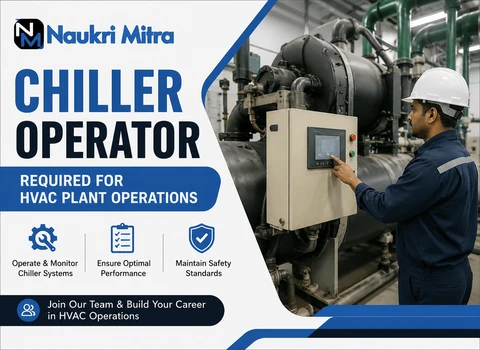
What Does a Chiller Operator Actually Do All Day?
Walk into any large office tower, hospital, or factory, and somewhere in the basement or a dedicated plant room, a chiller is quietly working to keep the whole place cool. Someone has to watch over that system. That's the Chiller Operator. This opening is for a Full-time Chiller Operator role at an HVAC plant in Noida, Uttar Pradesh, India, with a salary of ₹33,000 per month. It's not a glamorous job in the way people imagine "tech" careers, but it's one that keeps hospitals, malls, and manufacturing lines running without interruption.
Most people outside the industry have never heard the job title, yet almost every building they walk into depends on someone doing this work.
Why This Job Exists in the First Place
Chillers don't run themselves, at least not safely for long stretches. Pressure drifts, refrigerant levels drop, bearings wear out, and water flow through the condenser can slow down without anyone noticing until the whole system trips. Companies bring in a dedicated operator so that someone is actually watching the numbers and catching problems before they turn into a shutdown. In a hospital, a chiller failure can mean an operating theatre losing its climate control. In a food plant, it can spoil an entire batch. That's the kind of risk employers are trying to avoid.
A Shift on the Plant Floor
The shift usually starts with a walk-around. You check the compressor sound, glance at the pressure gauges, note the chilled water inlet and outlet temperatures, and write it all down in the logbook. Nothing fancy — just discipline. If something looks off, even slightly, you flag it before it becomes a real fault.
From there the day settles into a rhythm of monitoring the control panel, adjusting set points as load changes through the day, cleaning strainers and filters, and topping up oil or refrigerant when levels call for it. When an alarm goes off, the operator is the first responder — sometimes it's a false trip, sometimes it's the beginning of a bigger issue that needs the maintenance team.
What the job usually involves
- Starting up and shutting down chillers, pumps, and cooling towers correctly
- Logging pressure, temperature, and flow readings at set intervals
- Catching unusual vibration, noise, or smell early
- Cleaning condenser coils, strainers, and filters
- Handing over clear notes to the next shift
- Supporting senior technicians during bigger repairs or annual overhauls
Where You'll Find This Kind of Work
HVAC plant roles aren't limited to one type of industry. Hospitals need continuous cooling for operation theatres and ICUs. IT parks and data-heavy office buildings need it for server rooms. Pharma units, food processing plants, and cold storage facilities depend on stable temperatures for the product itself, not just human comfort. Noida, where this position is based, has grown into a hub with a mix of commercial buildings and industrial units, and demand for people who can run these systems properly has grown right along with it.
The Equipment You'll Have Your Hands On
Depending on the plant, you might be working with centrifugal or screw chillers, cooling towers, condenser pumps, and a control panel that shows real-time system status. Pressure gauges, digital thermometers, multimeters, and flow meters are the everyday tools. Understanding the refrigerant cycle — how heat moves from the chilled water to the refrigerant and then gets rejected at the cooling tower — isn't just theory here. It's what tells you whether a reading is normal or a warning sign.
Skills That Actually Matter on the Job
Technical grounding helps, but it's not the whole story. Operators who do well tend to notice small changes — a slightly different hum, a gauge reading that's two units off from usual. They stay calm when an alarm sounds instead of freezing up. And they write things down properly because the next shift relies on that logbook to know what happened before they arrived.
Reading basic electrical and piping diagrams helps too, especially when a maintenance team asks for input on where a fault might be coming from.
Who Fits This Role
ITI candidates from electrical, mechanical, or refrigeration and air-conditioning trades are a natural fit. Diploma holders in mechanical engineering are considered as well. Freshers with proper vocational training can get a start here too, though someone with prior plant experience will usually be viewed as a stronger candidate for a shift lead track down the line. Hands-on exposure to engineering drawings and precision measuring instruments during training tends to count for more than marks on a certificate.
What the Body Goes Through
This isn't a desk job. Expect to be on your feet, walking the plant room, occasionally lifting a spare part or a tool kit. Chiller plants often run 24 hours, which usually means rotational shifts, including night duty at some point. Plant rooms tend to be warmer and louder than an office — that's just the nature of standing next to compressors and pumps for hours at a stretch.
Staying Safe Around the Machines
Refrigerant leaks, high-pressure lines, and rotating equipment aren't to be taken lightly. Safety shoes, gloves, ear protection near compressors, and goggles when handling refrigerant or cleaning chemicals are standard. Before any servicing work, lockout-tagout procedures need to be followed properly — skipping that step is how accidents happen. If something smells off or a leak is suspected, it gets reported immediately, not "checked later."
Where New Operators Usually Struggle
Figuring out why an alarm actually triggered — versus it being a nuisance trip — takes time to learn. Summer months are the real test, when chillers run near full load for weeks and small inefficiencies suddenly matter a lot more. Most people pick this up faster by working alongside an experienced technician during an actual breakdown than by reading a manual. There's no real substitute for that.
Growing Within the Same Field
Many operators start as helpers and move up to independently running a shift within a few years, especially once they've handled multiple chiller brands and tonnages. From there, some move into supervising junior staff; others lean toward preventive maintenance planning or energy-efficiency work — still within HVAC, just a different angle on it.
Pay and What Might Come With It
This Chiller Operator position in Noida, Uttar Pradesh, India, is Full-time and pays ₹33,000 per month. Beyond the base salary, some employers offer overtime pay, PF, ESI, festival bonuses, uniforms, transport, or canteen access — though these vary by company and shouldn't be assumed to be guaranteed.
If You're Just Starting Out
Get comfortable with basic refrigeration concepts before you walk into an interview. If your ITI or diploma program gives you access to real chillers rather than just diagrams, use that time well — it's the closest thing to actual plant experience you'll get before your first job. And take safety seriously from day one; it's not something you pick up "eventually."