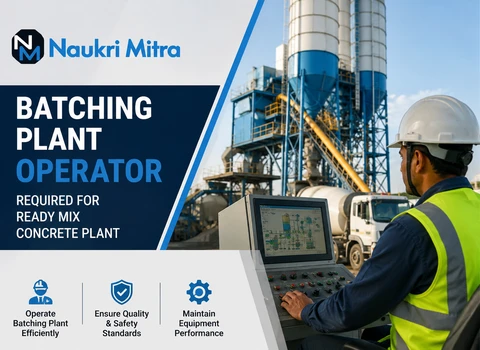
What Does a Batching Plant Operator Actually Do?
Walk into any ready mix concrete plant around Pune, and you'll find one person quietly controlling the whole show from a small cabin near the mixer — that's the Batching Plant Operator. This person runs the equipment that combines cement, sand, aggregate, water, and admixtures into concrete, batch after batch, so trucks can carry it out to building sites, road projects, and bridges across the city. The opening in Pune, Maharashtra is a Full-time position paying ₹33,800 a month, and it works for someone starting fresh in industrial work as well as someone who's already spent time around batching systems.
Why This Role Matters More Than It Looks
Concrete isn't just sand and cement thrown together. Get the water-cement ratio wrong by even a small margin and the strength of a slab or column can suffer years later. That's the real reason companies don't hand this job to just anyone — they want someone who understands mix designs and won't guess their way through a shift. Whether the order is for a housing project, an office building or a stretch of road, the batch has to come out right the first time, since concrete can't really be "fixed" once it's poured.
A Shift From Start to Finish
Most days start with a walk around the plant — checking the control panel, seeing how much cement and aggregate is sitting in the silos, and making sure the conveyor system looks fine before any orders come in. Once production requests arrive, the mix design gets loaded into the system, and the operator watches closely as cement, sand, aggregate, and water get weighed and dropped into the mixer. It sounds automated, and much of it is, but someone still has to keep an eye on silo levels, watch for blockages on the belts, and make quick calls if something doesn't look right.
What This Job Involves Day To Day
- Running the batching control system to produce concrete matching the required mix design
- Keeping track of material stock in silos, hoppers and aggregate bins
- Logging batch numbers, quantities and any deviations that come up
- Coordinating dispatch timing with transit mixer drivers so trucks don't sit idle
- Doing basic checks on the weighing scales, conveyors and central mixer
- Flagging anything unusual to the maintenance staff before it turns into a breakdown
None of this happens in isolation either — dispatch clerks, quality staff, and drivers all work around the operator, so a fair bit of coordination is part of the job, even though it's not written down anywhere.
The Kind of Places Operators Work In
You'll typically find this role at a ready mix concrete plant set up close to a construction zone, sometimes a standalone facility supplying several sites at once, other times a plant built specifically for one large project. Expect a mix of outdoor work near the silos and aggregate yard, plus time inside a control cabin where the actual monitoring happens.
Machines You'll Get to Know Well
The batching plant control panel is the centerpiece — that's where mix proportions get entered and adjusted. Beyond that, there's the weighing system for cement and aggregate, the central or drum-type mixer, conveyor belts moving raw materials around, and screw or pneumatic systems for transferring cement from the silo. Load cells, moisture sensors, and digital readouts are also part of daily work, since they're what tell you whether the batch is coming out to spec.
Skills That Set Good Operators Apart
A working knowledge of mix ratios helps, obviously, but so does basic comfort with computers or touchscreen panels — most modern plants aren't run with switches and levers anymore. Reading production data quickly, catching a strange sound in the mixer before it becomes a bigger issue, and sticking to the mix design even when a site is pushing for faster dispatch — these are the things that actually separate someone reliable from someone who's just filling the seat. ITI holders in electrical, mechanical or fitter trades tend to pick this up fast, and so do diploma holders in civil or mechanical engineering. That said, plenty of operators have learned the job purely through time spent on the plant floor.
What the Body Goes Through
This isn't a desk job. There's standing for long stretches, some climbing near the silos, and working around dust and machine noise for most of the shift. Because ready-mix supply runs on tight construction schedules, operators often work rotational shifts — early mornings, late evenings, sometimes both in the same week, depending on how busy the sites are.
Staying Out of Harm's Way
Around conveyor belts and rotating mixers, safety habits aren't optional. Helmets, safety shoes, gloves, dust masks, and high-visibility vests are standard gear on most plants. Staying alert around moving parts, respecting lockout procedures whenever maintenance is underway, and keeping the control area free of clutter all go a long way toward preventing the kinds of accidents heavy machinery can cause in a careless moment.
Where Things Get Tricky
Machines break down at the worst possible times, power fluctuations throw off a batch mid-cycle, and sometimes a site calls in an order change with barely any notice. Add Pune's heat and humidity through much of the year, and a shift can test your patience more than your technical skill on any given day.
Moving Up From Here
Operators who stick with it for a few years often move into senior operator roles, shift-in-charge positions, or shift toward quality control within the same plant. The experience of running batching operations day after day builds exactly the kind of judgment that plants look for when filling supervisory positions.
Pay and What Else Might Come With It
This Full-time role in Pune, Maharashtra, India comes with a monthly salary of ₹33,800. Depending on the employer, there may also be overtime pay, PF, ESI, bonus, uniforms, or transport and canteen facilities — though these aren't standard everywhere and tend to vary from one company to the next.