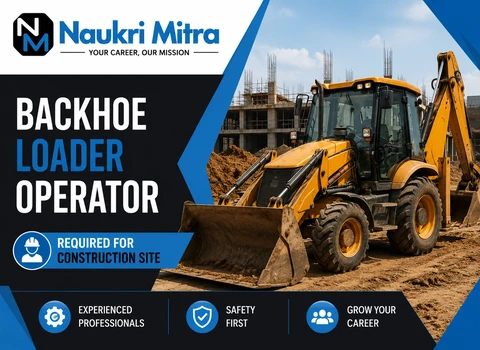
What This Machine Does and Why One Operator Runs Both Ends
A backhoe loader has a bucket in the front and a digging arm at the back. That's the whole idea behind it. One operator can dig a trench with the rear arm, then turn the machine around to load the same soil into a truck with the front bucket. Sites use this setup because it means fewer machines parked around, and fewer people needed to run them.
Where the Demand Comes From
No foundation gets poured, no pipeline gets laid, without someone digging the ground first. That work usually falls on a backhoe loader and whoever is driving it. A good operator moves the project along. A careless one hits a cable that nobody has properly marked, and then the whole site loses a day sorting it out. This is basically why the job exists in the first place.
How a Shift Usually Starts
Before anything gets dug, there's a walk around the machine. Hydraulic hoses, tires, fuel, oil, horn, lights - all of it gets checked first. Skipping this step is how small problems turn into breakdowns halfway through the day.
Once the checks are done, work starts based on what the site supervisor needs - a trench here, leveling there, material loaded onto a waiting truck. There's a lot of back-and-forth throughout the shift. Truck drivers waiting their turn, a surveyor marking depth, other laborers working close to the machine. Running the machine well is only part of it. Staying alert to everyone around it is the other part, and honestly the harder one to get right.
What Fills Most of the Day
- Digging trenches or foundation pits with the rear arm
- Loading soil, sand or debris using the front bucket
- Leveling ground before other trades start their work
- Quick daily checks on the machine, reporting anything unusual
None of this really shows up on paper the way it plays out on site. Knowing when soil is too loose to dig fast, or when to ease off near something buried underground, comes from time spent on the machine more than from any manual.
The Kind of Sites Where This Work Happens
Residential buildings, road projects, pipeline work, land development - these are the usual places you'd find a backhoe loader running. Noida in Uttar Pradesh has had a fair bit of construction activity going on for a while now, which keeps this kind of work fairly steady for operators who know what they're doing.
Other Equipment That Shows Up Alongside It
The backhoe loader rarely works on its own at a site. Dump trucks carry away what gets loaded. Compactors and rollers come in once the ground is level. For checking depth and slope, most sites still use plain measuring tape and grade stakes, though laser levels are increasingly used for grading accuracy. An operator doesn't need to set one up, but being able to read one helps.
What Separates a Decent Operator From a Good One
Technical control gets you through training. Judgment is what keeps you employed after that. Soft clay behaves differently than rocky soil, and knowing the difference changes how aggressively you dig. Smooth hydraulic movement matters too - a sudden jerk with the arm can crack something nearby, or hit a pipe nobody could see from the surface anyway.
A few things tend to come up again and again when people talk about what makes someone good at this: steady control over the levers and pedals, reading the ground before committing to a depth, catching a mechanical problem before it becomes a breakdown, and working carefully anywhere near buried cables or pipelines.
Who Usually Picks This Up Faster
Freshers with an ITI background in mechanical or automobile trades tend to grasp machine mechanics more quickly, since much of it isn't entirely new to them. Diploma holders in similar fields have a similar edge. That said, a good number of operators learned mostly by watching first - starting as a helper on site, getting a few supervised hours on the controls, and working up from there before running the machine alone.
What the Body Goes Through
It's a seated job but not an easy one. Hours of constant hand-and-foot coordination add up by the end of a shift. Add dust, engine noise, and whatever the weather decides to do - summer heat or a monsoon turning the ground to mud. This is full-time work, and depending on how a project is running, shift timings can start early. Tight deadlines tend to push everyone's schedule around.
Safety Around a Machine This Size
None of the safety talk here is just formality. A machine this size working close to people is genuinely risky if handled carelessly. Sounding the horn before moving, keeping a clear line of sight, never digging into ground you can't see properly - these get repeated on every site for good reason.
PPE usually means a helmet, a high-visibility vest, steel-toed shoes, and ear protection where noise levels are high. Gloves are mostly used during maintenance, not while the machine is actually running.
The Parts of the Job That Wear People Down
Uneven ground, low visibility when it's raining hard, several ground workers needing attention at once - all of this adds up over a shift more than people expect going in. Machines also break down, and if that happens somewhere far from a repair shop, an operator who can troubleshoot even a little saves everyone a long wait.
What Actually Gets an Operator Rehired
Contractors remember the ones who dig cleanly, without wrecking whatever's underground, and who take care of the machine instead of running it hard without maintenance. That kind of reputation moves through word of mouth more than anything formal. Keeping up with newer hydraulic systems as machines get updated, and actually communicating with site engineers instead of guessing at instructions - both matter more over a longer career than most people realize early on.
Where a Few Years of This Can Lead
Operators who stick with this long enough often move up to larger excavation machines or start handling equipment scheduling across multiple sites. A few end up training new operators once they've built a strong enough track record. None of it happens fast. It builds slowly, through work that holds up over time.
Salary and What Might Come With It
This role is based in Noida, Uttar Pradesh, and is a full-time position paying ₹32,000 a month. Some employers add extras on top - overtime, PF, ESI, bonuses, uniforms, transport - but that depends entirely on the company hiring. None of it should be assumed before actually joining.