📚 Table of Contents
- Introduction
- Startup Stories from the Co-Working Floor
- Here’s the Thing About Environments
- The Buzz You Can’t Fake
- When Founders Admit It’s Hard
- Relatable Examples That Bring It Home
- What Actually Works for Startup Teams
- Skills and Tools That Thrive in Co-Working Hubs
- The Future of Startup Growth in Co-Working Hubs
- Getting Started Without Overthinking
- Conclusion + Call-to-Action
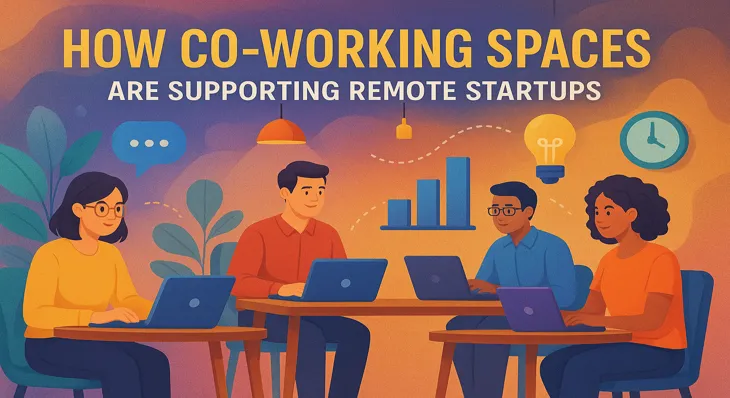
How Co-Working Spaces Are Supporting Remote Startups
Introduction
Starting a business is tough—no way around it. You’ve got deadlines breathing down your neck, bills stacking up, and a team that might be spread across three cities and two time zones. Finding a setup that works without draining your budget feels like a puzzle with missing pieces. This is where co-working spaces are supporting remote startups in ways most people don’t expect. They’re not just about desks and Wi-Fi. They’re about giving you room to grow without a long lease, energy that fuels your day, and, honestly, a little sanity when things get messy.Startup Stories from the Co-Working Floor
Take a small team I met in Bangalore—two developers and a designer. They started out bouncing between coffee shops. At first, the vibe was fun, but soon the clattering cups, spotty internet, and awkward stares when investor calls got heated drove them crazy. Once they moved into a co-working hub, everything shifted. They had access to collaboration tools, extra meeting rooms, and spontaneous hallway chats that often led to partnerships. One overheard conversation at the espresso machine introduced them to a mentor who’d scaled a similar SaaS product years earlier. That offhand moment ultimately saved their launch. A digital nomad I spoke to in Lisbon said the same. “I land in a new city, and within 24 hours, I’ve got a desk, fast Wi-Fi, and people to grab lunch with.” For her, co-working spaces weren’t just offices; they were lifelines.Here’s the Thing About Environments
Most people think that startups fail due to a lack of money. Sometimes true. But often, it’s the environment. A creative workspace can spark ideas you didn’t know you had. Room to grow without a long lease means less stress about overhead. And those tiny nudges of support—someone sharing a tool, or a quick tip on taxes—make all the difference. Call them perks if you want, but for founders, they're essential. They’re survival tools.The Buzz You Can’t Fake
Ever walked into a co-working space on a Monday morning? It’s not silent like a library, and it’s not chaotic like a café. It’s… buzzing. You hear keyboards clicking, a brainstorm spilling out in one corner, someone pitching by the window. That hum kinda sneaks into your work and gets ideas flowing. You’re not just renting a chair—you’re plugging into momentum.When Founders Admit It’s Hard
A founder once told me, “I spend half my week wondering if I’m failing.” Sound familiar? Investor calls, hiring, product bugs—it piles up. Co-working spaces soften the edges. They don’t fix everything, but they give you mentors who’ve been through it, a network so you don’t feel like you’re shouting into the void, and programs that nudge you forward. One joked that the espresso machine in her hub did more for her sanity than her first investor. Funny—but kinda true.Relatable Examples That Bring It Home
Think back to school. Studying alone at your desk? Hard. But in a study group, you swap notes, laugh at the same tough questions, and keep each other accountable. That’s what co-working does for startups. Hybrid work setups offer both focus time and a sense of community. And, just as pooling textbooks in school, resource sharing—whether it’s whiteboards, printers, or contacts—keeps costs down and doors open.What Actually Works for Startup Teams
Forget the buzzwords. What matters is what helps founders navigate the challenges of entrepreneurship. Straight talk, practical stuff, stories from teams who’ve lived it. That’s where co-working really proves its worth.Skills and Tools That Thrive in Co-Working Hubs
Passion alone won’t scale a company. You need tools, allies, and space that grows with you. Co-working hubs bring that together. Team collaboration platforms keep global teammates in sync. Entrepreneurial programs introduce you to investors. And no long-term leases mean you’re not chained to costs you can’t handle. Many hubs even promote startup collaboration—pairing founders from entirely different industries who often end up swapping contacts or co-creating new products. At Naukri Mitra, we’ve tracked how the skills most valued by global employers—adaptability, digital literacy, and collaboration—line up precisely with what founders sharpen inside co-working hubs. Some real takeaways:- Cutting costs through shared resources, not cutting corners.
- Building credibility just by working alongside serious founders.
- Boosting focus in spaces designed for actual work, not distraction.
The Future of Startup Growth in Co-Working Hubs
Here’s where it gets interesting. Co-working hubs aren’t a stopgap—they’re becoming the backbone of startup life. Remote founders using shared spaces and digital nomads dropping into global hubs are shaping tomorrow’s startup ecosystem. These spaces also power business incubation by offering structured mentorship and direct support. Insights from Naukri Mitra confirm it: demand for these setups is climbing fast. And here’s the kicker—research suggests the global co-working market could top $30 billion by 2030. Not hype, not a trend. A shift. One health-tech startup in Bangalore told me they slashed 35% of costs after moving into a hub. That cash? They pumped it straight into scaling their product.Getting Started Without Overthinking
Wondering how to get the most out of a co-working space as a founder?- Scout around – Don’t pick the first shiny space. Some hubs lean towards tech, while others lean towards creativity. Match your vibe.
- Try before you commit – Most offer trial days. Use them. Sit in, listen, feel the energy.
- Talk to people – Seriously. Coffee chats lead to more than caffeine. Jump into events, swap tools, share struggles.
- Ask what’s included – Mentorship, funding contacts, shared gear—it varies. Don’t assume.
- Check your pulse often – Is it helping you grow? Scale up, scale down, or switch if it’s not working.